Weekly Summary: Business Section – The Farming Forum
Date Range: 18 May 2026 – 24 May 2026—
Executive Summary
This week in The Farming Forum’s Business section, discussions were dominated by several pressing themes impacting agriculture and rural economy. The most substantial conversation revolved around land tax, highlighting ongoing concerns over fiscal policies affecting farmers and landowners. Food-related topics such as ultra-processed foods and food price caps also engaged significant attention, reflecting wider debates on food security and affordability. Environmental and sustainability issues surfaced in conversations about land fallowing for 2027, the Welsh Sustainable Farming Scheme, and Net Zero targets with skepticism about their feasibility. Additionally, industry-specific business advice and operational challenges—including new crop spraying ventures, haylage processing, and steel industry losses—provided vital insights into the day-to-day concerns and strategic adjustments farmers face. Other notable discussion points addressed ethical considerations of limited companies and farm management practices. Emerging interests in digital farming tools and agricultural finance were evident but comparatively understated.—
Conversations at a Glance
| Conversation Name | Contribution Count | Key Topics |
|---|---|---|
| Land Tax | 177 | Tax policy impacts on landowners, financial implications, government regulations |
| Ultra Processed Food | 115 | Health concerns, market trends, consumer demand, and regulatory considerations |
| Food Price Cap | 90 | Price controls, inflation, impact on farmers and consumers |
| Will there be large areas of land left fallow in 2027? | 86 | Environmental compliance, production impacts, sustainability goals |
| Duchy Farms | 65 | Farming enterprise, land management, rural development |
| The Morals of Limited Companies | 51 | Ethical business practices, corporate responsibility, agricultural company structures |
| Essential Daily Food Items | 46 | Staples pricing, availability, supply chain challenges |
| New Crop Spraying Business Advice | 38 | Operational advice, regulatory compliance, business startup concerns |
| How Long to Leave Haylage Before Baling | 38 | Practical farming techniques, quality control |
| British Steel Is Losing £1.5 Million a Day Why? | 37 | Industry crisis, economic impacts, supply chain effects |
| Net Zero – It’s Over | 34 | Climate policies, skepticism of net zero targets, future of farming practices |
| Other Conversations | Varying <30 | From farm vehicle insurance to local farming events and agricultural technology |
Detailed Conversation Summaries
Land Tax: The Foreground of Fiscal Debate
With 177 contributions, the land tax conversation was the most active topic this week. Participants extensively debated government land taxation policies, expressing concerns about their financial impact on farming operations and rural landholding. Discussions included calls for fairer tax assessments and the implications for inheritance, estate management, and long-term viability of farms. Members shared personal experiences and practical advice for navigating new tax structures and engaged in speculative debates on potential policy shifts.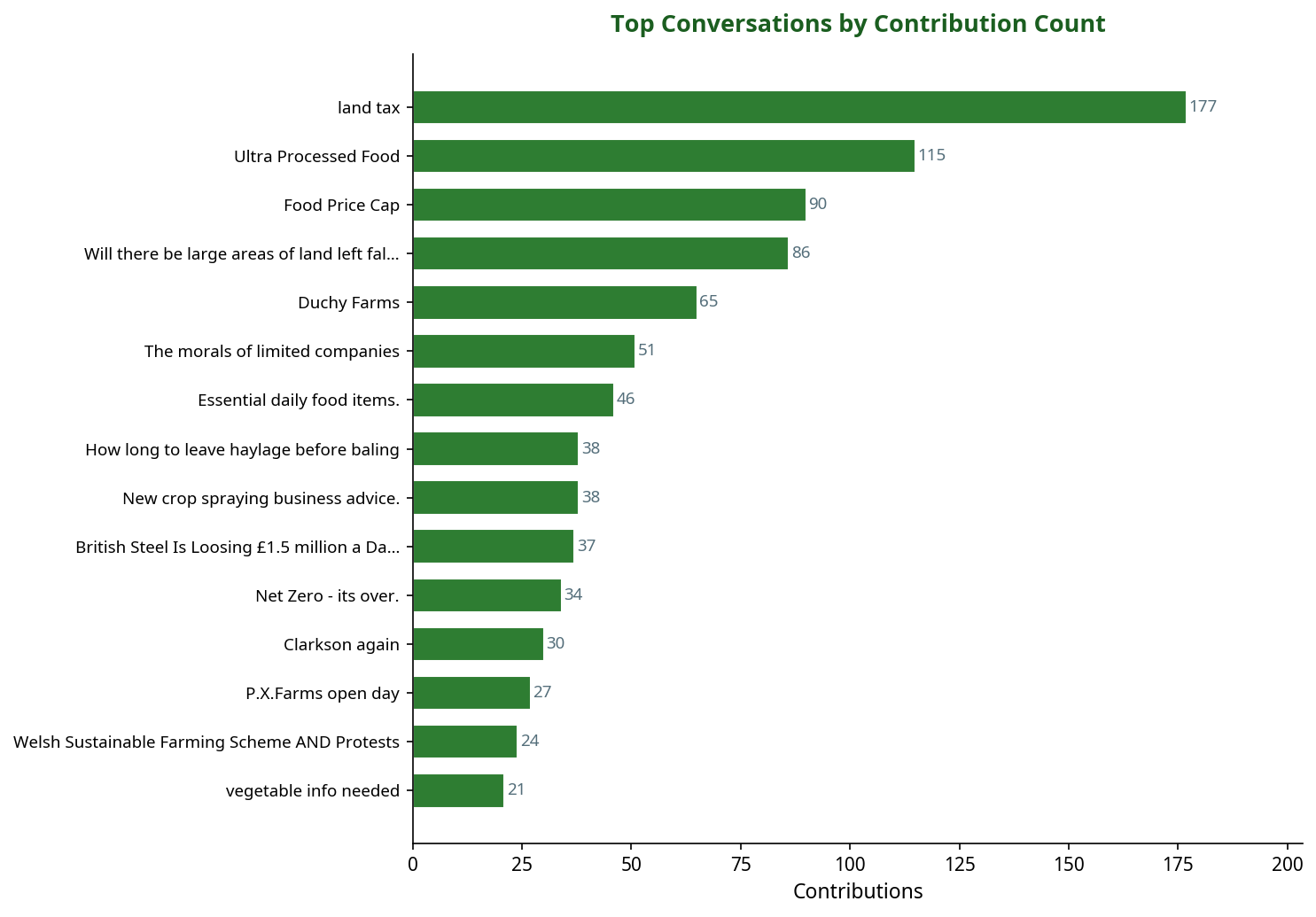
Food Industry Focus: Ultra Processed Food and Price Regulation
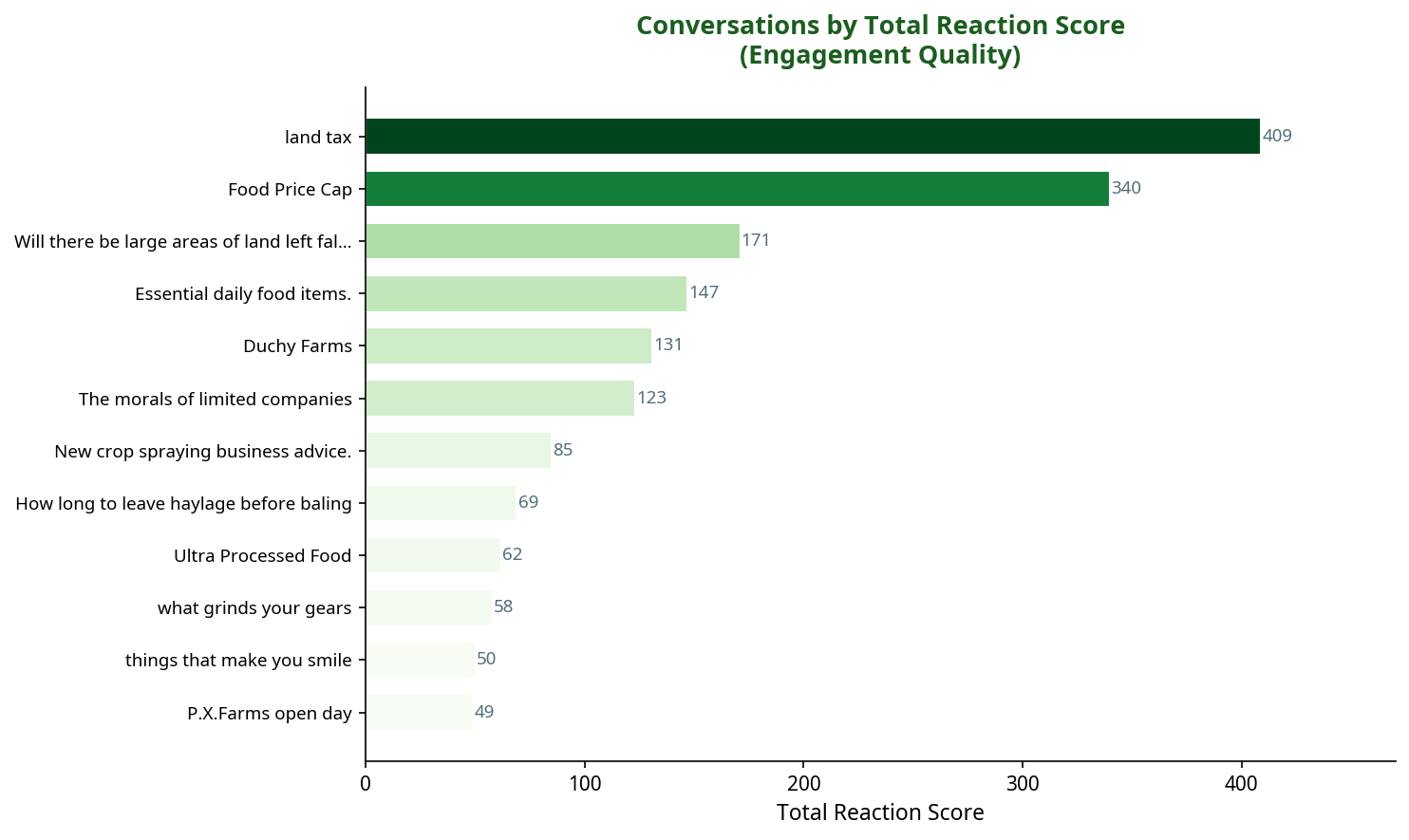
The discussions on ultra processed food (115 contributions) and food price caps (90 contributions) reflected a growing interest in food industry dynamics. Forum members critiqued the health impact of ultra processed foods and debated how market demand influences agricultural production choices. The food price cap conversation centered on government interventions aimed at controlling inflation and their effect on both producers and consumers, highlighting tensions between economic sustainability and consumer protection.Environmental and Sustainability Concerns
Environmental themes permeated many conversations, especially those considering whether large areas of land will be left fallow in 2027 (86 contributions). This dialogue explored the balancing act between productivity and adhering to environmental regulations aimed at promoting biodiversity and reducing emissions. The Welsh Sustainable Farming Scheme and climate change debates, including skepticism expressed in the “Net Zero – It’s Over” conversation (34 contributions), underscored ongoing farmer uncertainty and frustration regarding sustainability targets and the practicality of implementation.Agricultural Business and Operational Advice
Several conversations provided hands-on business guidance. The “New Crop Spraying Business Advice” and “How Long to Leave Haylage Before Baling” dialogues, each with 38 contributions, offered practical insights into crop management and operational efficiency. Contributors shared knowledge on herbicide application methods, resistance management, optimal timing for haylage baling, and startup advice for farming-related businesses, emphasizing peer support within the community.Industry Challenges Beyond Farming
The crisis in British Steel, with daily losses of £1.5 million (37 contributions), garnered attention as forum members assessed the wider economic implications for agriculture and rural industries dependent on steel products and infrastructure. Debates also covered ethical considerations within agricultural companies, particularly limited companies (51 contributions), where corporate responsibility and social expectations were scrutinized.Technology and Land Management Tools
Users reported technical issues with the “Magic.Gov” mapping platform, a government environmental data tool, impacting their ability to measure land areas—a critical task for regulatory compliance and subsidy applications. Alternatives such as Google Earth Pro and LandApp were recommended, highlighting the community’s adaptive approach to technological challenges.—
Conclusion
This week’s discussions in The Farming Forum’s Business section reveal a community deeply engaged with the intersection of economic pressures, environmental mandates, and operational realities. Land tax concerns and food industry debates dominate the conversation, illustrating tensions between regulation and profitability. Meanwhile, the nuanced discourse around sustainability highlights both the challenges and the uncertainties farmers face as climate and environmental policies evolve. Practical business advice, agricultural techniques, and broader industry concerns supplement a comprehensive picture of a sector navigating transformation. The forum continues to serve as an invaluable resource for peer-to-peer knowledge sharing and support within the agricultural business community.—