Weekly Business Summary
The Farming Forum | 25th – 31st May 2026—
Executive Summary
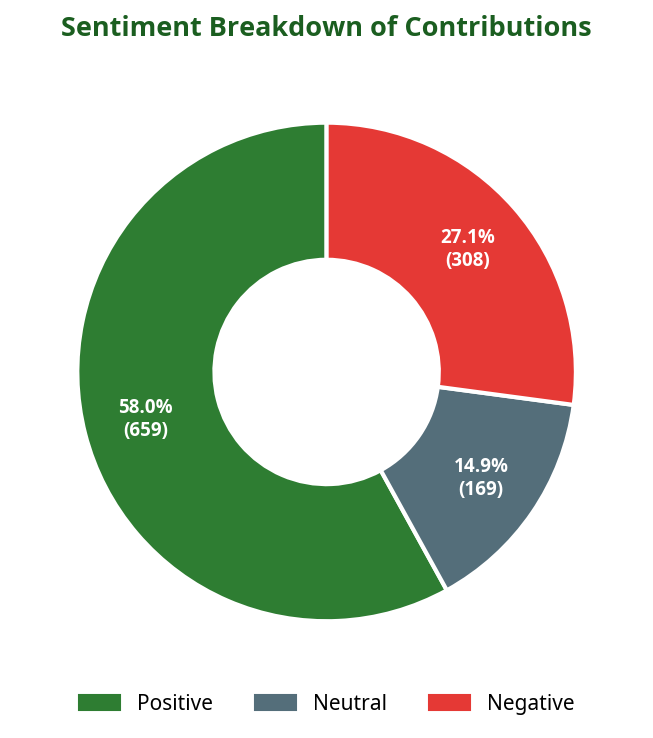
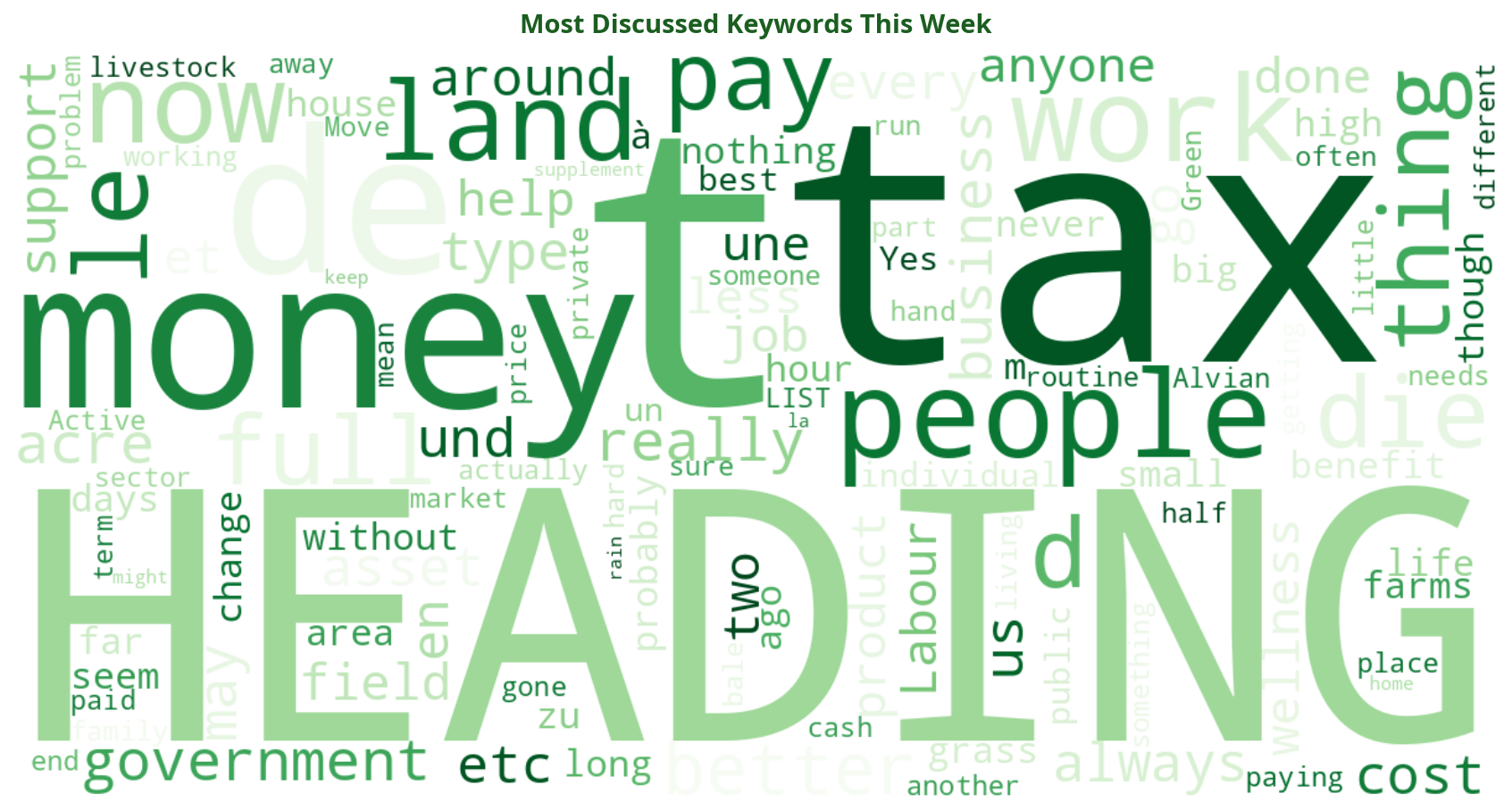
This week’s discussions within the Business section of The Farming Forum primarily revolved around tax implications for landowners, open farm events, weather impacts on farming operations, and concerns over labor and operational challenges. The dominant topic was the ongoing debate around land tax, attracting the highest volume of contributions by a significant margin. Other notable conversations included firsthand accounts and preparations for haymaking, reflections on farm labor recruitment especially regarding NEETs (Not in Education, Employment, or Training), and issues around parking and rural traffic tensions. Community engagement remained strong, with various members sharing practical experiences, from machinery servicing to crop and animal welfare updates. The breadth of dialogues underscores current sector concerns alongside lighter community and event-related content.—
Conversations at a Glance
| Conversation Name | Contributions | Key Topics |
|---|---|---|
| Land Tax | 328 | Tax regulations, compliance difficulties, personal experiences with governmental forms |
| P.X.Farms Open Day | 93 | Event planning, farm showcases, public engagement |
| Quite Hot | 79 | Weather patterns, heat effects on farming activities |
| Charles Wright Packing Up | 64 | Personal and business transitions on farms |
| Hay Making 2026 | 39 | Timing, techniques, weather considerations |
| Oi! You Can’t Park There | 38 | Rural parking conflicts, access issues |
| NEETS and Farm Work | 38 | Labor challenges, youth employment, skills development |
| Kev’s Diary | 36 | Daily farm experiences, equipment updates, personal insights |
| What Is the Biggest Pain Point for Producers? | 33 | Sector challenges, financial pressures, regulatory difficulties |
| Thunderstorms Tonight | 33 | Weather forecasts, crop protection concerns |
Detailed Discussion Highlights
Land Tax: Navigating Complex Compliance
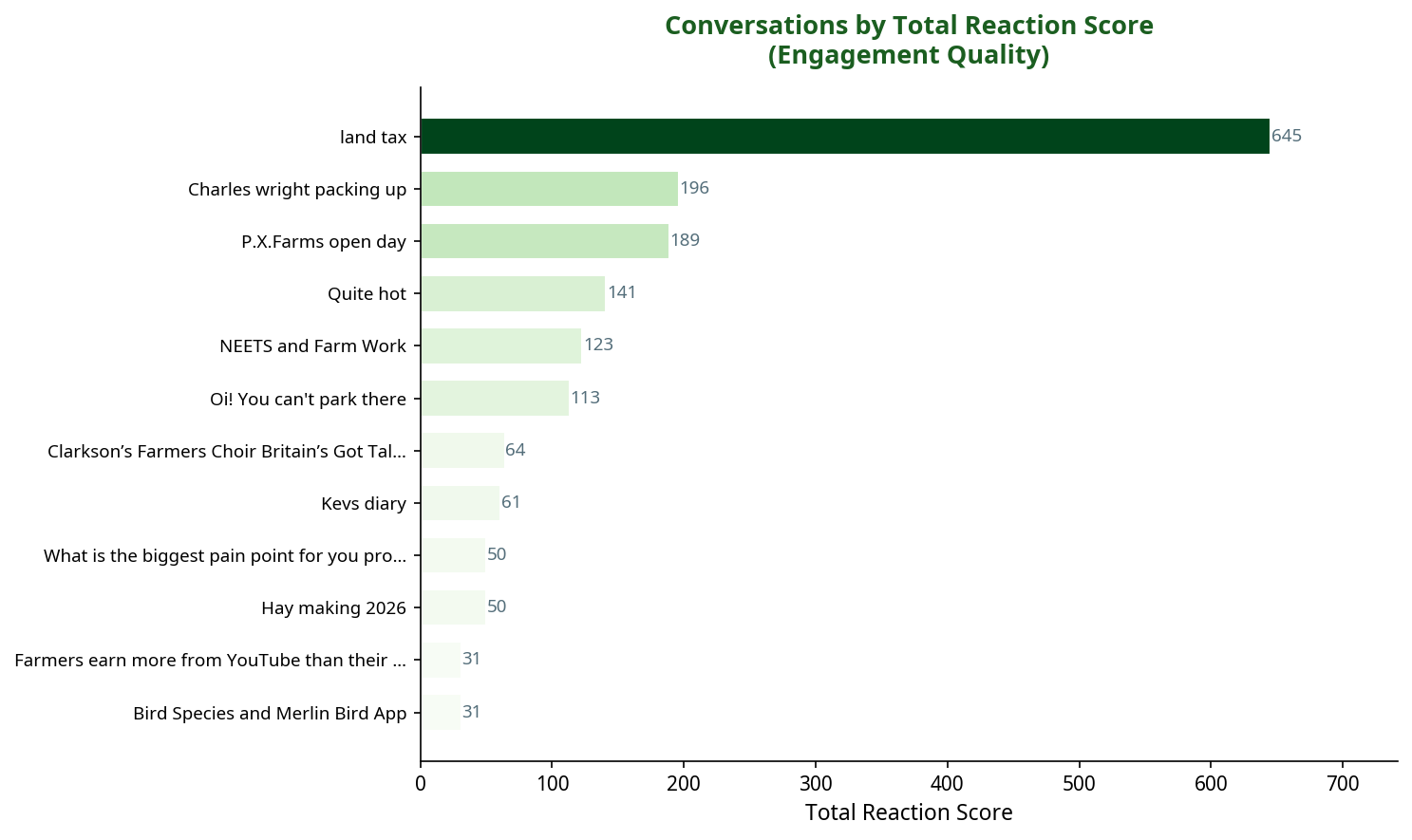
The land tax conversation overwhelmingly dominated the week, with 328 contributions addressing the layered challenges faced by farmers and landowners concerning tax regulations. Many contributors expressed frustration over repetitive requests for documentation, in particular the FATCA forms required to validate UK residency for tax purposes. One contributor noted receiving the same form twice with no clear feedback on prior submissions, highlighting bureaucratic inefficiencies. The dialogue also included practical advice shared by experienced members on managing taxable income streams, especially distinguishing commercial operations from investment income to better comply with requirements. Overall, this conversation underscored a widespread sentiment of administrative burden and a pressing need for clearer guidance.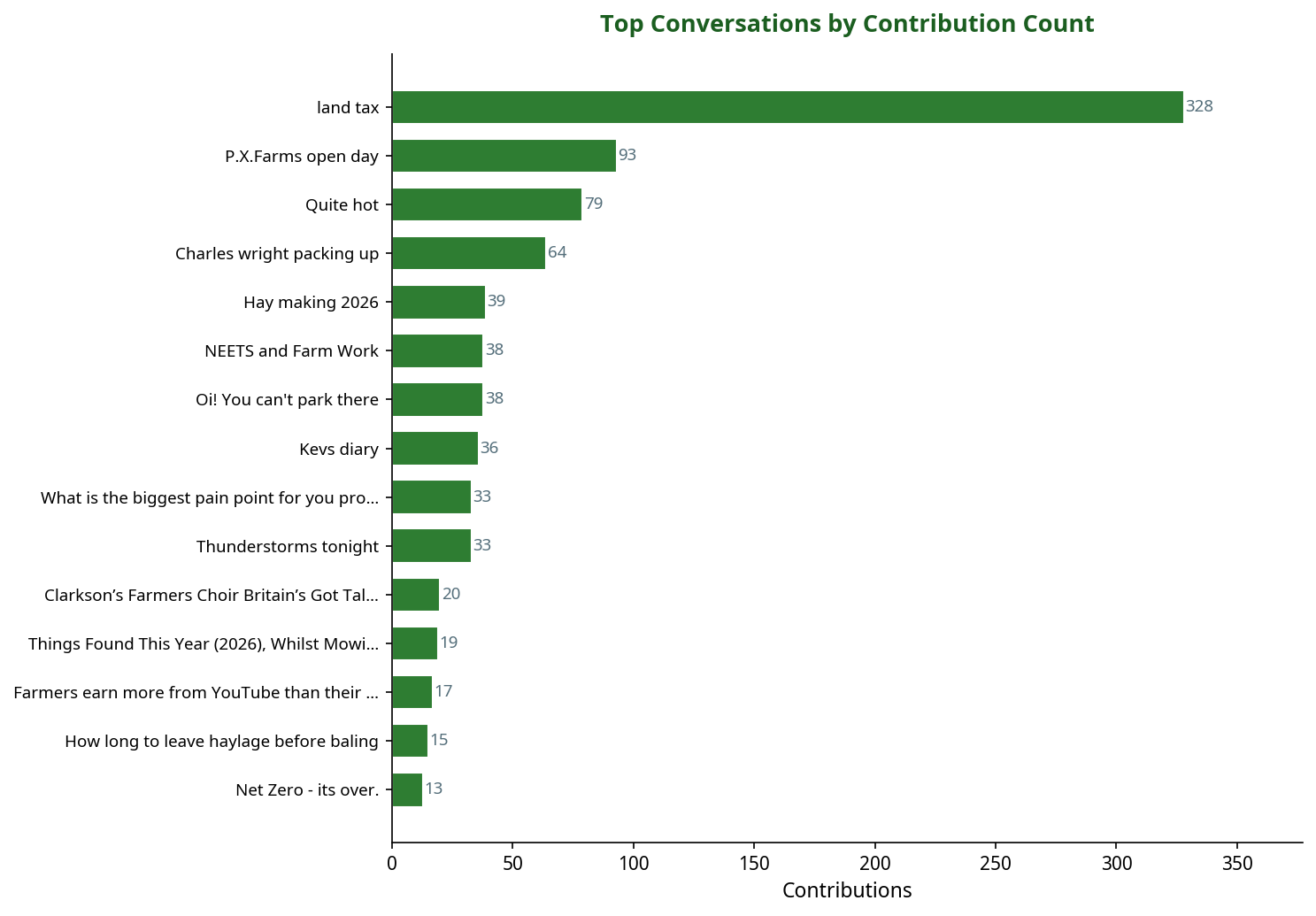
P.X.Farms Open Day: Community and Public Engagement
The open day at P.X.Farms attracted 93 contributions, with discussions centered on event logistics, visitor experiences, and the importance of community outreach in agriculture. Members praised the initiative for enhancing public understanding of modern farming practices and fostering stronger community relationships. Preparations and on-the-day highlights were shared enthusiastically, including mentions of notable visitors and demonstrations of farming technology. This vibrant conversation illustrated the sector’s commitment to transparency and public involvement.Weather and Farming: Heatwaves and Storm Threats
Two related conversations, “Quite Hot” (79 contributions) and “Thunderstorms Tonight” (33 contributions), reflected farmers grappling with unpredictable and challenging weather conditions. Contributions frequently described frustration at timing, with rain interrupting essential activities like spot spraying of weeds, only to stop as work ceases. The “Quite Hot” dialogue also touched upon concerns about crop vulnerability to heat, while “Thunderstorms Tonight” focused on preparing for sudden adverse weather to protect yields. Contributors shared both anecdotal experiences and suggestions for mitigating weather impacts.Operational Challenges: Haymaking and Labor
“Hay Making 2026” (39 contributions) and “NEETS and Farm Work” (38 contributions) brought attention to seasonal operational challenges. The haymaking discussions included advice on optimal timing for baling and haylage preparation against a backdrop of changing weather patterns. Meanwhile, the NEETS conversation revealed a significant interest in addressing the dairy and arable labor shortage through engaging young people outside conventional education and employment tracks. Across both threads, members emphasized the need for skill development and enduring investment in human resources to sustain farm productivity.Rural Access and Community Issues
With 38 contributions, “Oi! You Can’t Park There” reflected the frustrations farmers face regarding rural parking and traffic, especially involving newcomers unfamiliar with the agricultural environment. Several contributors voiced concerns over damage caused by inappropriate parking on country lanes and compromised access for large machinery. This conversation underscored lingering tensions between agricultural needs and increasing rural population changes.Additional Noteworthy Conversations
– Charles Wright Packing Up (64 contributions): Reflections on personal transitions and changes in farm ownership or operations provided a human dimension to the business discourse. – Kev’s Diary (36 contributions): A popular ongoing series, Kev shared updates on equipment servicing, land management, and lighter farm anecdotes that maintained member engagement. – What Is the Biggest Pain Point for Producers? (33 contributions): This candid conversation revealed financial pressures, regulatory complexity, and labor shortages as chief concerns.—
Conclusion
This week, The Farming Forum’s Business section provided a fertile ground for robust dialogue on pressing agricultural issues, from taxing constraints and workforce challenges to weather-related disruptions and community dynamics. The voice of the farming community remains clear: while innovation and open events foster optimism, many are weighed down by regulatory complexities and operational hurdles. Continued exchange of practical knowledge and mutual support will be essential as farmers navigate evolving landscapes both literally and figuratively. As always, The Farming Forum serves as a vital platform linking agricultural business realities with collective experience and insight.—