
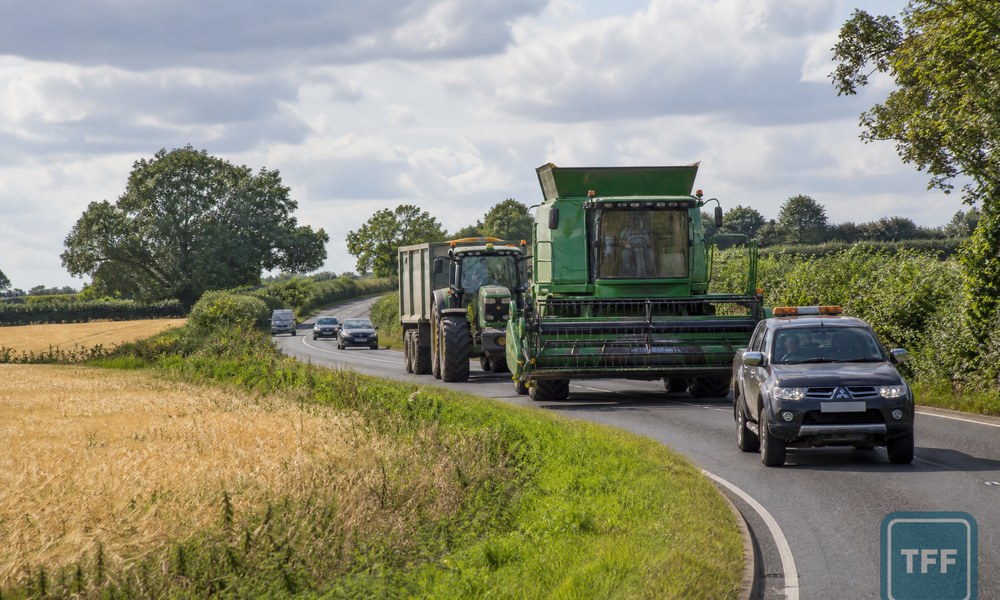
When Harvest Halts the Road
By TFF News, 16 August 2026, Farming
Five Whys and How
1. Why did traffic build up? Because long convoys of combines, tractors and trailers occupied the carriageway during harvest.
2. Why does that annoy the public? Because narrow rural roads force long delays and make overtaking risky.
3. Why are escorts used? To warn oncoming drivers and manage blind corners.
4. Why do escorts sometimes cause problems? They can create a solid barrier that discourages safe overtaking and fosters frustration.
5. Why does behaviour matter? Impatience and ill-judged manoeuvres increase crash risk.
How to respond: Plan movements, use sensible convoy spacing, communicate with local authorities and remind drivers to pull over where safe.
This Conversation matters because it exposes a recurring safety and public relations problem for farming communities. Large machinery is essential during harvest but it competes with everyday road users on narrow routes. The debate shows no single villain: escorts, convoy size, impatient motorists and cyclists all play a part. Better practice would reduce danger, ease tensions with local residents and preserve farm access during peak seasons.
What happened on the A17
Bob lincs described filtering past a seven-vehicle convoy that left no room for overtaking. That single Contribution sparked a broader farmer Conversation about convoy management, escorts and driver behaviour.
Convoy logic and safety
Farmers explained why machines travel together at harvest: scheduling, efficiency and the need to move headers and units between fields. Several contributors insisted tight formations prevent other drivers getting stranded between slow-moving machines and a towing vehicle. Others challenged that logic, arguing too many long vehicles in a row create hazards of their own. “You don’t want a load of overtaking vehicles muddled between your escort and convoy,” one farmer observed, while another noted escort vehicles can sometimes look like an unnecessary obstacle.
Law, etiquette and local context
Contributions referenced legality of queue jumping and the need for patience. A repeated point was that public patience varies by area; tourist routes and tourist seasons make tolerance harder to find. Farmers in tourist hotspots reported drivers who follow tractors too closely or attempt unsafe passes on corners. Several contributors suggested clear local guidance and signage would help.
Generational split and vehicle pride
The Conversation touched on attitudes to driving and vehicle choice. Younger contributors admitted to occasional cockiness, while older contributors warned that machine sizes now demand more caution. Comments about V8s, Range Rovers and BMWs provided lighter asides, but the underlying theme is practical: drivers must match their behaviour to conditions.
Cyclists, e-bikes and other rural friction points
Contributors complained about e-bikes and groups of cyclists who travel three abreast on narrow lanes, increasing frustration and delay. These issues compound harvest congestion and underline a wider problem of sharing limited road space.
Practical fixes offered by farmers
Suggestions were pragmatic: pull over where safe, stagger convoy spacing, use local radio or social channels to warn of large movements, and review whether an escort is necessary on every run. Training and clearer guidance for young drivers and contractors were also recommended.
The Conversation shows farmers are alive to the problem: harvest movement is a necessary inconvenience that can be managed better. Practical measures, clearer local guidance and a dose of patience from everyone on the road will reduce risk and public irritation. Farmers and local authorities should treat convoy planning as part of harvest logistics rather than an afterthought.
Read the full conversation on The Farming Forum here.
This conversation had been viewed 12,831 times on The Farming Forum when counted on 1 October 2026. Want your brand in the room when farmers are talking? Book advertising with Agri Web Media.