
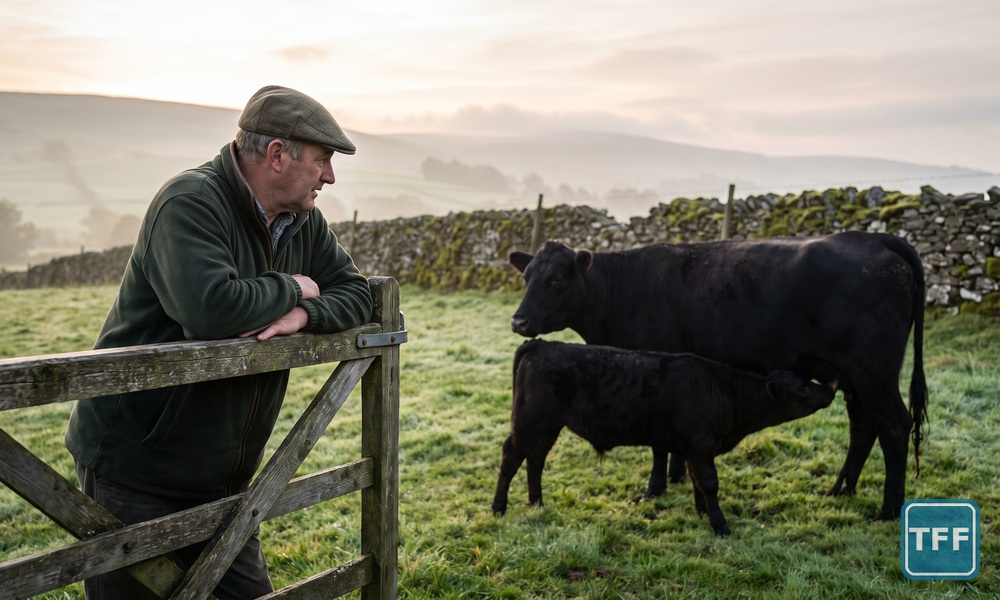
A beef farmer halfway through calving 80 cows without touching one asked The Farming Forum whether easy calving is now the whole job, or whether some herds still accept pulled calves as the price of a better sale pen. The answer was close to unanimous, and the argument moved somewhere more valuable for the trade: pelvic measurement, gestation length, myostatin genes and whether anyone trusts the figures bulls are sold on.
By TFF News | 10 October 2026 | Livestock
The conversation ran from 2 May to 4 June 2026 and drew 227 visible contributions, 7,839 views and 460 reactions, an average of 2.03 reactions per contribution. The figures describe this one self-selected conversation; they are not a representative survey of the beef sector.
A small live calf beats a big dead one
The opener set the tone: “Half way though my 80 this year and haven’t touched a calf except to tag.” His policy: “I won’t keep a heifer off a cow that’s ever been assisted and if a cow had more than one hard calving she’s down the road.” The most agreed-with contribution put the ambition plainly: “I prefer to find newborns with a full belly difficult to catch to tag.”
The economics were stated just as flatly. “Money in sucklers is numbers of calves on the ground.” The opener’s version: “a wee living calf is worth a lot more than a big dead one”. The main dissent was a reminder that the trait is not free: “It’s a balancing act, but actual difficult calvings are a drain on overall profitability.”
What a hard calving now costs
Caesarean prices were reported at anything from £300 last year to “£800+, seems a lot” now, against cows one contributor valued at £2,000. Behind the caution is the 2026 beef price: prime cattle averaged 592p per kg deadweight in mid June even after a 30p fall through May, by Farmers Weekly’s market report. Feeding got equal billing with breeding: “hay seems to have the cows sneeze out a calf, silage is the jack or section”, from a farmer who traced his trouble to winter rations. Veterinary evidence agrees: assisted calves are around five times more likely to die in early life, and the usual targets are fewer than 5% of cows and 15% of heifers assisted, according to a farm vet writing in Farmers Weekly.
The genetics balancing act
The most technical strand asked whether chasing the trait too hard breeds a new problem: “Put easy calving bulls on them and retain heifers then you get a line of ever decreasing circles – literally.” Several herds measure rather than guess, pelvic scoring replacements at a year old: “I divide height by width to get an ‘ovalness factor’. Cull out the smallest pelvis and most oval every year ie try and remove the extremes.”
Gestation length divided the room. The opener explained why his top 1% easy calving Angus bull was a mixed blessing: “The foetus puts on around 1kg a day in late pregnancy so a calf born 10 days faster would be around 10kg lighter and pop out easier.” An Irish contributor countered with a 293-day herd average and calves born unassisted outside: “So a long gestation doesn’t automatically mean harder calvings!” The same contributor had looked up two of the most used Belgian Blue AI sires in Ireland and found calving difficulty figures of 13.5% on cows and over 20% on heifers beside their high weanling values. Another farmer offered the simplest fix of the month: “I’ve had a lot less aggro since stopping using negative gestation length ebv bulls.”
The double muscling gene drew the hardest line, with a pedigree breeder arguing the Simmental and the other maternal breed societies should refuse to register carriers of myostatin variants that damage maternal ability. A South Devon breeder described losing cows and calves for three springs running to the daughters of one double muscled bull, and a Sussex herd put it in proportion: “49% down to genetics and 51% down to feeding in our Sussex cows.”
The 81% row
The sharpest exchange started with a benchmarking figure: “I’m still reeling from the knowledge that the SAC beef herd benchmarking data states the average calves reared per 100 cows is only 81%” The number was contested on the spot: it counts empty cows, infertile bulls, pneumonia losses and culling policy, not just calving deaths. A Galloway breeder on poor peat was honest about his own: “Head above the parapet….I’d jump for joy if I was weaning much more than 80%” The published benchmark sits between the two camps: SAC Consulting’s survey for Quality Meat Scotland’s Cattle and Sheep Enterprise Profitability in Scotland report put average calves reared per 100 cows at 88 to 91 across Scottish suckler herd types for the 2020 calf crop. The 81% cited in the conversation could not be verified against a published SAC figure and is reported here as one contributor’s account of benchmarking data.
Who trusts the catalogue?
Beneath the numbers ran a trust problem for the bull trade. One contributor claimed breeders manipulate the records behind EBVs; others demanded names and got none: “Without names and proof it’s just conspiracy theory”, one replied, and a pedigree breeder walked through why a herd gaming its figures mostly makes its other calves look worse. The allegations stayed allegations, and this article does not repeat the specific claims. What the trade should notice is where buyers landed: “Really…just buy bulls from people you trust, with similar goals, and nice looking cows.” Reputation, not paperwork, was carrying the sale.
The show ring question
The conversation kept circling back to heavily fed, extreme-shaped sale and show cattle, including an £18,000 in-calf heifer at a high-profile sale that several contributors admired as marketing while doubting as breeding stock: “You get heifers winning that I wouldn’t put near a bull because I doubt they’d be able to calve naturally.” One who had tried the type went further: “sale day is impressive but I question the ethics of keeping these sorts and what it takes to get them on the ground.” Even here the room was split, with others crediting the presentation and prices and noting that herds buying such cattle do calve them. A breed society representative used the conversation to invite buyers to its Beef Expo stand: easy calving is now a selling proposition in its own right.
The question the trade is left with
The opener himself closed the loop with a dead 70kg calf from an old cow that had never needed help: “So it can still happen even if you are going for easy calving like me.” The last word stripped the subject to its frame: “Is cattle production really that complicated? Turn forage into a saleable product.” The open question for breed societies, recorders and bull sellers is who closes the gap the conversation exposed: farmers selecting ever harder for easy calving while trusting the published figures less, and a sale ring still rewarding the very shapes they say they could not calve.
Read the source conversation and analysis
Read the full conversation on The Farming Forum here.
Download the nine-slide conversation analysis deck: Suckler farms put easy calving before big calves: conversation analysis (PDF).
This conversation had been viewed 7,839 times on The Farming Forum when counted on 10 October 2026. Want your brand in the room when farmers talk livestock? Book advertising with Agri Web Media.