Arable Section Weekly Summary
Date Range: 3rd August 2026 – 9th August 2026—
Executive Summary
This week’s discussions in the Arable section of The Farming Forum have been dominated by reflections on the 2026 harvest, with growers sharing diverse experiences ranging from unexpectedly low yields to pockets of outstanding performance. Weather patterns and their uneven distribution played a key role in crop outcomes, alongside disease and quality issues particularly in spring barley. A cautious optimism permeated many conversations, tempered by practical concerns over grain storage and market uncertainties. Other prominent themes included technical agronomy topics such as row spacing, precision soil sampling costs, and best practices for oilseed rape establishment. Additionally, grain quality and malting barley supply have emerged as focal points in market-related discussions.—
Conversations at a Glance
| Conversation Name | Contributions | Key Topics |
|---|---|---|
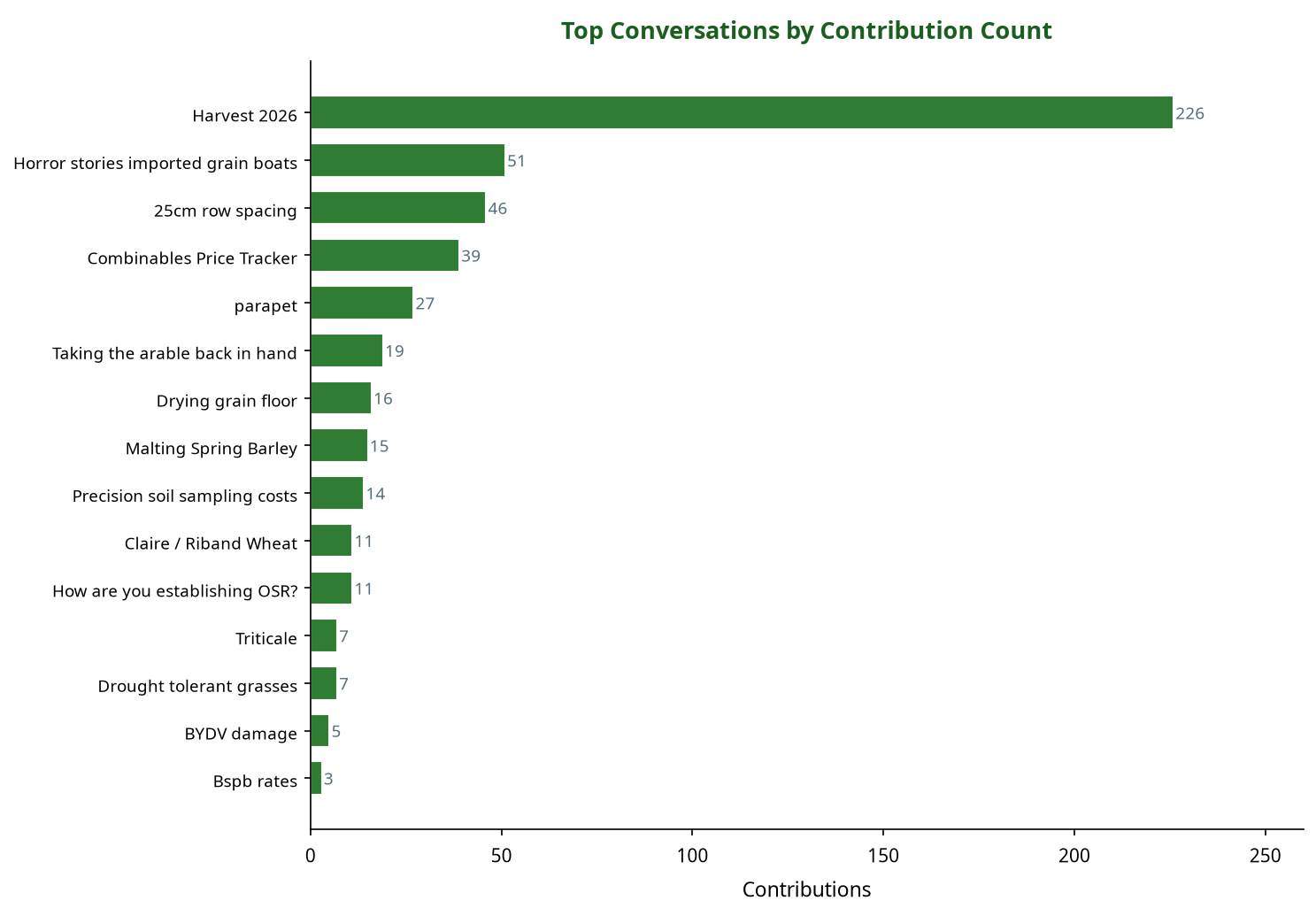
| Harvest 2026 | 226 | Crop yields, weather impact, harvest timing, storage capacity, quality issues |
| Horror stories imported grain boats | 51 | Grain quality concerns, contamination risks, import practices |
| 25cm row spacing | 46 | Agronomic trial results, yield potential, seed drilling techniques |
| Combinables Price Tracker | 39 | Grain market prices, malting barley supply, feed versus milling quality |
| parapet | 27 | (Topic not fully clear) Infrastructure and management strategies |
| Taking the arable back in hand | 19 | Farm management, crop rotation, labour and contractor use |
| Drying grain floor | 16 | Grain drying techniques, moisture management |
| Malting Spring Barley | 15 | Quality standards, supply outlook, pricing |
| Precision soil sampling costs | 14 | Soil analysis costs, value for money, technology use |
| Claire / Riband Wheat | 11 | Variety performance |
| How are you establishing OSR? | 11 | Oilseed rape establishment methods |
| Others | < 10 | Various agronomic and disease management topics |
In-Depth Coverage of Key Conversations
Harvest 2026
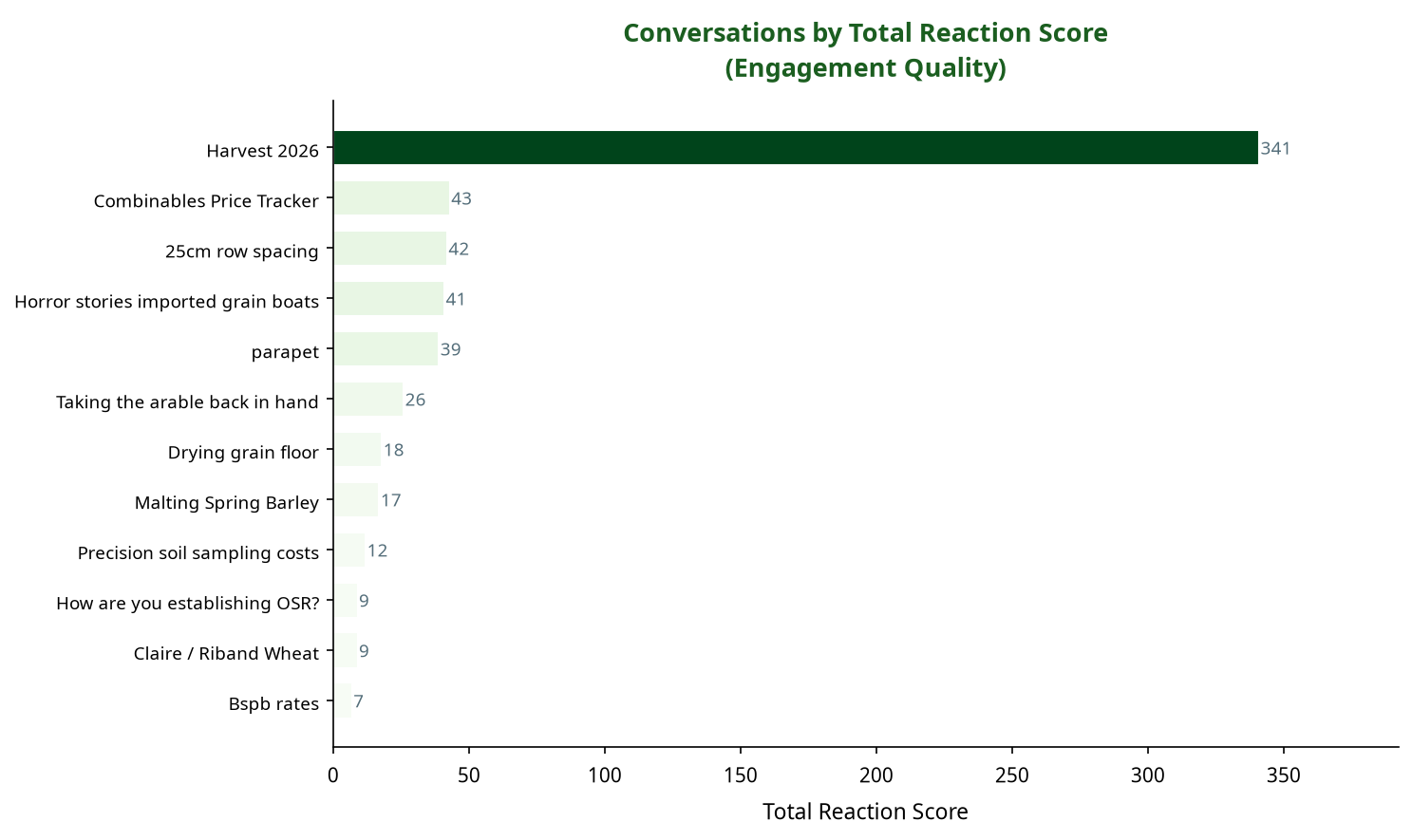
The most active conversation this week with 226 contributions, the Harvest 2026 discussion offered a comprehensive snapshot of this year’s arable outcomes across diverse farm types and regions. Members reported winter wheat yields averaging 9.3 t/ha with reported ranges between 7.2 t/ha to an exceptional 12 t/ha on some sites, highlighting significant variability.In contrast, spring barley generally disappointed with many contributors citing yields between 3.5 to 7.4 t/ha, often limited by premature ear death and incomplete grain fill attributed to the June heatwave and erratic rainfall distribution. Some described the spring crops as “awful” and “dreadful,” with concerns over chaffy samples and grain quality affecting marketability.
Despite these challenges, positivity was evident, with several contributors acknowledging relief after recent poor seasons impacted by flooding (2023/24) and drought (2025). Early finishing of harvest was noted, particularly for wheat, easing workload pressures. However, storage concerns surfaced due to reluctance or inability to sell immediately, leading to full cereal sheds.
Weather was a dominant theme, with members agreeing that while total rainfall from April to June was not exceptionally low (47mm), its erratic distribution combined with higher temperatures stressed crops. Some discussion touched on the contrast between “average” rainfall amounts and extreme seasonal variability, reinforcing the ongoing challenges of climate change.
Contractor availability and labour shortages featured repeatedly as operational constraints, with some farms opting to outsource spraying, fertilising, and harvesting to reduce stress. Machinery choices also came under discussion, including recommendations for investing in versatile drills like the Horsch Avatar for efficiency.
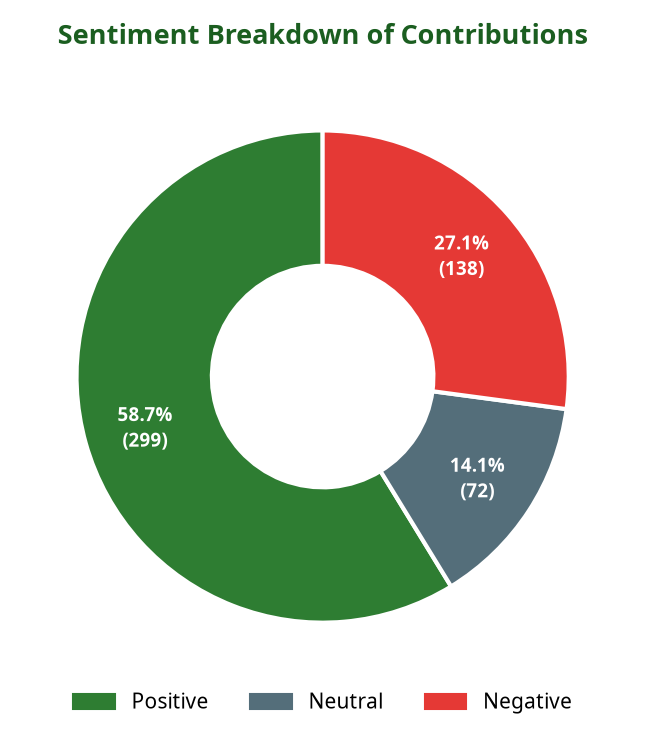
The overall sentiment captures a mixed harvest for 2026 – a notable improvement from recent disasters but tempered by ongoing climatic and operational pressures.
Grain Quality and Market Dynamics
- In the Combinables Price Tracker (39 contributions) and associated Malting Spring Barley conversations, members analyzed how quality issues in spring barley could tighten supply and push prices higher. Several contributors expect malting barley stocks to diminish, making it potentially “dear” in coming months.
- Concerns about grain quality extended to the Horror stories imported grain boats conversation, where users shared apprehensions about risks posed by imported grain, including contamination and variable standards. This added complexity to the market outlook, especially for feed grain buyers.
- Discussions touched on bushel weights being below normal, and sometimes sample grains were described as “crispy,” “powdery,” or “hollow,” signaling incomplete filling and quality defects. These factors compounded challenges for processors, affecting feed or milling suitability.
Agronomic Practices and Innovations
- The 25cm row spacing conversation showcased experiences and debates over drilling setups, with members sharing results from trials and practical insights into how narrower row spacing may influence yield and crop performance.
- In Precision soil sampling costs, farmers candidly discussed the value and expense of soil mapping technologies, with mixed views on whether multiple scans over years deliver commensurate benefits relative to cost. Some labelled recent large expenditure on soil analysis as “a waste of money,” citing uncertainty on how it translated to improved nutrient or yield outcomes.
- Discussions in How are you establishing OSR? and Taking the arable back in hand underlined the continued importance of oilseed rape establishment techniques, labour availability, machinery choices, and rotational strategies as farmers seek to optimise returns in challenging conditions.
- The Drying grain floor thread emphasized practical tips on drying methods, given the quality issues encountered and the push to preserve grain integrity post-harvest.
Sustainability, Regenerative Agriculture, and Industry Sentiment
While not as dominant quantitatively, several contributions critically examined themes around sustainability and regenerative practices. Some members expressed scepticism or frustration over buzzwords like “regenerative,” “hubs,” and “roadmaps,” preferring pragmatic approaches such as crop rotation, direct drilling, and soil organic matter enhancement measured by real-world results rather than jargon. The rebirth of direct drilling was noted as an early stride in UK regenerative farming, highlighting cost savings and operator comfort.
—
Conclusion
The week’s activity on The Farming Forum’s Arable section reflects a farming community navigating through a challenging but not disastrous 2026 harvest season. Variable yields, quality inconsistencies, and logistical concerns dominated grower discourse, underscoring the enduring influence of climate volatility and economic pressures. Market watchers remain alert to supply reductions in key crops like malting barley amid quality concerns. Agronomic debates on planting techniques and precision agriculture signal a continued drive for innovation balanced with pragmatic cost-benefit analysis. Meanwhile, underlying conversations on sustainability evoke a careful balancing act between tradition, modern practice, and evolving environmental imperatives. Going forward, growers appear cautiously hopeful but rightly attentive to the unpredictable nature of arable farming.—
For detailed discussion and to participate, please visit the conversation threads linked above.