Weekly Business Section Summary
The Farming Forum | 4th May – 10th May 2026—
Executive Summary
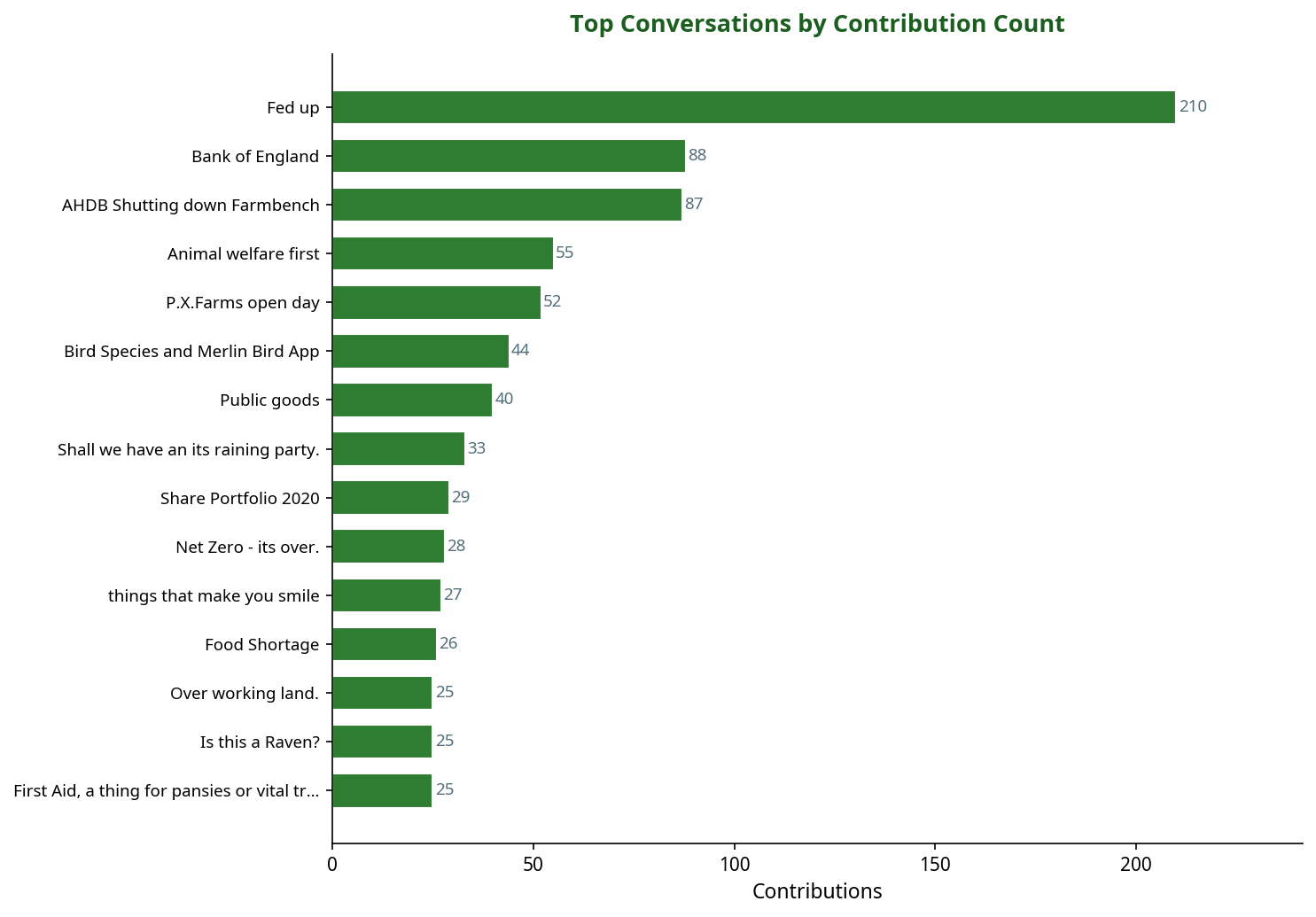
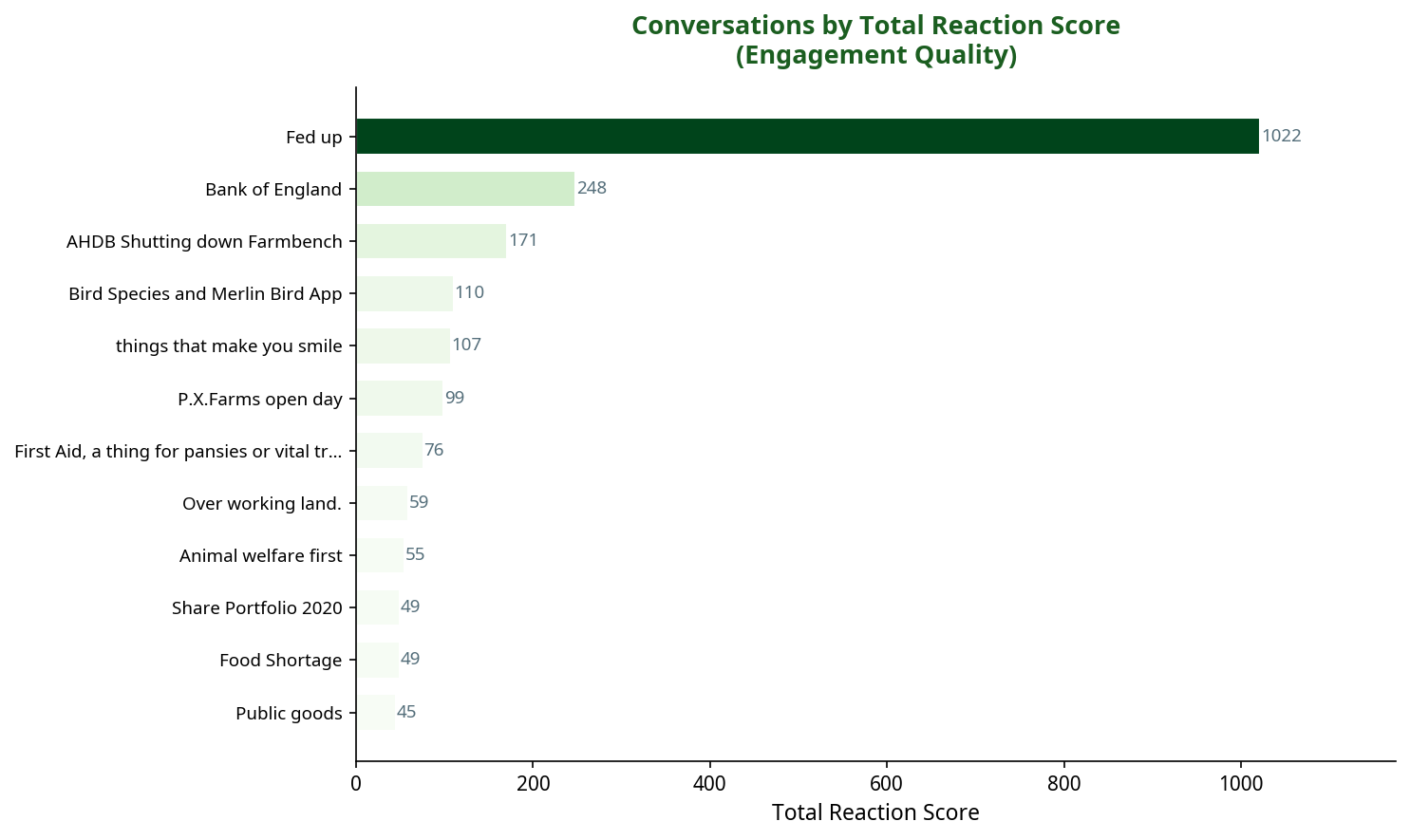
This week’s discussions in the Business section of The Farming Forum were dominated by economic concerns and sector-specific changes affecting UK agriculture. The highest engagement surfaced around the “Fed up” conversation, highlighting growing frustrations possibly linked to financial pressures or policy decisions. The Bank of England’s impact on farming economics also garnered significant attention, reflecting ongoing interest in monetary policy and credit availability. Notably, the AHDB’s announcement on shutting down Farmbench triggered widespread dialogue on industry data and benchmarking loss. Other prominent topics included animal welfare priorities, innovations like the P.X. Farms open day, and ecological interests such as bird species identification via apps. Conversations also touched on sustainability, climate skepticism, and emerging technologies, including the evolving role of electric vehicles and artificial intelligence in agriculture. Additionally, lighter, community-focused themes such as crop rotation tools, mental health, and first aid training remain active, indicating farmers’ holistic approach to business and wellbeing.—
Conversations at a Glance
| Conversation Name | Contribution Count | Key Topics Covered |
|---|---|---|
| Fed up | 210 | Frustrations with agriculture economics, policy, financial pressure |
| Bank of England | 88 | Interest rates, inflation impact on farming, finance availability |
| AHDB Shutting down Farmbench | 87 | Loss of benchmarking tools, future of farm data management |
| Animal welfare first | 55 | Ethical farming practices, livestock care standards |
| P.X. Farms open day | 52 | Farm innovations, community events, farmer networking |
| Bird Species and Merlin Bird App | 44 | Wildlife identification, environmental awareness |
| Public goods | 40 | Environmental schemes, government incentives |
| Shall we have an its raining party | 33 | Social events, community morale |
| Share Portfolio 2020 | 29 | Investment strategies, market trends |
| Net Zero – its over. | 28 | Climate change skepticism, debate on sustainability policies |
Detailed Review of Key Conversations by Theme
Economic and Financial Issues
#### Fed up The most active conversation, “Fed up,” with 210 contributions, revealed pervasive dissatisfaction among farmers. Contributors voiced concerns about increased input costs, supply chain disruptions, and government policies perceived as unsupportive of farming viability. The tone reflected anxiety over future profitability and sustainability, indicating heightened sector stress.
#### Bank of England With 88 contributions, this conversation revolved primarily around how interest rate adjustments influence farm borrowing costs, mortgage pressures on landowners, and inflationary impacts on operational expenses. Members debated the Bank’s monetary stance and its direct consequences on farm businesses, underscoring the importance of accessible finance in agriculture.
#### AHDB Shutting down Farmbench The AHDB’s decision to discontinue Farmbench evoked 87 contributions. Forum members lamented the loss of a reliable benchmarking tool vital for comparing farm performance and managing efficiency. Discussions included possible alternatives and calls for new data solutions to fill the impending gap, reflecting broad concern for data-driven decision-making support.
Ethics, Sustainability & Environmental Topics
#### Animal Welfare First With 55 contributions, this conversation highlighted shifting priorities toward higher welfare standards in livestock management. Farmers shared best practices and debated regulatory requirements, emphasizing ethical implications and market demands for welfare-friendly products.
#### Public Goods This discussion attracted 40 contributions focusing on environmental public goods payment schemes. Participants exchanged views on eligibility criteria, impact on profitability, and how these incentivize sustainable farming practices amid evolving policy frameworks.
#### Net Zero – its over. A smaller yet highly animated conversation with 28 contributions addressed skepticism around Net Zero commitments. Members debated the viability and ramifications of climate policies, reflecting a faction of the farming community questioning mainstream environmental narratives.
Innovation, Community & Practical Farming Tools
#### P.X. Farms Open Day This agricultural event, covered in a conversation of 52 contributions, provided a platform for sharing new technologies and networking. Attendees discussed insights gained, new equipment showcased, and community engagement benefits.
#### Bird Species and Merlin Bird App Contributions (44) here revealed farmers’ growing interest in wildlife conservation and the use of technology to identify species such as swallows, ravens, and rooks. These conversations underscored a connection between farming and biodiversity awareness.
#### Crop Rotation Planning Tool Although with fewer contributions (13), this conversation focused on utilising digital tools to optimize crop sequencing, improve soil health, and boost yields, highlighting tech adoption in agronomy.
Mental Health and Welfare
#### First Aid, a Thing for Pansies or Vital Training? With 25 contributions, this topic showcased diverging perspectives on the importance of first aid training on farms, highlighting a growing emphasis on personal and community safety.
#### Dealing with Depression – Suicidal Thoughts Though smaller (8 contributions), this sensitive conversation reflected ongoing efforts to address mental health challenges within the farming community, including sharing helpline resources and peer support.
—
Conclusion
This week’s Business discussions on The Farming Forum reveal a sector grappling with profound economic pressures and uncertainty alongside transformational challenges such as sustainability policies and technology adoption. The volume and variety of conversations illustrate a farming community actively engaged in navigating policy impacts, financial stress, and evolving market demands, while also valuing welfare, environmental stewardship, and communal support. As agriculture moves forward, the integration of innovative tools, open dialogue on mental health, and adaptation to regulatory changes will be critical for resilience and success in the coming years.—
Report prepared by [Your Name], Agricultural Business Journalist