Weekly Summary of the ‘Business’ Section on The Farming Forum
Date Range: 11 May 2026 – 17 May 2026—
Executive Summary
This week’s discussions in the Business section of The Farming Forum were dominated by key themes relating to land use and agriculture’s future, challenges within British industry, farm business operations, sustainability concerns, and legal/regulatory matters affecting agricultural machinery. The most engaged conversation queried whether large areas of farmland would be left fallow in 2027, highlighting widespread concerns about the evolving agricultural landscape under new policies and market pressures. Other significant topics included the financial struggles of British Steel, the implications of recent restructuring in farm businesses, and debates around animal welfare and net zero commitments. Several smaller yet noteworthy conversations examined related subjects such as legal advice for tractor and machinery use on public highways, innovative farming techniques, public goods, and community events like farm open days.—
Conversations at a Glance
| Conversation Name | Contribution Count | Key Topics Covered |
|---|---|---|
| Will there be large areas of land left fallow in 2027? | 168 | Land use changes, environmental impacts, policy effects on fallow land, wildlife considerations |
| British Steel Is Loosing £1.5 million a Day Why? | 86 | Financial challenges in steel industry, economic repercussions, possible solutions |
| P.X.Farms open day | 71 | Community engagement, farm innovations, networking opportunities |
| Ultra Processed Food | 66 | Food industry trends, health concerns, market demand |
| Vegetable info needed | 60 | Crop information, cultivation advice, pest control |
| Net Zero – its over. | 55 | Climate commitments, skepticism on net zero feasibility, policy critiques |
| Animal welfare first | 48 | Ethical farming practices, animal care standards, consumer expectations |
| Andrew Ward (wardy’s waffle) restructuring | 46 | Business restructuring implications, farm economics, leadership changes |
| Bank of England | 45 | Economic outlook, interest rates, agriculture financing |
| Best hand-wash | 30 | Hygiene practices, product recommendations |
| How much N produced by crimson clover | 29 | Nitrogen fixation, crop rotation benefits |
| Shall we have an its raining party. | 28 | Social gatherings, farm community morale |
| Police and courts are useless | 23 | Crime and justice concerns, law enforcement effectiveness |
| Best hammer for whacking bushes in | 20 | Tool recommendations, farm maintenance |
| Buffalo Farm Goes Bust | 18 | Farm closures, business risks |
| Lymes Disease Be Aware! | 16 | Disease awareness, worker health |
| Wheat and barley seed is changing | 14 | Seed technology, crop improvements |
| Electric Aga | 13 | Sustainable technology in farming households |
| Others (Below 13 contributions) | Various | Legal issues, advertising, livestock theft, first aid, environmental regulations, mental health |
Detailed Thematic Review
1. Land Use and Agricultural Policy
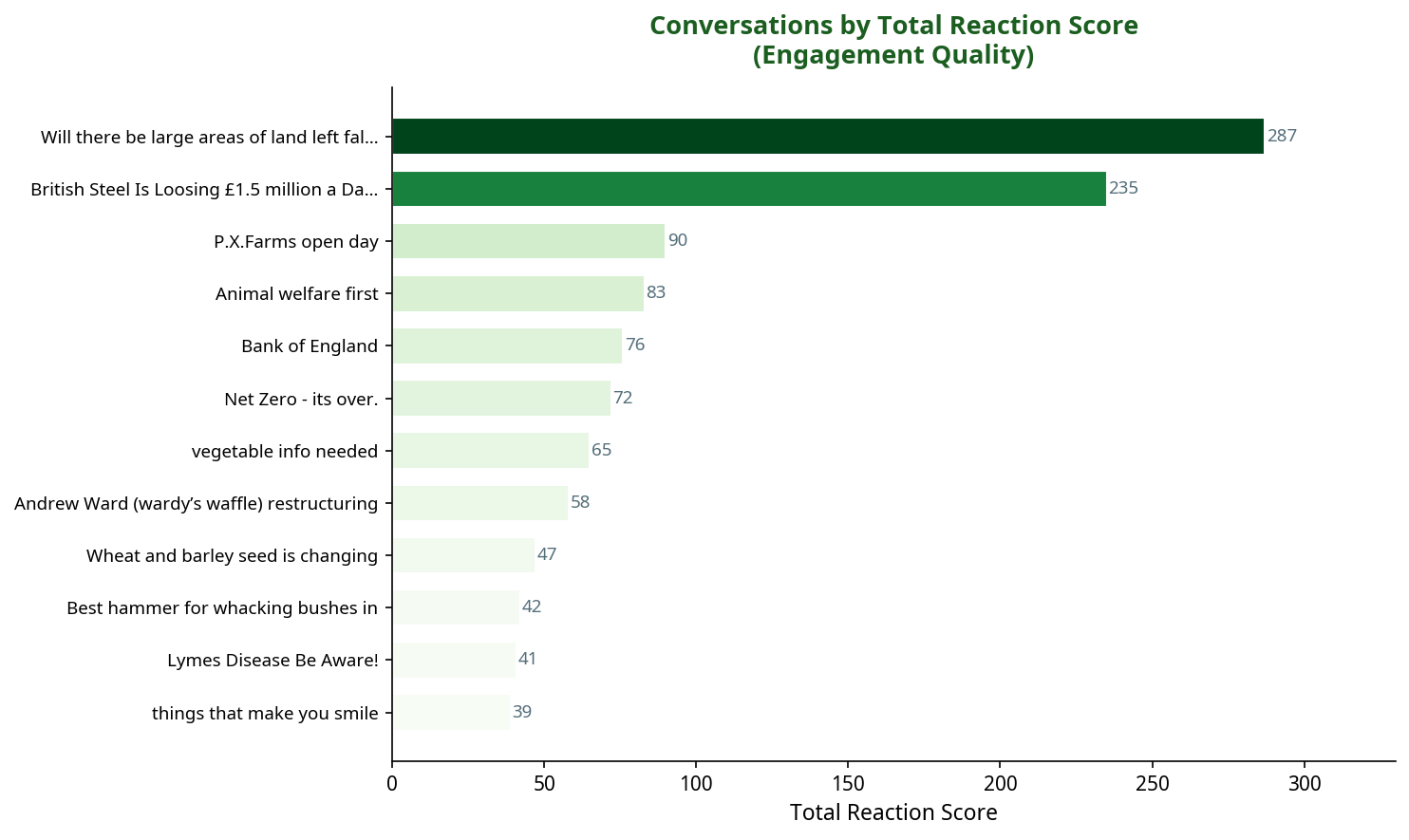
The leading conversation, “Will there be large areas of land left fallow in 2027?” attracted 168 contributions. Participants engaged in a robust debate about the likelihood and consequences of significant fallow land areas as a result of changes in subsidies, market pressures, and environmental policies such as the Sustainable Farming Incentive (SFI). Several contributions highlighted the impact on farmland wildlife, with contrasting views on whether fallow land benefits or harms bird populations. There was discussion on the need for innovation, including building reservoirs to improve water management, though some expressed frustration over lack of governmental support for such projects. The discourse revealed a tension between traditional farming practices and the call for rethinking farming’s future sustainability.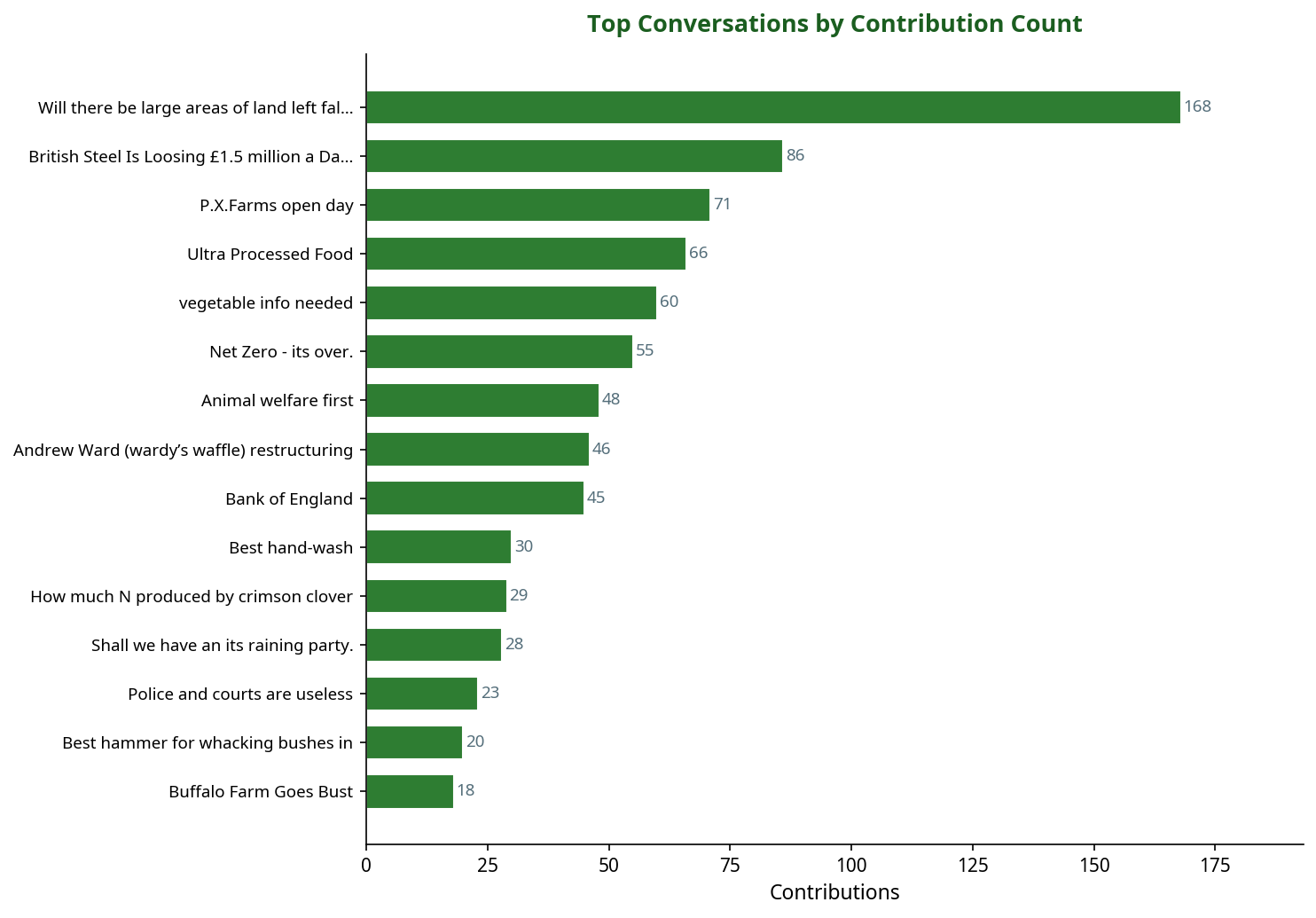
2. Industry Economics and Business Restructuring
The financial situation of British Steel, losing approximately £1.5 million daily, generated 86 contributions discussing the root causes and potential broader impacts on the rural economy. Contributors speculated on government intervention, market dynamics, and future prospects. Concurrently, the conversation around Andrew Ward (wardy’s waffle) restructuring (46 contributions) reflected the challenges farm businesses face in adapting to changing economic realities. This discourse examined leadership decisions, cost management, and strategic adaptation within the farming sector.3. Sustainability and Food Production
Debates over Net Zero commitments (55 contributions) showcased skepticism and critique, with contributors discussing the feasibility of achieving net zero and the economic impacts of related regulations. This linked closely to discussions on animal welfare (48 contributions), where ethical considerations intersected with sustainability goals. The conversation about Ultra Processed Food (66 contributions) provided insight into consumer trends and the growing demand for healthier alternatives, which has implications for producers and marketers.4. Community and Knowledge Exchange
The P.X.Farms open day (71 contributions) served as a platform for community engagement and knowledge sharing, highlighting innovative practices and fostering networking. Similarly, the vegetable info needed thread (60 contributions) reflected active peer-to-peer advice on cultivation and pest management. Smaller social conversations like “Shall we have an its raining party” helped enhance community spirit amidst ongoing challenges.5. Legal and Regulatory Concerns
Forums addressing legal compliance, such as “Recommend a legal firm specialising in agricultural tractors and machinery on the public highway” (10 contributions), provided valuable expert guidance. Contributors shared experience-based recommendations and highlighted the complexity of transport laws impacting agricultural machinery. Discussions related to Farm Business Survey Changes and VAT calculations revealed ongoing administrative and regulatory challenges faced by farmers.6. Health, Safety, and Miscellaneous Topics
Health-related conversations included awareness around Lyme’s Disease (16 contributions), emphasizing the risk to farm workers. Hygiene and safety tips appeared in discussions on the best hand-wash (30 contributions) and first aid importance (7 contributions). Other threads covered topics ranging from equipment recommendations to mental health support, illustrating the breadth of concerns within the farming community.—
Conclusion
The week’s conversations on The Farming Forum’s Business section underscored a farming community grappling with significant economic, environmental, and social shifts. Concerns about land use and policy-driven fallow land dominated engagement, reflecting anxieties about the future of agriculture under evolving subsidy schemes and environmental targets. At the same time, financial pressures in related industries, such as steel production, and the need for business adaptability were strongly debated. Sustainability and animal welfare continued to inspire active discussion, revealing a sector in transition. Community events and knowledge exchanges illustrated the importance of peer support amidst these challenges. Legal and regulatory complexities remain a critical area where members seek expert advice. Overall, the conversations paint a vivid picture of a dynamic agricultural business environment marked by uncertainty but also resilience and innovation.—