Weekly Dairy Sector Summary
Date Range: 3rd August – 9th August 2026—
Executive Summary
This week on The Farming Forum’s Dairy section, discussions were dominated by ongoing concerns surrounding milk prices, the impact of drought conditions on forage and maize crops, and market dynamics affecting cull cow and calf prices. The “Milk Price Tracker” remains the most active conversation, reflecting the sector’s sensitivity to pricing fluctuations amidst supply and demand shifts. The drought continues to cast a shadow over much of the UK, with members reporting brown pastures and urgent need for rain to sustain yields, particularly maize. Supply chain pressures, including increased culling and milk processor demands, also featured prominently. Additionally, issues related to breeding genetics and the use of alternative feeds such as brewers’ grains attracted niche but notable attention, reflecting efforts to adapt to current market and environmental pressures.—
Conversations at a Glance
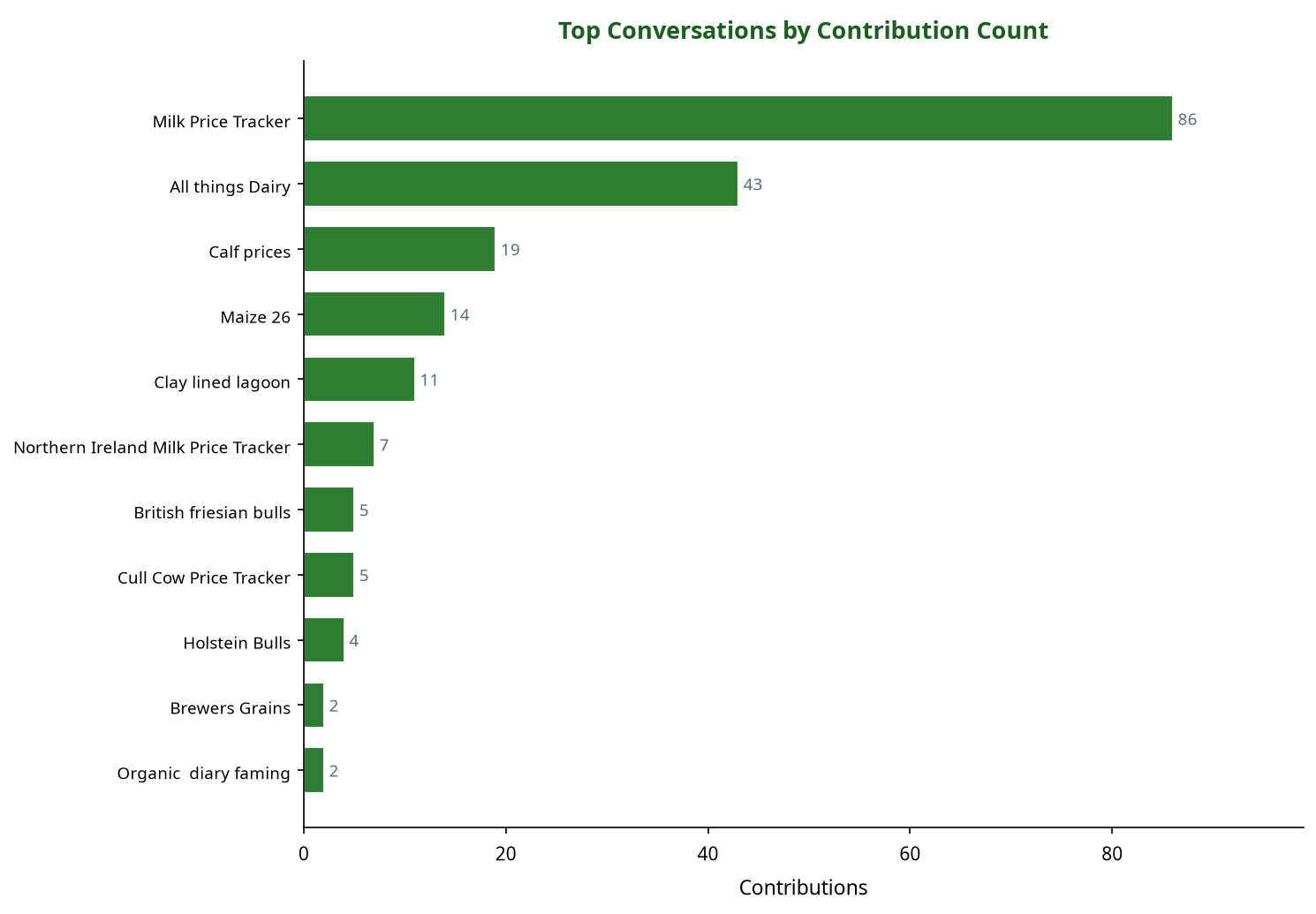
| Conversation Name | Contributions | Key Topics |
|---|---|---|
| Milk Price Tracker | 86 | Milk price fluctuations, supermarket contracts, global market influences, supply vs demand |
| All Things Dairy | 43 | Drought impacts, forage concerns, maize condition, culling rates, feed alternatives |
| Calf Prices | 19 | Demand and price variations, calf trading dynamics |
| Maize 26 | 14 | Maize crop performance, irrigation needs, drought stress |
| Clay Lined Lagoon | 11 | Manure management techniques and lagoon maintenance |
| Northern Ireland Milk Price Tracker | 7 | Regional milk price variations |
| Cull Cow Price Tracker | 5 | Cull cow price trends and volume changes |
| British Friesian Bulls | 5 | Breeding discussions around Friesian bulls |
| Holstein Bulls | 4 | Genetic improvements and availability |
| Brewers Grains | 2 | Use and sourcing of brewers’ grains as cattle feed |
| Organic Dairy Farming | 2 | Organic practices and challenges |
Detailed Conversation Analysis
#### Milk Price and Market Dynamics The Milk Price Tracker conversation was the most heavily contributed to, reflecting the central importance of milk pricing within the industry. Members debated recent fluctuations, including a notable 10p/kg drop in Pickstock milk prices. Uncertainty surrounds whether the decrease stems from seasonal factors such as summer holidays or broader effects like the drought and increased culling. Discussions also tackled the role of supermarket contracts, known as Contracts for Difference (CoP), with varied opinions on whether these safeguard farm incomes or distort market mechanisms. Several contributions emphasized the complexity of pricing formulas increasingly tied to cream content versus liquid milk volumes. Broad consensus exists that while supermarket CoP contracts provide supply security, their pricing mechanisms prompt ongoing debate regarding fairness and true cost coverage.
—
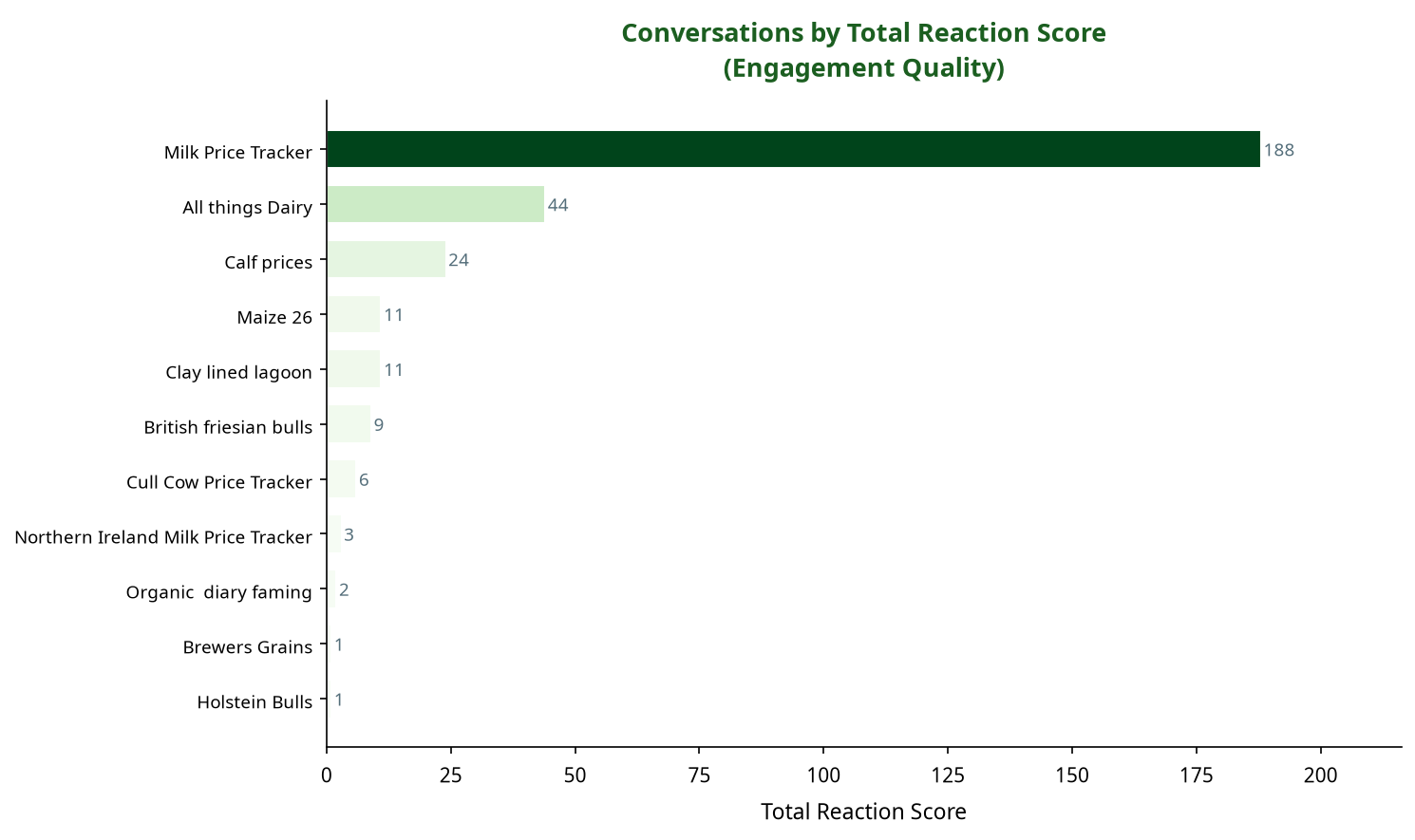
#### Drought and Forage Challenges A significant cluster of conversations under “All Things Dairy” and “Maize 26” centred on the persistent drought conditions impacting feed availability and crop health across multiple UK regions including the Midlands, South, and North Powys. Contributors shared observations of brown, dry pastures and stressed maize crops needing urgent rainfall. Some reported slight relief following brief showers, but concern remains over the long-term forage stock for the impending winter. The drought has accelerated culling in parts, evidenced by increased articulate loads recorded by local collection centres, possibly influencing cull cow prices and calf market dynamics. Members also sought advice and shared strategies for extending forage supplies, including integrating alternative feeds and adjusting cut schedules.
—
#### Calf and Cull Cow Market Movements Calf Prices and Cull Cow Price Tracker conversations reflected shifts linked to broader dairy herd management adaptations under current climatic and market conditions. Elevated culling numbers, partly driven by feed shortages, generate increased supply of cull cows and calves. This supply increase appears to have a cooling effect on prices, though regional variations persist. Contributors exchanged intel on local collection centre booking volumes and pricing trends, interpreting these data as indicative of herd management responses to both environmental stress and market signals.
—
#### Breeding and Alternative Feed Strategies Smaller yet noteworthy discussions included the use of specific genetics, particularly British Friesian and Holstein bulls, with farmers sharing experiences about progeny performance and suitability under current farm conditions. Interest in advancing dairy herd genetics to improve efficiency and adaptability is evident. Another thread discussed the consistent albeit limited use of brewers’ grains sourced from local microbreweries as a supplementary feed, highlighting both benefits (nutritional value, seasonal variability) and challenges such as inconsistency in availability. These conversations underscore ongoing efforts to optimize herd nutrition amidst fluctuating forage supplies.
—
#### Clay Lined Lagoons and Waste Management Several contributions addressed manure management, focusing on the design and upkeep of clay-lined lagoons. Discussions revolved around best practices for lagoon use in waste containment and environmental compliance, though contributions were fewer relative to pricing and feed topics. This reflects a steady but less time-sensitive interest in sustainable waste handling in dairy operations.
—
Conclusion
This week’s Dairy forum activity underscores the intertwined nature of environmental stressors and market conditions shaping the UK’s dairy industry. Milk pricing remains a vital and contested issue with members expressing concerns over market fairness and contract frameworks. The drought’s footprint is clear and widespread, fueling anxieties around forage availability and herd management choices, including increased culling. Meanwhile, adaptive strategies in breeding and feed innovations demonstrate proactive efforts by farmers to mitigate some challenges. Overall, the community continues to engage in robust and varied discussions reflecting real-time sector pressures and the search for resilient solutions.—