
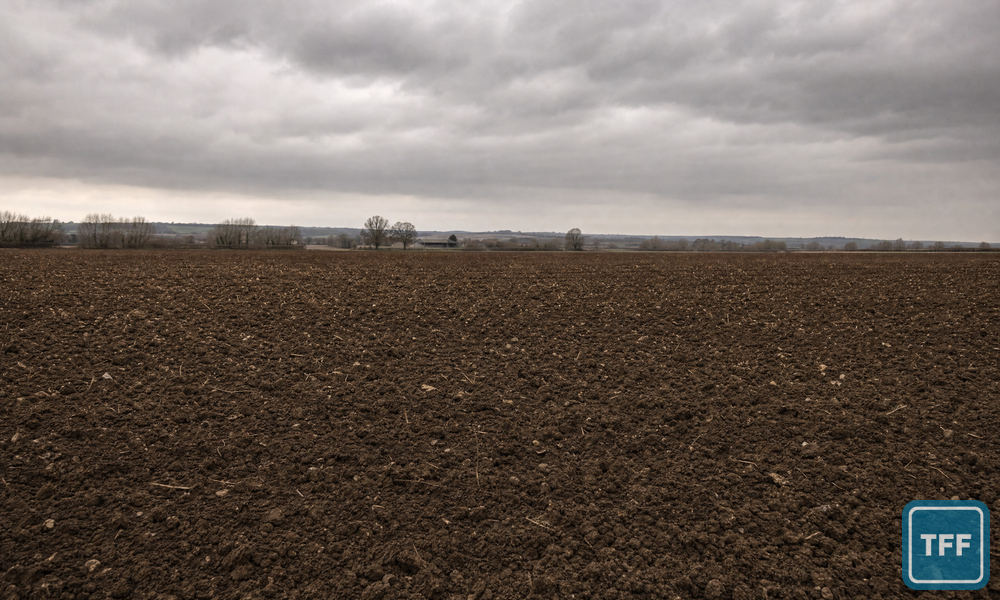
UK arable farmers are confronting a stark financial reality: with wheat production costs running neck-and-neck with market prices, a growing number are questioning whether it makes any economic sense to drill combinable crops at all in 2027.
A conversation on The Farming Forum, which has been drawing over 1,000 views a day since it opened on 16 May, has laid out the numbers in unvarnished terms. With 234 contributions from 45 farmers across the country, it represents one of the most substantive farmer-led discussions of the current arable crisis — and the picture it paints is serious.
The Numbers That Don’t Add Up
The opening contribution set the context directly. Across the farming press and media, the message is consistent: there is no profit in growing some combinable crops in certain parts of the UK in 2027, and possibly beyond. The question being asked is not rhetorical — it is a genuine business calculation.
Benchmark production costs for wheat are currently cited at £165–170 per tonne, according to contributors referencing the Dewing Grain podcast and their own farm accounts. Market prices are hovering in the same range. On thin-soiled ground — brash, chalk, or light land — where yields of 7 tonnes per hectare represent a good year, the arithmetic is unforgiving. One contributor described the situation plainly: “Unless everything works perfectly — which it doesn’t — you’ll run out of cash before the crop pays.”
Several farmers in the conversation acknowledged they had not drawn a wage from their businesses in recent years. This is not a fringe view. It is the lived experience of a significant number of arable operations across the country.
Rolling the Dice
The phrase “rolling the dice” appeared repeatedly in the conversation, and it captures the mood accurately. Farming has always involved risk, but contributors drew a clear distinction between manageable risk and the current situation, where the downside of a poor year is not a reduced margin but a genuine cash crisis.
“If you can still afford to roll the dice and drill another crop, then you aren’t doing too badly and don’t really know what a serious loss is,” wrote DrWazzock, whose contribution attracted 12 reactions. The point was not lost on others. When you have staff to pay, rent to meet, finance commitments, and multi-year contracts to honour, the decision to drill is not simply about crop economics — it is about keeping the whole business alive.
The debate over whether to continue growing loss-making crops was one of the sharpest in the conversation. Some argued that even a crop that loses money on a standalone basis still contributes to fixed costs and overheads that would exist regardless. Others rejected this logic entirely: “I’ve never understood the logic that growing a loss-making crop somehow helps. In fact my overheads are reduced if I don’t grow a crop.”
Land Sales and Structural Change
Beyond the immediate crop economics, the conversation pointed to a deeper structural shift already under way. Multiple contributors reported significant land sales, machinery auctions, and dealer network stress, particularly in Lincolnshire. “Big areas of land on the market or already changed hands, many large farm equipment sales, and if you listen to the trade, a lot less business taking place and dealers struggling,” wrote one contributor. Several dealers were reported to be receiving manufacturer support.
The suggestion that many of the sellers are farmers over 60 whose children have no interest in taking on the business prompted a sharp response from a contributor who was 61 and emphatically not ready to be categorised as part of the exit wave. The exchange highlighted the complexity of farm succession decisions and the danger of over-generalising about who is selling and why.
The Rotation Question
As the conversation progressed through the week, the tone shifted from diagnosis to pragmatism. Farmers began discussing what alternatives to a wheat-heavy rotation might look like: spring barley, winter beans, spring oats, grass leys, stubble turnips, and westerwolds. The logic was straightforward — if wheat is the most expensive and highest-risk crop in the rotation, why default to maximising it?
“A lot seem to default to maximising wheat like it’s some guarantee of maximising profit, when in reality it’s expensive and high risk in some situations,” wrote Spud, the most-reacted contributor in the conversation with 99 total reactions across his 34 contributions. The alternative rotations he outlined — barley, stubble turnips, oats undersown with grass, two years of grass, barley, beans — represent a significant departure from the conventional arable model, but one that several contributors found compelling.
The discussion of inputs was equally pragmatic. Pulling back on inputs to cut costs can be counter-productive if it reduces yields to the point where fixed costs per tonne rise. Lime, potash, sulphur, and organic matter were all cited as areas where false economies can cost more than they save.
A Conversation That Reflects the Sector
The sentiment data from this conversation tells its own story. The opening day — 16 May — registered a near-neutral average sentiment score, reflecting the uncertainty of the initial question. By 17 May, when the bulk of the contributions arrived (138 in a single day), sentiment had risen as the conversation became engaged and analytical. By the final days of the week, sentiment had climbed further as the conversation moved from concern to practical problem-solving.
This is a community that takes its challenges seriously and works through them in public. The fact that this conversation has been drawing over 1,000 views a day — from farmers, agronomists, traders, and others across the industry — is itself a measure of how widely the underlying question resonates.
Whether large areas of UK farmland will be left undrilled in 2027 remains to be seen. What is clear from this conversation is that the farmers making that decision are doing so with clear eyes, hard numbers, and no illusions about the difficulty of what lies ahead.
You can read the full conversation on The Farming Forum here.
You can view a slide deck for the conversation by clicking here.
This conversation had been viewed 11,633 times on The Farming Forum when counted on 1 October 2026. Want your brand in the room when farmers are talking? Book advertising with Agri Web Media.