Weekly Summary of the SFI Section on The Farming Forum
Date Range: 18 May 2026 – 24 May 2026—
Executive Summary
This week’s discussions in the SFI section were dominated by in-depth debates on the viability and practicalities of solar PV installations for farms, alongside significant discourse on legume fallow practices and the implications of new SFI26 regulations. Contributors shared valuable insights on system efficiencies, grant opportunities, and grid export challenges regarding solar energy. Concurrently, organic and rotational farming practices, especially focusing on legume fallows and soil organic matter improvements, attracted thoughtful exchanges. Issues related to AHL1 (Agricultural Hydrology Level 1) sowing seasons, field parcel management within SFI agreements, and broader organic farming year-round challenges also featured prominently. Lesser yet notable discussions touched on energy infrastructure specifics such as meter types, battery storage strategies, and public goods cultivation under SFI provisions.—
Conversations at a Glance
| Conversation Name | Contribution Count | Key Topics Covered |
|---|---|---|
| Is solar PV still worth it? | 23 | Solar charging caps, battery integration, grid export limits, grant schemes, payback periods, metering costs and benefits |
| Num 3 Legume Fallow | 22 | Soil organic matter impact, legume fallow durations, grazing strategies, public goods provision |
| SFI26: details, definitions and what to expect | 15 | SFI26 scheme specifics, agreement parcel management, definitions of allowable exclusions |
| The humble year of an organic farmer | 7 | Seasonal organic crop management, weed control challenges, soil nutrient cycling |
| ahl1 | 7 | Spring sowing progress, frost impact, crop establishment, final year procedural notes |
| Parallel wiring of solar panels | 3 | Technical wiring configurations and safety considerations |
| SFI26 best options for gross profit | 3 | Profitability analysis of SFI options, cost-benefit discussions |
| part parcels | 3 | Parcel mapping, exclusions for livestock feeding areas within agreements |
| Galileo Energy Scotland | 1 | Limited discussion on provider contact and services |
| Wild camping | 1 | Minimal engagement, general user impressions |
Detailed Conversations
Solar PV: Viability, Technical Challenges, and Financial Incentives
The highly active conversation “Is solar PV still worth it?” saw 23 contributions focused on practical farm-scale applications of solar energy. Key contributors discussed real-life experiences with Bluetti battery systems directly connected to solar arrays, reporting stable performance and illustrating that proper battery sizing can circumvent typical solar charge rate caps.A major theme concerned the complexity and costs of exporting power to the grid. Discussions highlighted the need for appropriate metering—especially the pros and cons of installing half-hourly meters to access cheap nighttime tariffs and flexible export rates. While half-hourly meters offer detailed monitoring and potential tariff benefits, contributors cautioned against unnecessary metering expenses, particularly when operating under capacity limits (e.g., below 100 kVA). A recurring point was that metering charges could add around £350 annually, impacting overall economics.
Grant funding was another critical topic. Participants noted the existence but also the complexity and timing issues of schemes such as the £60k farm productivity grant, with some contributors expressing frustration over missed opportunities due to administrative hurdles. Discussions underscored a need for clearer incentives to enhance rooftop solar adoption, pointing out current export payments (6-8p/kWh) may not sufficiently encourage investment.
Lastly, durability and degradation of panels over time were debated. Experience from farmers with older systems indicated minimal degradation after long service, boosting confidence in solar PV’s long-term return on investment.
Legume Fallow Practices and Soil Organic Matter Management
The conversation “Num 3 Legume Fallow,” with 22 contributions, was centered on the impact of extended legume fallow periods on soil health, particularly soil organic matter (SOM). Contributors shared experiences spanning single-year to three-year legume fallows, often used as part of organic or low-input rotations to improve soil fertility and provide public goods under SFI.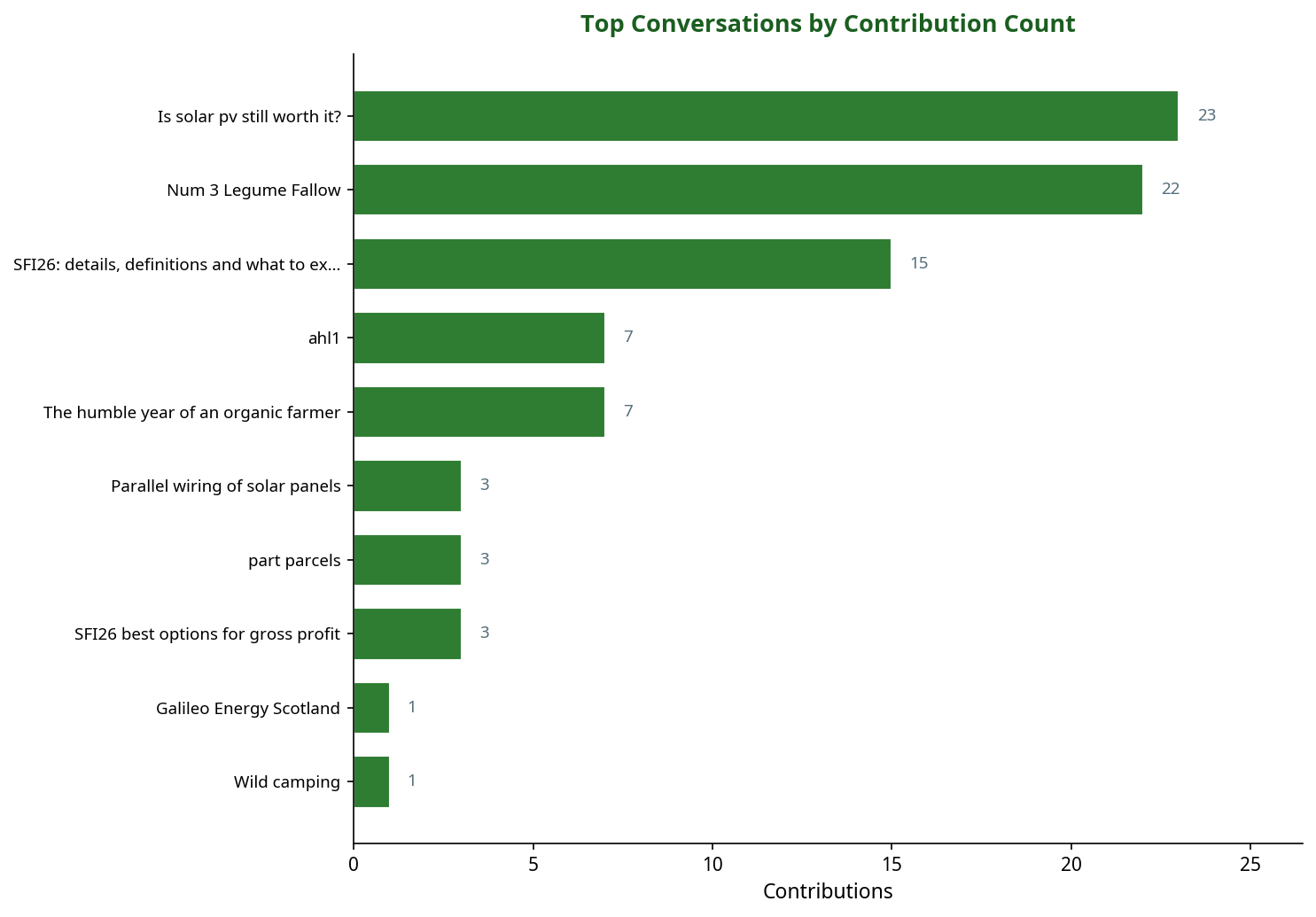
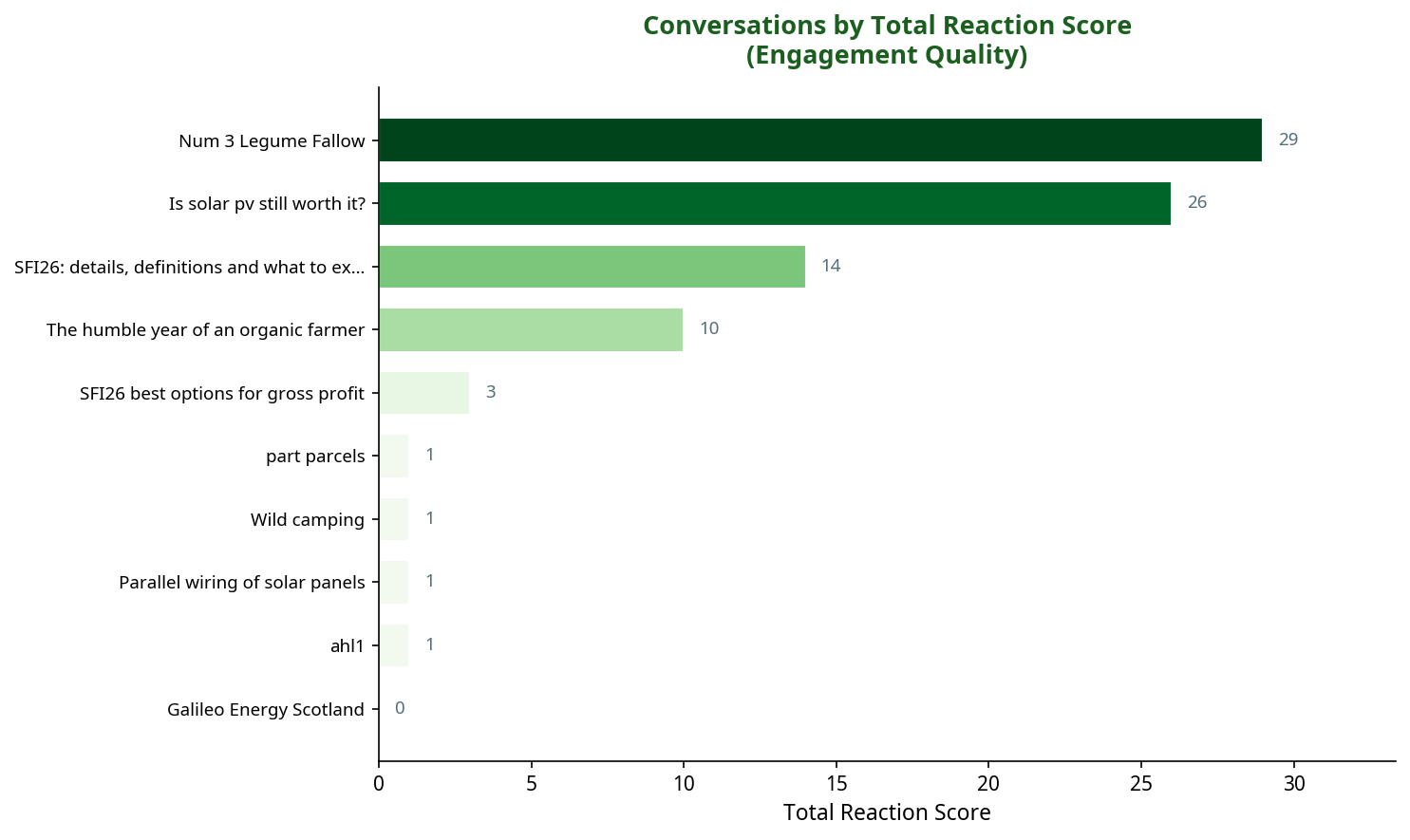
The consensus indicated that measurable improvements in SOM are challenging to detect within the short term. Some members noted negligible immediate soil organic matter gains from two- or three-year legume fallows, prompting consideration that any positive effects might require longer-term observation or alternative management methods. Grazing of legume fallow areas was also discussed to understand its influence on sward recovery and nutrient cycling.
Practical implementation advice included proper timing of cuttings to avoid premature seeding and management of dry conditions that could stunt sward growth. Some contributors reported on flowering milestones for crops like Sanfoin and Lucerne, which have ecological and soil health benefits. Overall, the dialogue provided valuable first-hand perspectives on balancing productivity and environmental stewardship in fallow management.
SFI26 Scheme: Understanding Details, Definitions, and Expectations
A significant conversation with 15 contributions addressed the upcoming SFI26 scheme. Participants explored the definitions and terms applicable, with particular focus on the mapping and management of parcels under SFI contracts.One specific point of discussion was handling exclusions within fields submitted for agreement—for example, when areas used for autumn stock feeding need to be left out. Clarifications established that partial parcel accounting (subtracting excluded areas from total parcel size) can be done without remapping unless the parcel is included under ‘whole parcel’ options.
The conversation also touched on consultancy and grid compatibility checks for export limits linked to SFI compliance, emphasizing administrative requirements and costs (e.g., scheme fees around £9k for certain export thresholds). Contributors debated financial optimization strategies, including oversizing solar systems and integrating batteries to maximize output while conforming to grid restrictions.
These insights provide essential guidance for farmers preparing applications and planning operational changes aligned with SFI26 parameters.
Organic Farming Year-round Challenges
Under “The humble year of an organic farmer,” contributors (7 contributions) shared candid accounts of managing organic crops across seasons. The conversation reflected on the critical window whereby crops successfully suppress weeds before the latter dominate, highlighting the delicate balance required in organic weed control without chemical supports.Crops such as spelt, organic oilseed rape, and winter wheat were mentioned, with attention given to soil nitrogen dynamics and cultivation methods like the use of disc drills and power harrows. Visual evidence shared by members underscored the aesthetic and functional aspects of organic rotations in practice, including challenges related to soil nutrient availability and weed pressure.
AHL1 Sowing and Seasonal Progress
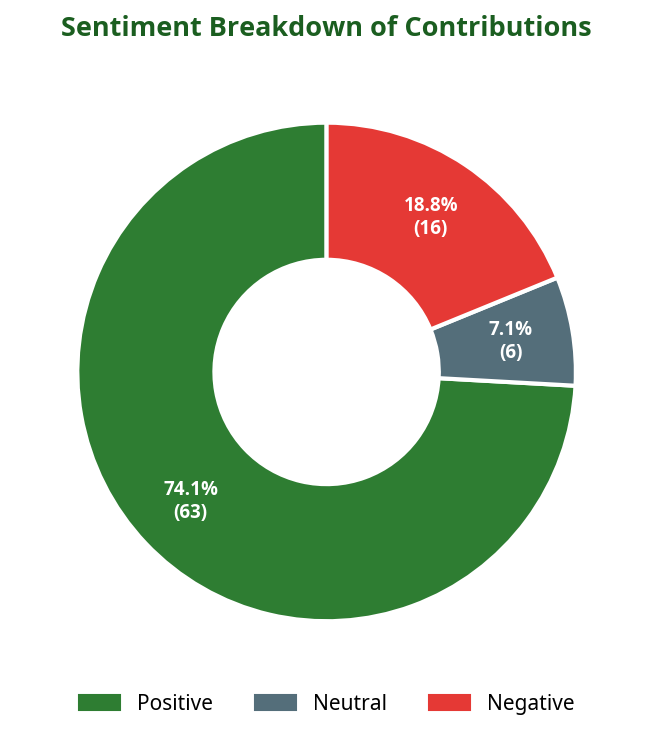
In a smaller yet relevant conversation, 7 contributions documented progress and experiences with AHL1 sowing during adverse seasonal conditions, such as frost presence and arid soil status. Participants recounted the timing of sowing operations, crop sparsity concerns, and the significance of this year’s sowing as the final cycle under the current scheme. Sentiments expressed ranged from cautious optimism about crop establishment to relief at the impending scheme conclusion.—
Conclusion
This week’s SFI discussions on The Farming Forum reflected a community actively engaged in navigating both cutting-edge energy solutions and traditional but evolving farming practices within the framework of evolving agricultural policies such as SFI26. Solar PV systems remain a focal point, with practical experiences and technical complexities well articulated, while legume fallow practices continue to ignite thoughtful debate on soil health outcomes. Parallel attention to scheme specifics and organic farming realities highlights the holistic approach farmers are adopting to meet regulatory, environmental, and economic challenges. These collective contributions offer valuable knowledge to all stakeholders aiming to optimize sustainable farming futures.—