
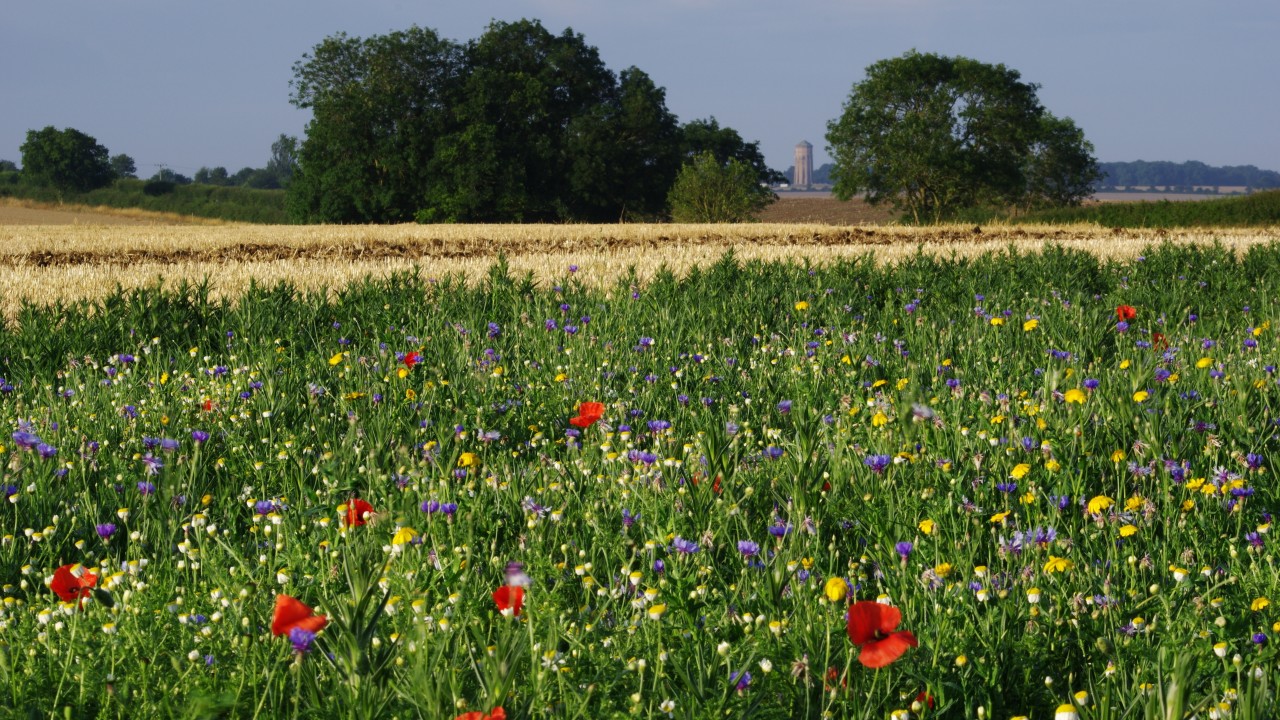
The Verdict from the Field: Nobody Wins
When DEFRA unveiled the reformed Sustainable Farming Incentive earlier this year, it promised a simpler, better-targeted scheme that would support food production alongside environmental delivery. Farmers on The Farming Forum had a different reading. Over seven weeks, 62 contributors generated 443 contributions to the conversation “Who are going to be winners with the new SFI?” a question that attracted more than 16,000 reads from the farming community and produced an answer that DEFRA’s communications team is unlikely to be quoting in its next press release.
The reformed SFI brings reduced payment rates on the most popular options, a £100,000 per-farm cap on total scheme income, and the removal of several actions that farmers had built into their business plans. The question of who benefits, and who loses, has dominated farmer discussion since the changes were announced.
Why It Matters
The SFI is England’s primary mechanism for replacing the Basic Payment Scheme, which is being phased out following the UK’s departure from the European Union. For thousands of farming businesses, particularly those on lower-grade or marginal land, SFI income has become a structural part of their financial model. Any reduction in payment rates or total accessible income is not an abstract policy adjustment, it is a direct hit to farm viability.
The conversation on The Farming Forum is significant not merely for its volume but for the quality of its contributors. These are experienced, commercially aware farmers who understand both the policy detail and its practical consequences. Their assessment carries weight.
The Cap?
No single issue generated more debate than the per-farm cap. Initial discussion prior to the annoucment thought it might be set as low as £40,000, but was in fact set at £100,000 when Defra made their annoucnment on the 24th February. The government’s stated rationale is to ensure that smaller farms receive a fairer share of a fixed budget. The farming community’s response was more nuanced and largely sceptical.
Clive, the conversation’s most prolific contributor with 44 contributions and 71 reactions, argued that the mechanism was poorly designed: “No need for a cap, create a scheme that’s not worth it on above-average land but a better option than crops on marginal land. That puts food production, investment and inputs where it’s efficient and nature where it’s not.” He added that a per-hectare cap would have been less distorting than a blanket ceiling, noting that “economies of scale are a myth in UK agriculture, so I see no justification to discriminate.”
The concern that the cap would distort land markets and penalise efficient operations was widely shared. Jackov Altraids, the conversation’s most reactive contributor, with 80 reactions across 39 contributions, was characteristically direct: “Going back to the original question, who is going to win with this new SFI? I don’t believe it is possible for anyone to be better off for this revised scheme as there have only been reductions, removals and a cap. It is a perverse outcome.”
Institutions vs. Working Farmers
Perhaps the sharpest line of debate concerned who the scheme would ultimately serve. The consensus among contributors was uncomfortable: large institutional landowners, the National Trust, wildlife trusts, and pension fund-backed farming operations, are well-positioned to benefit, while working farmers face the most disruption.
One farmer put it plainly:
“The Institutions will benefit most. NT. Wildlife Trusts. Pension Funds etc.”
Another took a harder line:
“National Trust should be capped at £40,000, same as everyone else. Make them relet it all.”
That contribution earned 12 reactions, one of the highest in the entire conversation.
The point about institutional landholdings is not trivial. Large organisations with multiple holdings and professional land management teams are better placed to navigate scheme complexity, absorb administrative costs, and optimise across multiple agreements. The £100,000 cap seems to apply per holding, which raises further questions about how it interacts with fragmented ownership structures.
Food Production vs. Environmental Delivery
A recurring tension throughout the conversation was the relationship between the scheme’s environmental ambitions and its impact on food-producing farms. Steevo, who contributed 15 times and earned 32 reactions, argued that “using environmental goods for arable support seems counter-intuitive. It creates a distraction from the real issues making arable production inefficient and costly. What’s needed is more honesty that UK regulations are adding cost to UK production.”
Grass And Grain, whose single contribution earned the highest reaction score in the entire conversation (15 reactions), quoted directly from DEFRA’s own communications: “A few days before this SFI ’26 launch, DEFRA were saying it would be recalibrated to support food production. What they actually did was reduce the payment rates on some of the most popular options, as well as capping the scheme to force farmers into other options.”
The frustration with this gap between stated intent and actual delivery was a consistent thread. Topground asked a question that several contributors had been asking since the scheme’s inception: “What are the measurable outcomes? The civil service is only interested in the process that supports their employment prospects. They don’t care about the product.”
The Human Cost
Behind the policy debate is a straightforward economic reality. Farma Parma captured it without embellishment: “It’s all set up to make us poorer there is no getting away from this. Cereal prices nowhere near where they should be. Livestock admittedly half decent but not where they need to be. All inputs increasing nicely year on year.”
Chipchap offered what may be the most widely-felt sentiment in the entire conversation: “It really would be a breath of fresh air if we could make a living from feeding the British people, without all these schemes and red tape.” Seven reactions. It needed no further elaboration.
Who Actually Benefits?
The conversation did identify some potential beneficiaries of the reformed scheme. Upland and less-favoured area farmers, who have historically received less from SFI due to the nature of their land, may find the recalibrated options more accessible. Spud argued for a more targeted approach: “The sensible thing is to make the stewardship fit the legislation. Massively encourage grass margins by watercourses. Promote over-winter cover, particularly on steep land. Support less-favoured areas that are strategically valuable.”
Smaller farms entering the scheme for the first time may also find the simplified structure more navigable. But the overall direction of travel, fewer options, lower rates, a hard cap means that the farmers who had built the most substantial SFI income streams face the sharpest adjustment.
Looking Ahead
The conversation on The Farming Forum is unlikely to be the last word on SFI reform. With existing SFI 2023 agreements running to their conclusion and a new scheme structure taking shape, the coming months will test whether DEFRA’s recalibration delivers on its stated aims. The farming community is watching closely and, as 16,000 reads of a single conversation demonstrates, so is a very large audience beyond it.
Full conversation on The Farming Forum – https://thefarmingforum.co.uk/index.php?threads/who-are-going-to-be-winners-with-the-new-sfi.434248/
DEFRA SFI 2026 guidance – https://thefarmingforum.co.uk/index.php?threads/sfi26-details-definitions-and-what-to-expect.435370/
This conversation had been viewed 26,483 times on The Farming Forum when counted on 1 October 2026. Want your brand in the room when farmers are talking? Book advertising with Agri Web Media.