
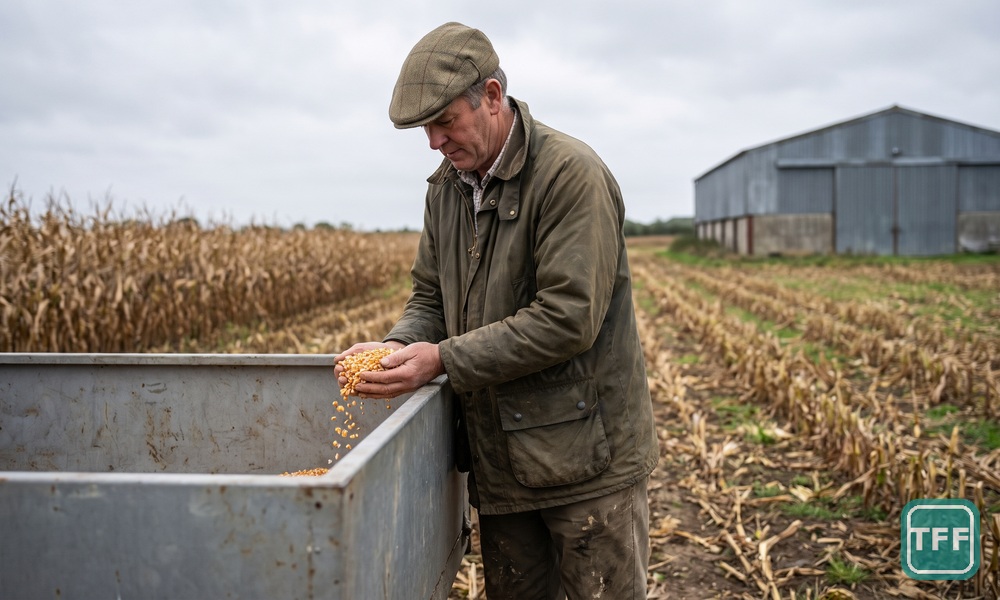
A light land arable farmer opened a conversation on The Farming Forum at the end of February with a plain question: is there a single combinable break crop still worth growing in the UK? Seven months and 460 contributions later, the room had defended almost every candidate and settled on none. The nearest thing to a winner was not a crop at all but a government scheme payment, and that should make uncomfortable reading for any business selling seed, chemistry or kit into the break crop slot.
By TFF News | 4 November 2026 | Arable
The conversation ran to 460 visible contributions between 27 February 2026 and 23 September 2026 and had been viewed 19,840 times on The Farming Forum when counted on 4 November 2026. It drew 727 reactions, an average of 1.58 per contribution. As always, these figures describe one self-selected conversation, not a representative survey of UK farming.
Every candidate arrives with a caveat
The opening contribution asked “is there a single combinable break crop worth growing in the uk now ?” and dismissed the candidates in a line each: flea beetle for oilseed rape and linseed, chocolate spot for beans, oats barely a break at all. Defenders pushed back. On linseed, one grower argued “£600 a ton isn’t a low price, you’ve just got to get the yield”. Another kept it shorter: “Simple answer, over the last 2 years at least, OSR!”
The weight of the conversation sat with the sceptics. 82 contributions dealt directly with break crop options and their margins, and the recurring experience was summed up by a grower who has tried winter and spring linseed, oats, beans, soya, canary seed, peas, millet and both oilseed rapes: “I’m finding nearly all break crops wish crops”. Within a week, one contributor called it: “The answer is clearly “NO” there are no break crops worth growing”. The replies that did defend one pointed at rotation benefit rather than profit. “The biggest motivator for combinable break crops is invariably the first wheat that follows them”, wrote one, and another concluded “I’m not sure there’s a single, reliably profitable break crop.”
The scheme has become the break crop
The first answer with real support was not a crop: “Legume fallow, ideally with an SFI payment!” The grower who coined the wish crops line agreed: “SFI23 has been the best break crop I’m sorry to say”. Another contributor was blunter still about where the money sits: “The best payer is extended over winter stubble.” He added that the scheme pays more for that stubble than for the covers that would do the soil more good. The opener reported the same pull from his own agreement: “improvement in our wheats following a year of alh1 / alh2 has been dramatic”.
The arithmetic is published: Defra’s CNUM3 legume fallow action pays £532 per hectare per year under SFI26, even after a June 2026 rate cut. Every break crop the trade wants to sell into the rotation now has to beat a guaranteed payment for growing nothing harvestable.
Grain maize stirs the most genuine interest
Of the actual crops, grain maize drew 64 contributions, the most sustained interest of any candidate. One grower, treating maize as a core crop rather than a break, noted “We are up to nearly 200ha this year”. From East Yorkshire another reported “Some been growing it 10+ years and they’re not stopping – that tells you something.” The market case was made with import figures: even with UK bioethanol production halted, AHDB’s March 2026 estimate still put 2025/26 UK maize imports at 2.15 million tonnes, and contributors reported major merchants willing to buy from farm.
The barrier is water, in both directions. On drying, one experienced voice offered a rule of thumb, “it takes 1litre of Kerosene to dry 1%mc from 1t of maize”, and warned growers they will be cutting at 30 per cent moisture. Another agreed that “drying is a massive cost that is not discussed often enough”. On drought, one contributor was direct: “My 2025 grain maize crop was never harvested.” September brought the reality check from the grower with nearly 200ha in the ground: “In the lighter land its been poor 4-5t/ha on the stronger land its been comparable to wheat 8-9t/ha.”
Pulses wait on a policy signal
Pulses and protein crops drew 49 contributions, and the tone was wary. “Current pea price is just good enough to tempt people back in, who had forgotten why they stopped growing peas in the first place.” The success stories came with contracts attached. One grower reported “Peas – outperformed wheat GM last harvest by £200/ha” and set out the workings: “Grow maple peas on a contract for £400/t. Variable costs £209/ha. Yield 3.8t/ha over weighbridge.” Others remembered the other side of the coin: “Peas here can be fantastic or a total disaster”.
The most supported idea in this strand was a policy one. “Don’t know why they don’t have a pulse sfi option, legume, soil improver, flowers, displaces imported soya.” drew nine reactions, and another put it as “What we need is a sub to grow peas or beans it would be a win win for government and farmers”. One contributor sketched the design: “A ‘low input harvested spring legume’ similar to the current cereal option would be brilliant.” Another pointed to the InFaba project, which is splitting field beans into separate feed fractions to cut dependence on imported soya.
The argument underneath
The reason the question never got a clean answer is that it kept sliding into whole-business economics, which drew 78 contributions of its own. It also hit a nerve: 138 of the 460 contributions were asides or personal exchanges between regulars, more than any single crop managed. The opener saw no case for spending his way out: “don’t feel like there is a good case for any agricultural investment right now”, and on land occupation costs, “either rents fall and landowners accept lower returns or it simply doesn’t and land sits fallow”. Another contributor drew the structural conclusion: “solely combinable crop farms maybe on their way out in the only nation in Western Europe without any true subsidy”.
What the trade is left with
Nobody in 460 contributions named a combinable break crop that reliably pays its way on rent, kit, labour and seed. The break crop slot on light arable land is being held open by first wheat effects and scheme payments, and every commercial offer into that slot now competes with Defra as much as with other crops. Grain maize has the demand but waits on affordable drying and a kinder run of springs. Pulses have the agronomic case and would move on a single policy signal. The open question for seed houses, merchants and machinery dealers is which gap gets closed first, because whoever closes it picks up the acres that are currently growing a government option instead.
Read the source conversation and analysis
Read the full conversation on The Farming Forum here.
Agri Web Media’s nine-slide analysis of the conversation, with engagement, theme and sentiment data, can be downloaded as a PDF: Conversation analysis slide deck (PDF).
This conversation had been viewed 19,840 times on The Farming Forum when counted on 4 November 2026. Want your brand in the room when farmers talk arable? Book advertising with Agri Web Media.