Weekly Summary: Arable Section
Date Range: 7th – 13th September 2026
—
Executive Summary
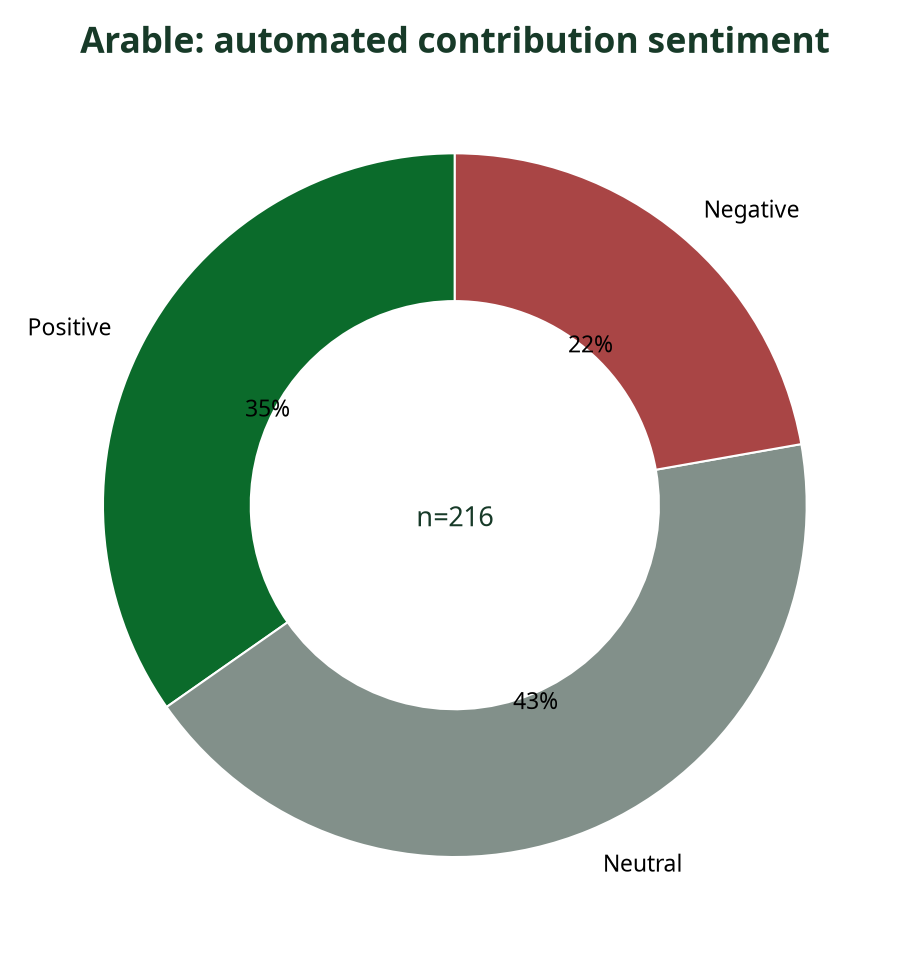
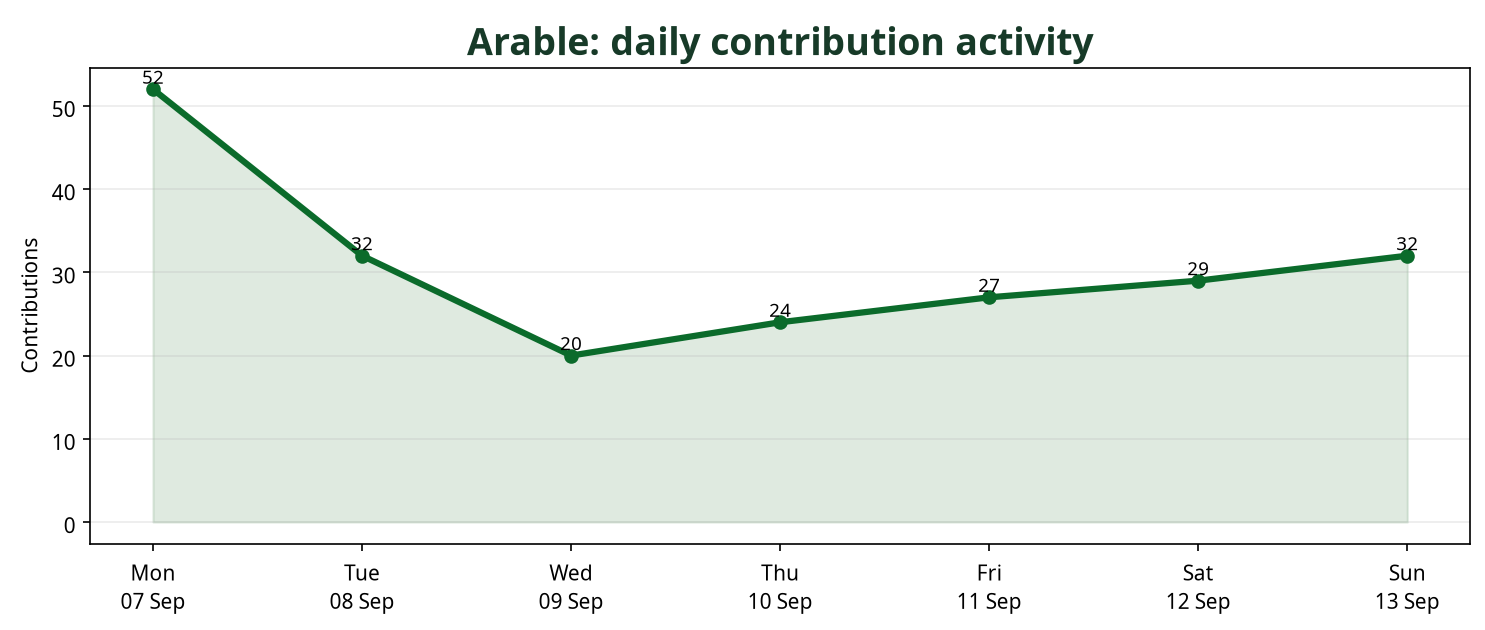
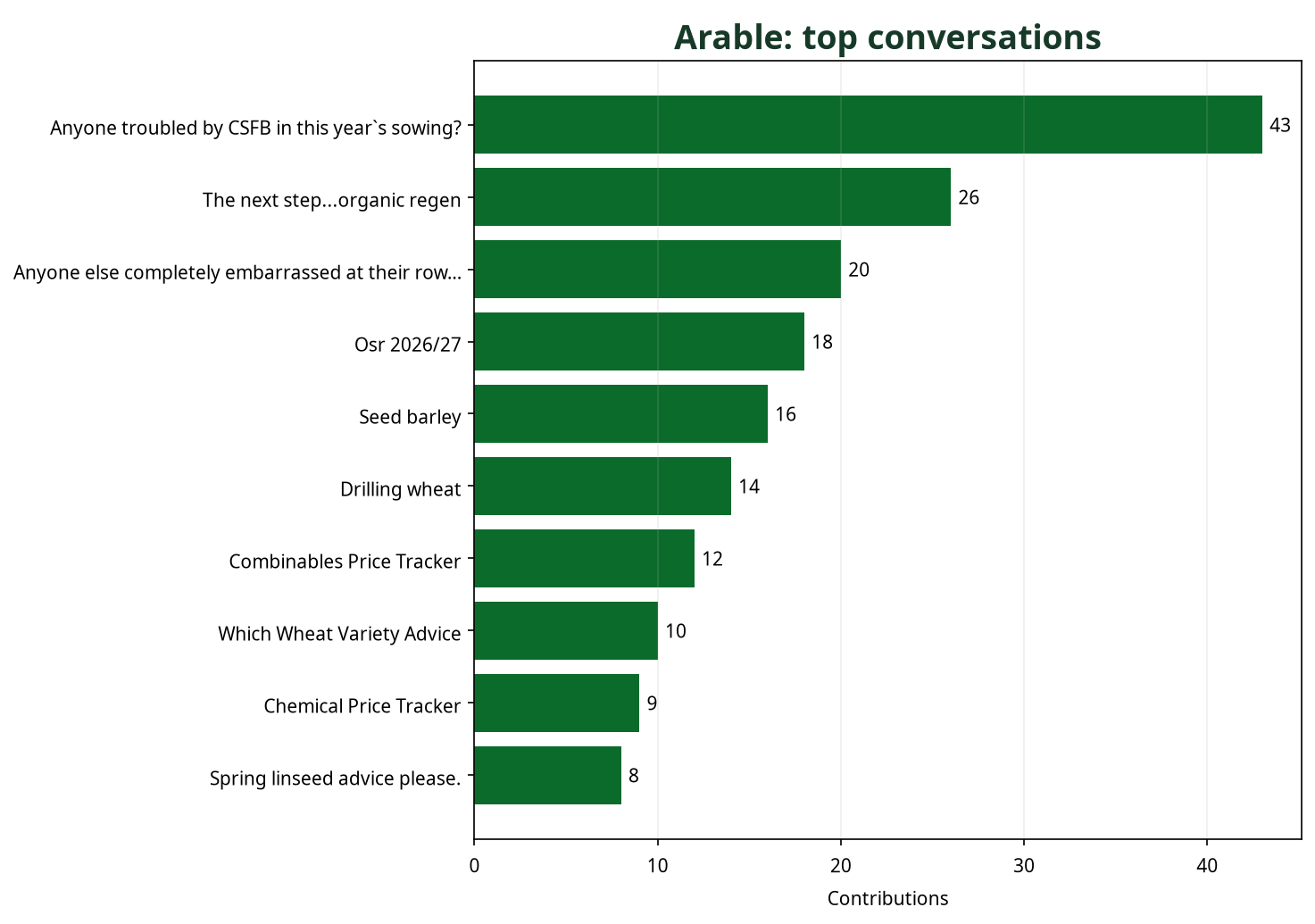
Over the week ending 13 September 2026, contributors to the Arable section posted 216 entries across 21 conversations. The busiest threads focused on crop establishment under pest pressure, practical interest in regenerative or organic approaches, visible harvest losses and local price and input-cost reports. A 43-contribution discussion on cabbage stem flea beetle (CSFB) illustrated widely different oilseed rape establishment outcomes and emphasised strong field-to-field variation. Separate conversations weighed the practical and economic uncertainty of moving to lower-input systems (26 contributions) and compared visible combine losses during harvest (20 contributions). Smaller but active exchanges provided local grain price reports (12 contributions), seed-variety experiences (10 contributions) and fertiliser quotes (8 contributions). Contributors repeatedly framed observations as farm-specific rather than generalisable, citing local weather, soil, field history and logistics as major sources of variation. The week’s posts highlighted uncertainty around near-term prices and input costs and underlined that on-farm decisions are being made under substantial localised risk.
—
Conversations at a Glance
| Conversation Name | Contributions | Key Topics |
|---|---|---|
| Anyone troubled by CSFB in this year`s sowing? | 43 | cabbage stem flea beetle pressure; oilseed rape establishment variability; local weather and field conditions |
| The next step…organic regen | 26 | transition economics; weed-control challenges; soil-building aims; mixed-enterprise logistics |
| Anyone else completely embarrassed at their rows of combine losses | 20 | visible harvest losses; throughput versus loss trade-offs; differences between crops and fields |
| Osr 2026/27 | 18 | ryegrass control strategies |
| Seed barley | 16 | seed barley availability; brome (broom) weed control; local seed suppliers; winter vs spring barley |
| Drilling wheat | 14 | Drilling timing; Direct drilling vs plough; Green bridge/blackgrass pressure |
| Combinables Price Tracker | 12 | local crop price reports; regional delivery differences; international market references |
| Which Wheat Variety Advice | 10 | contributor-reported yields; variety price comparisons; quality and disease observations; cropping viability |
| Chemical Price Tracker | 9 | anecdotal price drivers |
| Spring linseed advice please. | 8 | spring linseed harvest yields |
—
Detailed Conversation Analysis
Official Context
AHDB says no single chemical or non-chemical approach provides completely reliable cabbage stem flea beetle control, and its current guidance recommends an integrated strategy informed by local conditions and monitoring. See AHDB.
Establishment and pest-related uncertainty
Oilseed rape and cabbage stem flea beetle pressure
A 43-contribution thread on cabbage stem flea beetle (CSFB) dominated discussion about establishment. Contributors reported a wide range of outcomes for oilseed rape, from severe early damage on some fields to satisfactory establishment on others. Posts repeatedly emphasised local modifiers — recent weather, seedbed condition, crop history and small-scale field variation — rather than a single explanatory factor. Several contributors framed CSFB as an added source of uncertainty when deciding whether to grow oilseed rape, but these were anecdotal reports and not presented as representative evidence for wider regions.
Variety choice, soils and early establishment
In a smaller exchange about wheat varieties and establishment (10 contributions), contributors linked varietal performance to seed cost, reported yields and local disease or soil conditions. Posts noted that differences in early vigour, establishment and canopy development matter at field scale and interact with soil structure and moisture. Contributors used their own yield and quality reports to make sense of variety choice, stressing that performance was highly context-dependent; these are case observations rather than broadly validated comparisons and contributors cautioned that results may not transfer between farms.
Harvest performance and visible losses
Combine losses, throughput and timing
A 20-contribution conversation focused on visible combine losses and the trade-offs between throughput and crop left in the field. Contributors compared photos and descriptions from different crops, machines and conditions, noting that losses were often more visible on certain varieties or field shapes. The exchange concentrated on operational choices — header settings, ground speed and processing rate — and the pressure to maintain harvest momentum. While contributors expressed concern about the economic implications of observable losses, accounts remained observational and did not establish a common benchmark for acceptable loss levels.
Markets and input-cost signals
Local combinable price reports
A 12-contribution price-tracker thread collected contributor-reported prices for wheat, barley, beans and oilseed rape, with numerous posts emphasising regional delivery and timing differences. Contributors compared their local figures with wider market commentary but framed the numbers as individual observations rather than verified benchmarks. The discussion conveyed mixed short-term market signals and substantial regional variation; participants described uncertainty about the near-term direction of prices and the influence of local basis levels on marketing decisions.
Fertiliser quotes and input-cost pressure
An eight-contribution fertiliser-price thread captured contributor-reported quotes and perceptions of regional availability. Posts indicated upward pressure on some input costs and uneven availability by product and location. Contributors treated the figures as indicative prices from their procurement experiences, noting that supply and cost pressures were influencing on-farm planning. Several posts linked input-cost concerns back to cropping choices and budgeting, but these were individual reports and not official or nationally representative pricing data.
Transitioning to organic and regenerative approaches
Economics, logistics and weed-control challenges
A 26-contribution discussion examined the practical and economic uncertainties of moving towards organic or regenerative systems. Contributors debated potential premiums against perceived reductions in input expenditure, while highlighting weed-management challenges, equipment costs and the practicalities of integrating livestock or cover-cropping. Posts stressed that transition outcomes depend heavily on farm-specific logistics, labour availability and existing soil condition. Contributors treated the topic as a series of individual farm experiments rather than a shared blueprint, and many emphasised that long-term soil-building aims are being balanced against short-term financial and operational risks.
—
Conclusion
Across 216 contributions in 21 conversations, contributors used week-long exchanges to surface the strong local variation that underpins many arable decisions. The most active threads highlighted that pest pressure, soil and weather variability are key drivers of establishment outcomes, while harvest-stage decisions are influenced by visible loss and the operational need to keep moving. Market and input-cost threads provided regionally specific price and quote reports that participants used to frame immediate budgeting and cropping choices, not as formal benchmarks. Interest in organic or regenerative change is active but approached with caution because contributors repeatedly noted equipment, weed-control and logistical hurdles. Overall, the week’s posts underscored a pattern of farm-level risk management under substantial local uncertainty rather than any clear consensus on crop choice, price direction or best practice.
—
For ongoing updates, readers can follow the active conversations linked throughout this summary.
This summary reflects contributions posted during the stated period. It is not a representative survey and should not be treated as professional, legal, financial, veterinary, agronomic or safety advice.