Weekly Summary: Arable Section
Date Range: 21st – 27th September 2026
—
Executive Summary
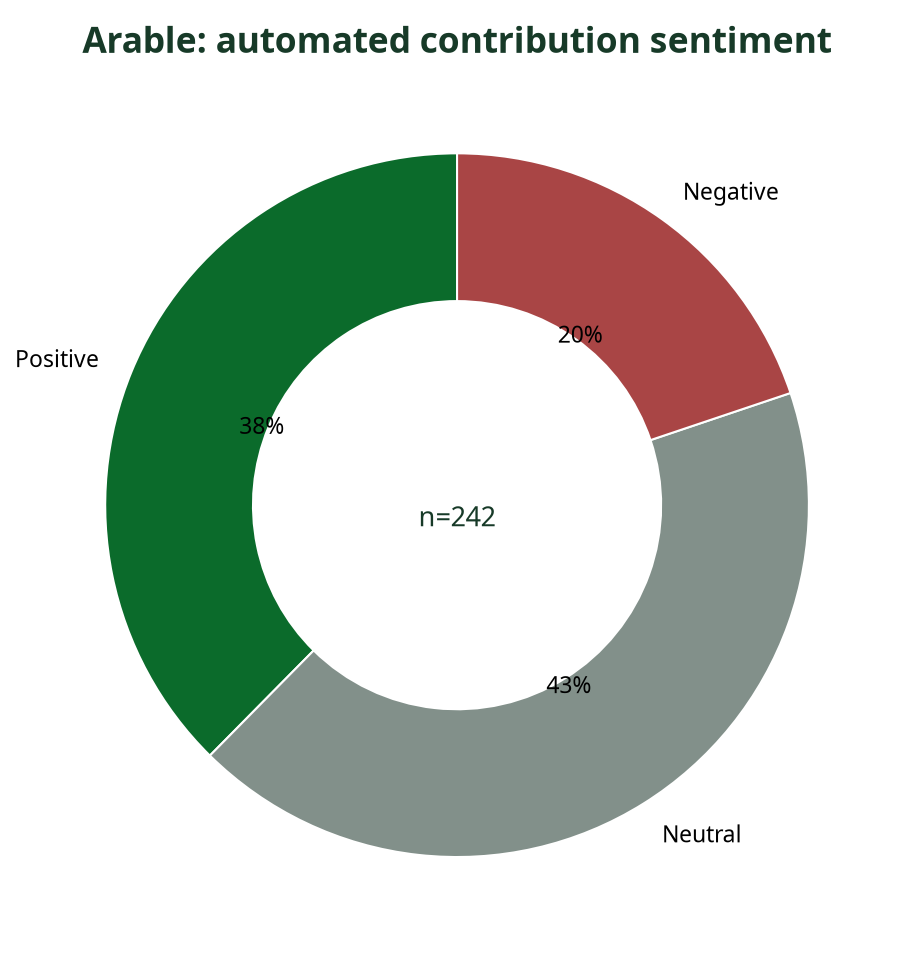
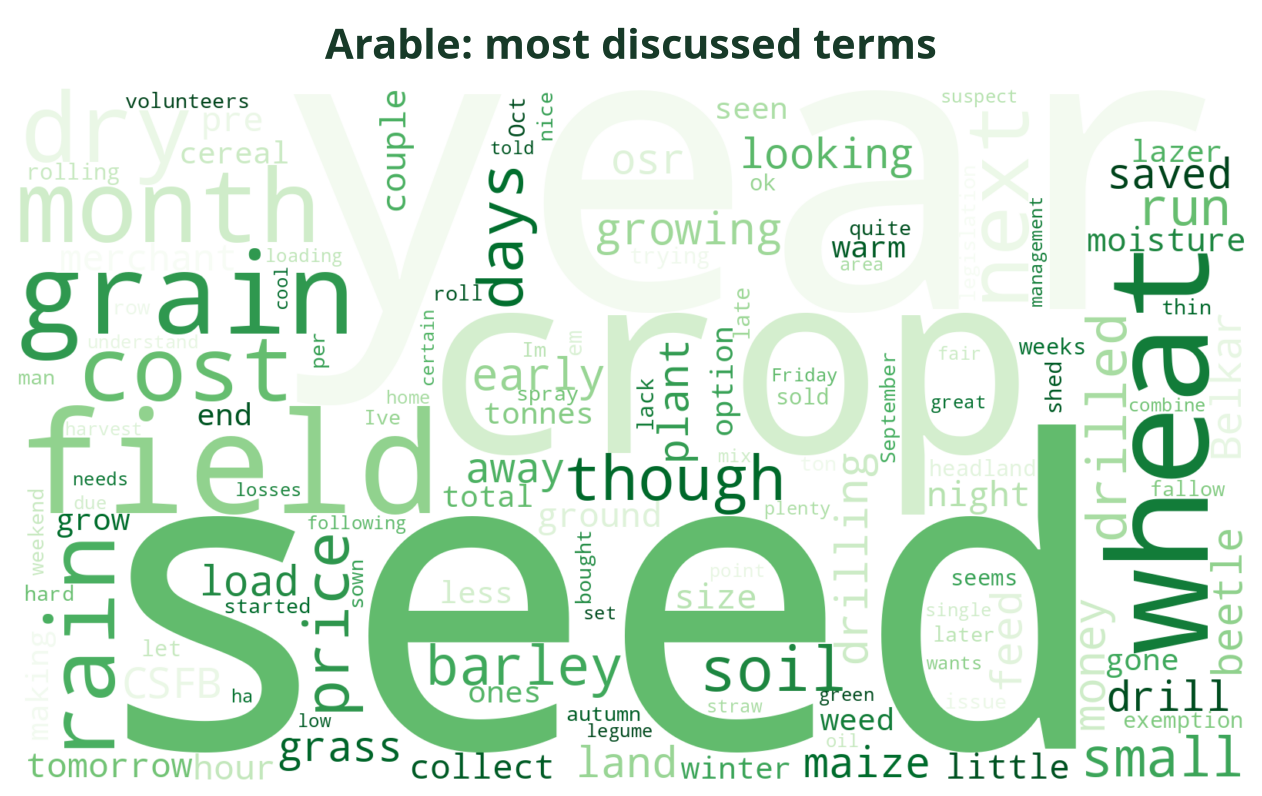
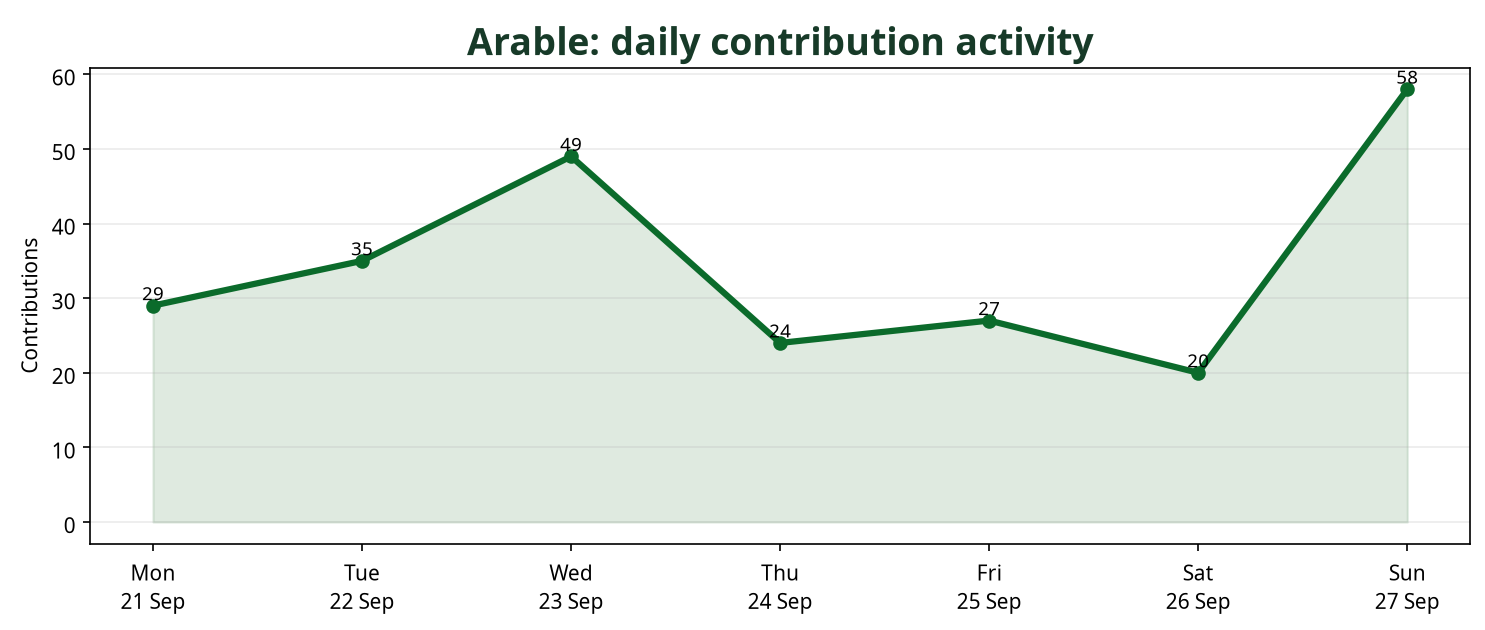
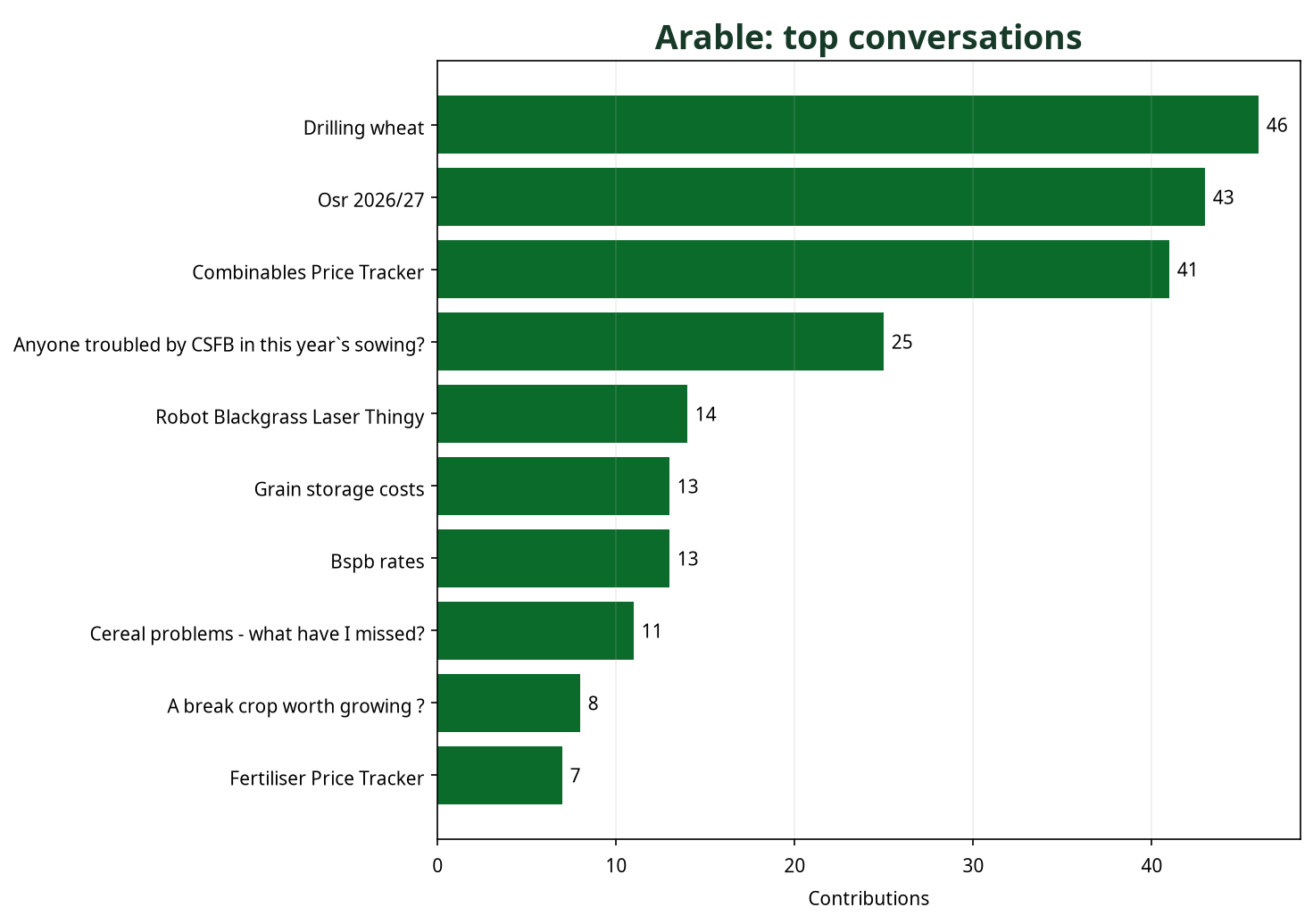
The Arable section recorded 242 contributions across 21 conversations between 21 and 27 September 2026. The strongest supported themes were wheat and oilseed rape establishment, local combinable-crop market reports, grain-storage economics and visible harvest losses. Contributors compared field conditions and autumn workloads but did not identify one establishment approach that applied across farms. Market posts supplied local price, delivery and quality-assessment observations that varied by place and timing and are not treated as verified benchmarks. A storage discussion considered finance, energy, labour, handling, haulage and alternative building use without producing a common costing method. A smaller harvest-loss exchange likewise remained observational and did not establish a technical cause. Low-confidence, legal, product-performance, agronomic-instruction and allegation-heavy records were excluded from narrative evidence. The report therefore describes discussion patterns rather than recommending crop, machinery, storage or marketing decisions.
—
Conversations at a Glance
| Conversation Name | Contributions | Key Topics |
|---|---|---|
| Drilling wheat | 46 | wheat establishment timing; weather and soil conditions; variation between fields |
| Osr 2026/27 | 43 | oilseed rape establishment; field-to-field variability; pest pressure and crop condition |
| Combinables Price Tracker | 41 | local crop price reports; regional delivery differences; collection and rejection experiences |
| Anyone troubled by CSFB in this year`s sowing? | 25 | crop losses and re-drilling; rolling and insecticide experiences; follow-on cropping decisions |
| Robot Blackgrass Laser Thingy | 14 | robotic weeders; laser/zapper technology; weed identification limits; commercial availability |
| Grain storage costs | 13 | grain storage costs; building opportunity cost; labour and handling; commercial storage comparison |
| Bspb rates | 13 | BSPB declarations and exemptions; Definition of 92‑tonne threshold; Farm saved seed versus bought-in seed; User experiences contacting BSPB |
| Cereal problems – what have I missed? | 11 | soil and water management; pests and weeds; input supply and costs |
| A break crop worth growing ? | 8 | grain maize viability; weather and heat units; yield variability by soil; harvest practicality |
| Fertiliser Price Tracker | 7 | reported fertiliser price changes; supplier quotes and regional variation; buying timing and sentiment; future policy cost concerns |
—
Detailed Conversation Analysis
Establishment timing and field variability
Wheat drilling decisions
A 46-contribution wheat discussion compared drilling progress across farms. Contributors described differences in soil moisture, weather and field readiness and set those observations against autumn workload. The accepted evidence supports a narrow conclusion: participants were making farm-specific timing decisions under variable conditions rather than following one common programme. Specific agronomic instructions, product claims and assumptions about future crop performance were excluded. The conversation is therefore useful as a record of establishment uncertainty and operational pressure, but it does not provide a verified recommendation for when or how another business should drill.
Oilseed rape establishment
The 43-contribution oilseed rape thread described uneven early crop condition between fields. Contributors referred to weather, soil moisture and pest pressure when comparing their own experiences, but the discussion did not establish a single cause for the differences or a preferred response. Some participants linked those experiences to confidence in future oilseed rape areas, although those comments remain individual intentions rather than a sector forecast. Product, pesticide and application advice was excluded from the article. The retained theme is field-to-field variability and the uncertainty it created for contributors reviewing establishment progress.
Combinable-crop market observations
Local prices, delivery and quality assessment
The Combinables Price Tracker generated 41 contributions containing local price, delivery and quality-assessment reports. Contributors described different outcomes by delivery point, timing and individual transaction. These posts are retained as examples of current market discussion, not as verified national prices, evidence about any named business or a basis for marketing advice. The exchange showed that participants were using peer reports to compare regional conditions, while also recognising that individual figures and experiences were not directly comparable. Unsupported allegations and prescriptive responses to commercial disputes were excluded from narrative use.
Storage economics and harvest observations
Grain storage cost components
A 13-contribution discussion considered which costs matter when comparing on-farm grain storage with immediate sale or commercial storage. Contributors mentioned finance, energy, labour, handling, haulage and the alternative use of buildings. No common costing method or commercial strategy emerged, and individual numerical examples were excluded. The supported point is that participants viewed storage as a combination of direct and indirect costs rather than a single monthly charge. Comments about future prices or market instruments were not treated as financial guidance, and the article does not recommend a storage or selling decision.
Visible harvest losses
A smaller five-contribution exchange recorded concern about visible harvest losses. Contributors compared experiences across crops, fields and machines and considered several possible explanations, but the evidence did not establish a technical diagnosis or product-performance ranking. The article therefore retains only the observed variability and the economic concern attached to crop left in the field. Detailed operational adjustments and claims about the suitability of recovered material were excluded. The thread illustrates how contributors were reviewing the season’s results while remaining uncertain about the relative influence of crop condition, field circumstances and equipment differences.
—
Conclusion
Arable discussion during 21–27 September was led by establishment progress and by practical questions about crop marketing and post-harvest costs. Wheat and oilseed rape contributors repeatedly described variability between fields, but the evidence did not support a universal explanation or course of action. Combinable-crop posts supplied local market observations whose timing and delivery basis differed, so they should not be read as benchmarks. The grain-storage exchange showed how finance, energy, labour, handling and building use can all enter individual calculations without producing one accepted method. Harvest-loss comments were similarly observational rather than diagnostic. Overall, the week’s conversations provide a useful record of issues occupying participating forum members, not a representative survey, technical instruction, market forecast or financial recommendation.
—
For ongoing updates, readers can follow the active conversations linked throughout this summary.
This summary reflects contributions posted during the stated period. It is not a representative survey and should not be treated as professional, legal, financial, veterinary, agronomic or safety advice.