
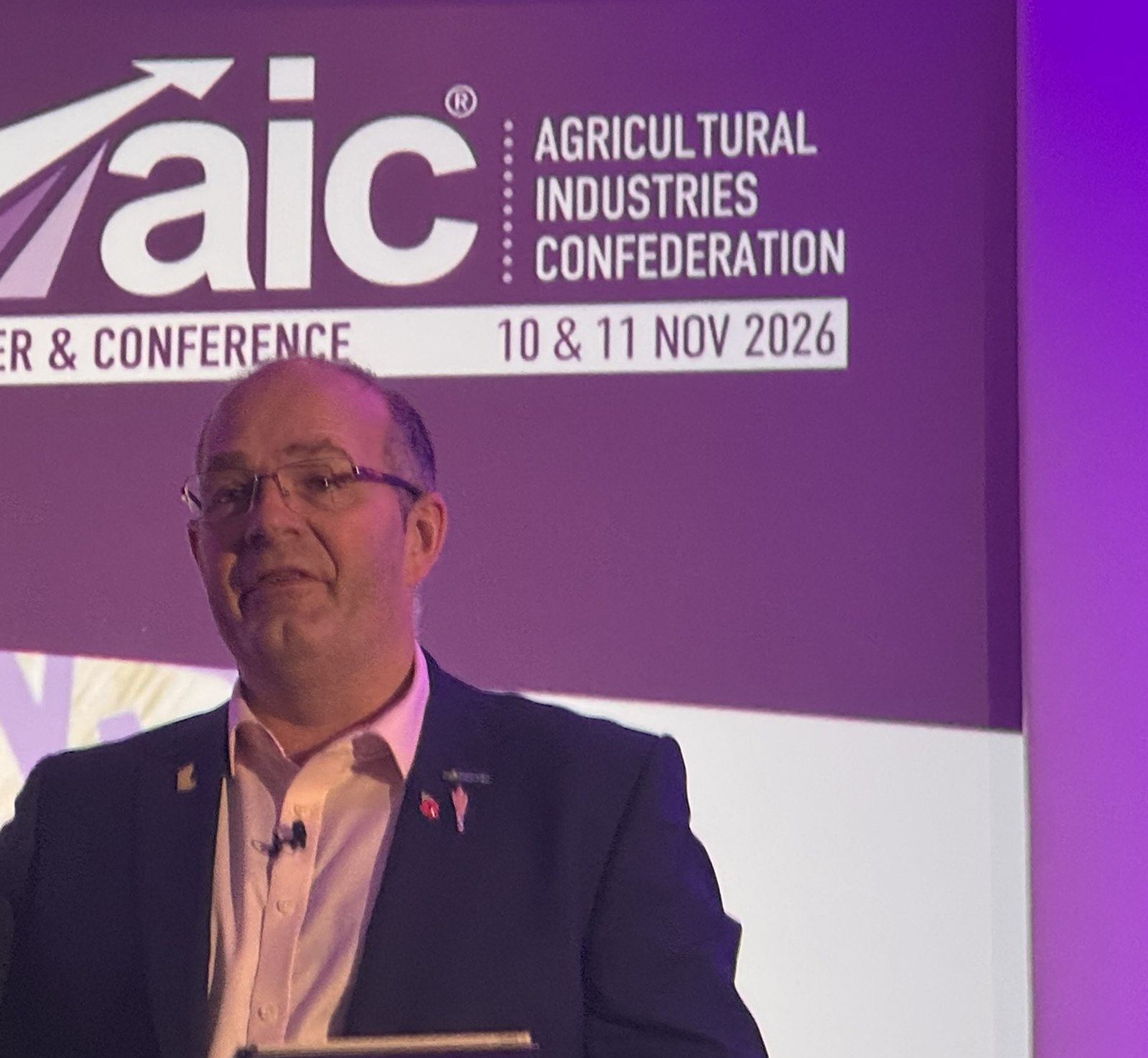
AIC Conference 2026, Peterborough. Tom Bradshaw, President, NFU. Introduction by Chris Fellows
I sat through the whole of the AIC conference in Peterborough on Wednesday with a notebook and, by lunchtime, a tally. The theme was “Delivering for the Agri-Food Supply Chain in an Ever-Changing World”, and by my count the word change, in one form or another, came up at least 105 times. That’s leaving out the talk on generations at work, which wasn’t about farming.
Eighteen of those were somebody reading out the title. Another dozen or so were climate change. So I went back through the rest to see who exactly was being asked to change.
The trade wanted government to change. AIC wants Defra held to account on “delivering change” and a “meteoric change in ambition”. The Brussels speakers want the EU to change direction. The ministers wanted farmers to change. In Scotland, support “will change” and only active farmers will get it. Northern Ireland’s Andrew Muir told us the future won’t be secured “by resisting change”. Wales is preparing businesses for change. The GLP-1 session wanted consumers to change what they eat.
What I struggled to find was anyone asking the supply trade, the people in the room, to change anything about how they do business with farmers. Ministers asked them to plan for disruption, IGD asked them to rethink demand. The one who asked about their relationship with farmers was Tom Bradshaw.
What the NFU president told the trade
Bradshaw started by picking up AIC’s own point that fert orders are slow this season. AIC put that down to farmers needing a nudge. Bradshaw put it down to money. Arable farmers have just had their third bad harvest in a row, and there’s no BPS cheque landing on 1 December any more to sort it out. “Farmers don’t have the money,” he said.
He reckons this is the first year the real effect of losing BPS has shown. The rush for SFI wasn’t really about the environment, he said, it was about getting a guaranteed quarterly payment into the cash flow. He’s worried about SFI27, with around £820m of schemes ending next financial year and no idea how much money will come through to replace them.
Then the comparison that should worry everyone. UK agriculture gets about 0.2% of GDP in support, against an EU average of 0.6%, and what we do get is payment for public goods, not support. Next week we sign an SPS deal to reduce friction with farmers who still get £200/ha. That £200/ha is what lets them ride out a bad harvest. English farmers are being asked to compete without it.
He put some hard numbers on where we’ve got to. Over 30 years the UK has become less self-sufficient in 10 of 11 key commodities. The agri-food trade deficit has doubled in 25 years to £40bn. Dairy needs to find 2.4p/litre just to meet environmental rules coming over the next ten years. We have legally binding targets for nature, water, air and net zero, and nothing for food production, so food is always the one that gives.
On SPS, he said the signs are that industry’s concerns on crop protection have been heard. His bigger worry is how we implement EU rules from here. “Historically, the UK has been brilliant at gold plating everything,” he said, and if we do that again it won’t work for British farming. He also warned that SPS isn’t a light switch. The shelf space we lost in Europe has been filled, and nobody’s left a sign up saying waiting for British product. We’ll have to win it back.
He was blunt about the Budget. When the Prime Minister sat round a farm kitchen table, he heard and listened and clearly didn’t act. It would have cost £330m to put inheritance tax right. Instead farmers are told to be grateful for a tariff cut on fertiliser that covers less than 15% of what we import, while CBAM carries on. He said “food security is national security” is now a meaningless, hollow phrase to farmers on the ground.
He wants tax relief so farmers can build reservoirs, and planning that enables rather than blocks. As it stands we’re importing poultry produced to the old standards because we can’t get planning for sheds built to the new ones.
The challenge
He finished with the only real challenge to the trade all day. A lot of arable farmers are genuinely asking whether they’ll carry on. So, he asked the room, how much does British supply mean to your business? Will your sourcing policies give farmers the confidence to keep investing? Lose that productive capacity, he said, and it’s very hard to get back.
It was a room full of merchants, feed compounders and fert suppliers, and it went quiet.
So if you’re dealing with your merchant this winter, does it feel like British supply matters to them?
Join the discussion on The Farming Forum.