
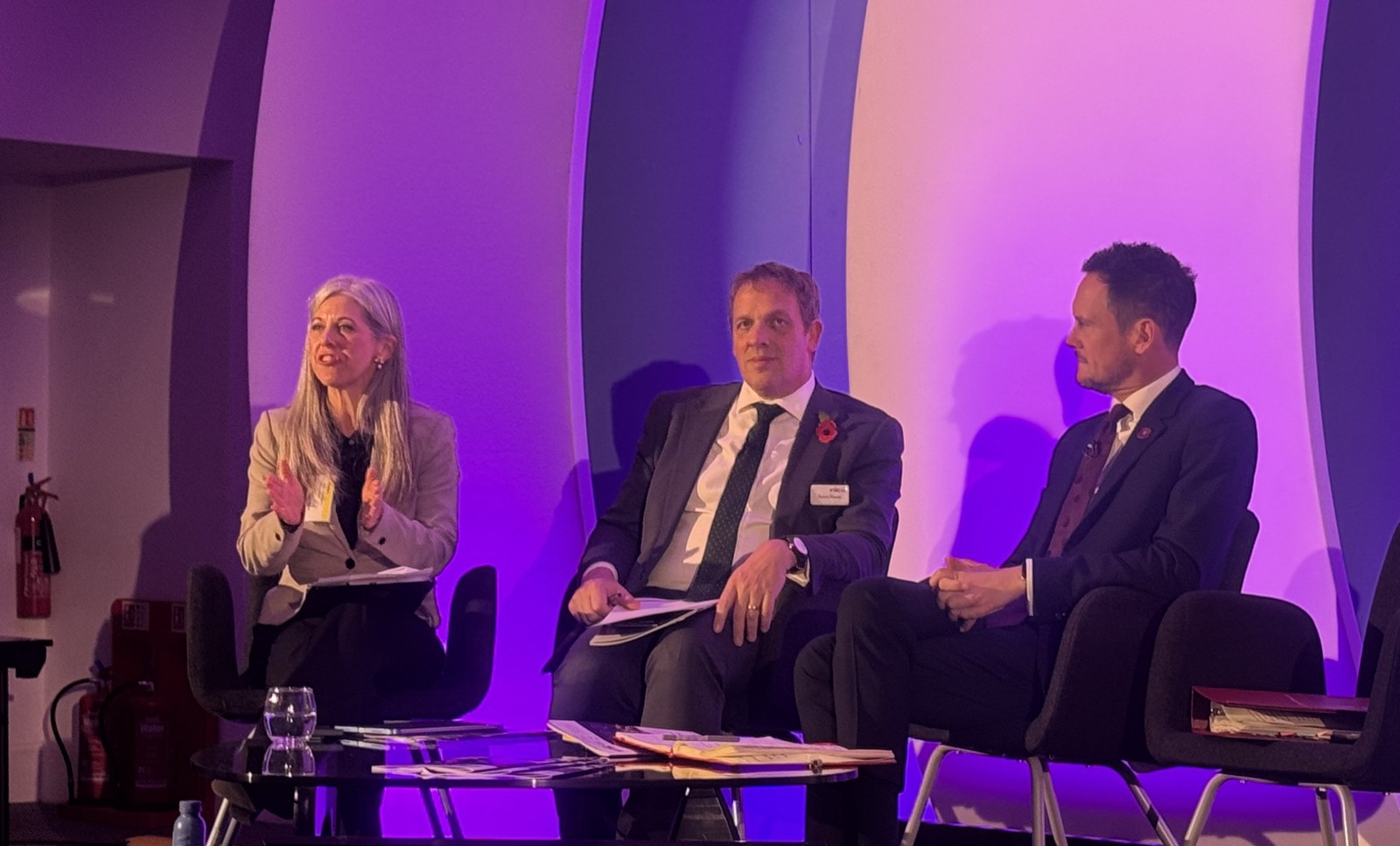
AIC Conference 2026, Peterborough. Robert Sheasby (AIC), Tom Bradshaw (NFU), Stephen Morgan MP (Defra), with video addresses from Jim Fairlie MSP, Llyr Gruffydd MS and Andrew Muir MLA
The AIC conference in Peterborough on Wednesday had a clear shape to it. In the morning the trade’s chief executive and the NFU president set out what they wanted from government. In the afternoon the farming minister turned up to answer questions, and the three devolved ministers sent videos. Put the asks next to the answers and the gap is hard to miss.
What AIC asked for
Robert Sheasby, chief executive of the Agricultural Industries Confederation, speaks for the merchants, feed compounders, seed houses, fertiliser suppliers and crop protection firms between farmers and the rest of the chain. He opened the day with a year of flood, drought and “five heatwaves one summer”, and a shopping list.
He wants the strands of Defra’s work, the farming roadmap, land use framework and profitability review, pulled into one plan business can invest against. He set out six asks: the right policy, better two-way trade deals, a tax regime that gives confidence to invest, regulation fit for purpose, proper investment in science, and attracting people into the industry. Behind all of it is one number. Agriculture is 0.6% of UK GDP and AIC wants it at 1%.
He also had a line farmers will pick up on. Fert orders have been slow, slow enough that AIC, the unions, AHDB and government sent out a joint warning in August. More messaging on ordering is coming before Christmas. A couple of hours later Tom Bradshaw gave the other side: third bad harvest in a row, no BPS cheque on 1 December, and farmers simply don’t have the money.
What the NFU asked for
Bradshaw’s list was longer and sharper. Food resilience in the Prime Minister’s ten-year plan. Enough money in SFI27 to cover around £820m of schemes ending next year. An answer to the gap with EU farmers, who still get around £200/ha while we sign up to their rules. No gold plating when we implement them. Inheritance tax put right, at a cost of £330m. A fertiliser tariff cut that covers more than 15% of imports, with CBAM carrying on regardless. Tax relief to build reservoirs, and planning that enables rather than blocks.
He spoke before lunch. The minister arrived for the afternoon session.
What came back
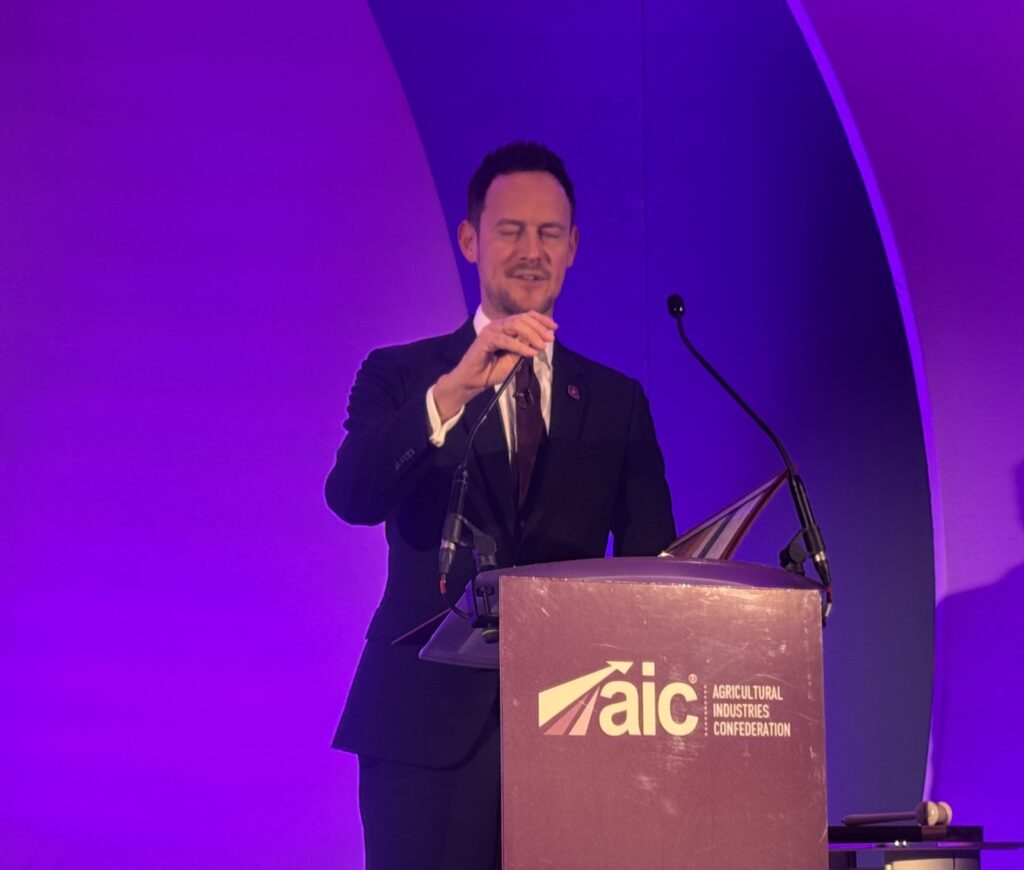
Stephen Morgan, the farming minister, was frank that he’s fairly new to farming, coming from a constituency that “looks to the sea”. His speech covered trade deals with India, the Gulf states, South Korea and Switzerland, and the fert tariff suspension from 27 November. He mentioned the £65m drought support package, SFI27 starting “as early as possible”, and sector growth plans for horticulture and poultry. Then he took questions.
Asked when arable would get a growth plan, he said decisions on other sectors come in the new year and he was “all ears”. Arable is on his radar, Anna Jones told the room.
The most-voted question on the conference app said England’s support system is an outlier in the UK and Europe and doesn’t support productive farming. His answer was the budget: £11.8bn over the parliament, £2.3bn a year, scrapping first come first served for SFI, and a fairer, simpler system. I can’t help thinking when hearing these numbers, how much of this money ends up in the accounts for working farmers? This overall budget seems to get spread thinly.
Pushed on how English farmers should feel when Scotland, Wales, Northern Ireland and the EU all keep direct payments, he pointed to the partnership board and the SPS deal. Sheasby stepped in to say the policy is still grounded in a 2018 consultation. Every other farmer in Europe is getting extra support, he said, and English farmers need a level playing field, on fertiliser among other things. No new answer came back.
On food security against self-sufficiency, he said the roadmap commits to at least maintaining current production. He agreed with Sheasby that the partnership board is the vehicle for change, but didn’t take up the 1% GDP target.
On SPS, he said the UK will be a “contributor” to the common framework and details come after the signing, due on 20 November. Sheasby asked him to make sure Defra has the staff in Brussels to make it count, and said that costs money. That wasn’t answered either.
Asked about fertiliser self-reliance by a polyhalite miner, he pointed to the tariff suspension and the roadmap.
What wasn’t mentioned at all: inheritance tax, CBAM, how much money goes into SFI27, how much goes to working farmers, reservoirs, planning permission and the £200/ha gap with Europe.
The other three ministers
Scotland, Wales and Northern Ireland sent videos, so nobody could ask them anything. But what they said was telling. Scotland’s Jim Fairlie said direct payments stay until 2030, for active farmers only. Wales’s Llyr Gruffydd said the Sustainable Farming Scheme covers 70% of Welsh farmland and advance payments went up to 80% because of the year farmers have had. He also wants to move beyond “farming by calendar” on slurry. Northern Ireland’s Andrew Muir said £245m of Farm Sustainability Payment has gone out since September, at £330/ha.
So the three ministers still paying farmers directly weren’t in the room. The one who isn’t was, and he didn’t have an answer to why or how much.
In fairness to Morgan, he’s five months in, a week from an SPS signing, and can’t announce money at a trade conference. But Sheasby and Bradshaw both made the same point in different words. Farmers and the trade can’t invest against a slogan. “Food security is national security” needs a number, a budget and a date behind it.
We need solid figures from Defra on how the farming budget is made up, what is going into different pots and how much those farmers producing food can rely on. As we are talking about a food production system in crisis and we need to invest in our farmers today, not provide schemes for the future.
Join the discussion on The Farming Forum.