Weekly Summary of the ‘Arable’ Section | The Farming Forum
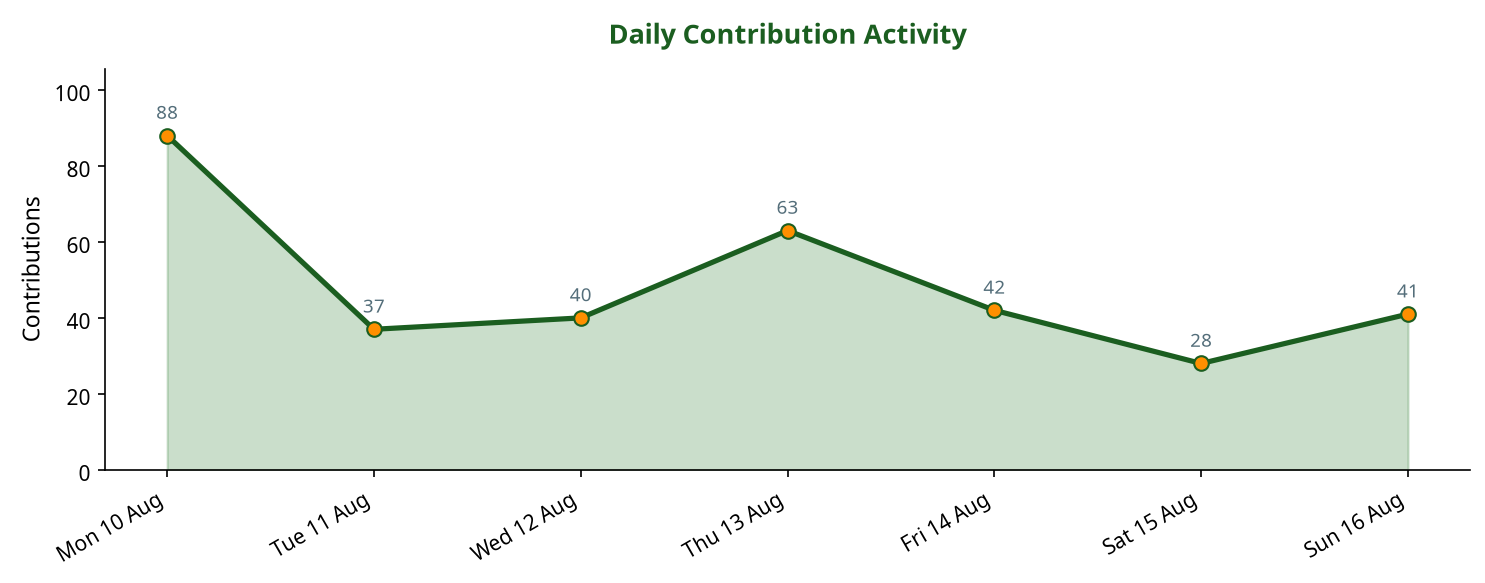
Date Range: 10 August – 16 August 2026—
Executive Summary
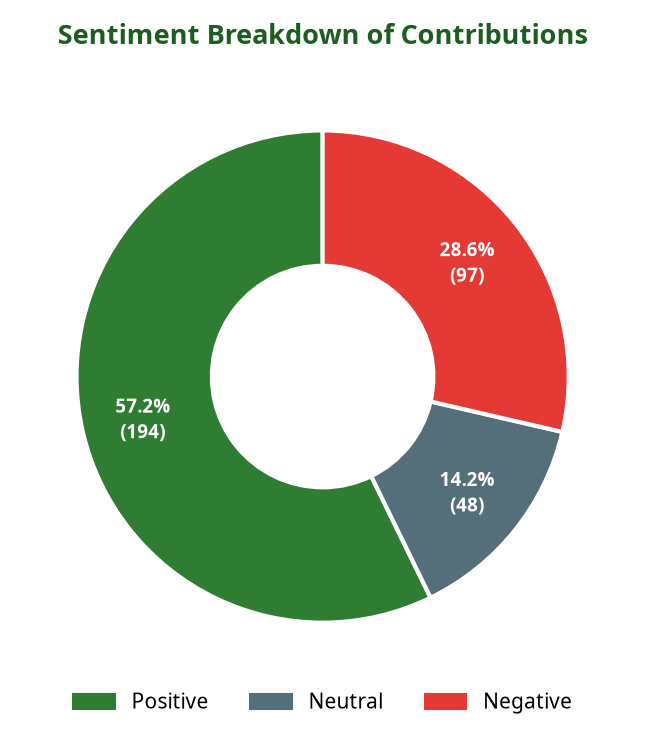
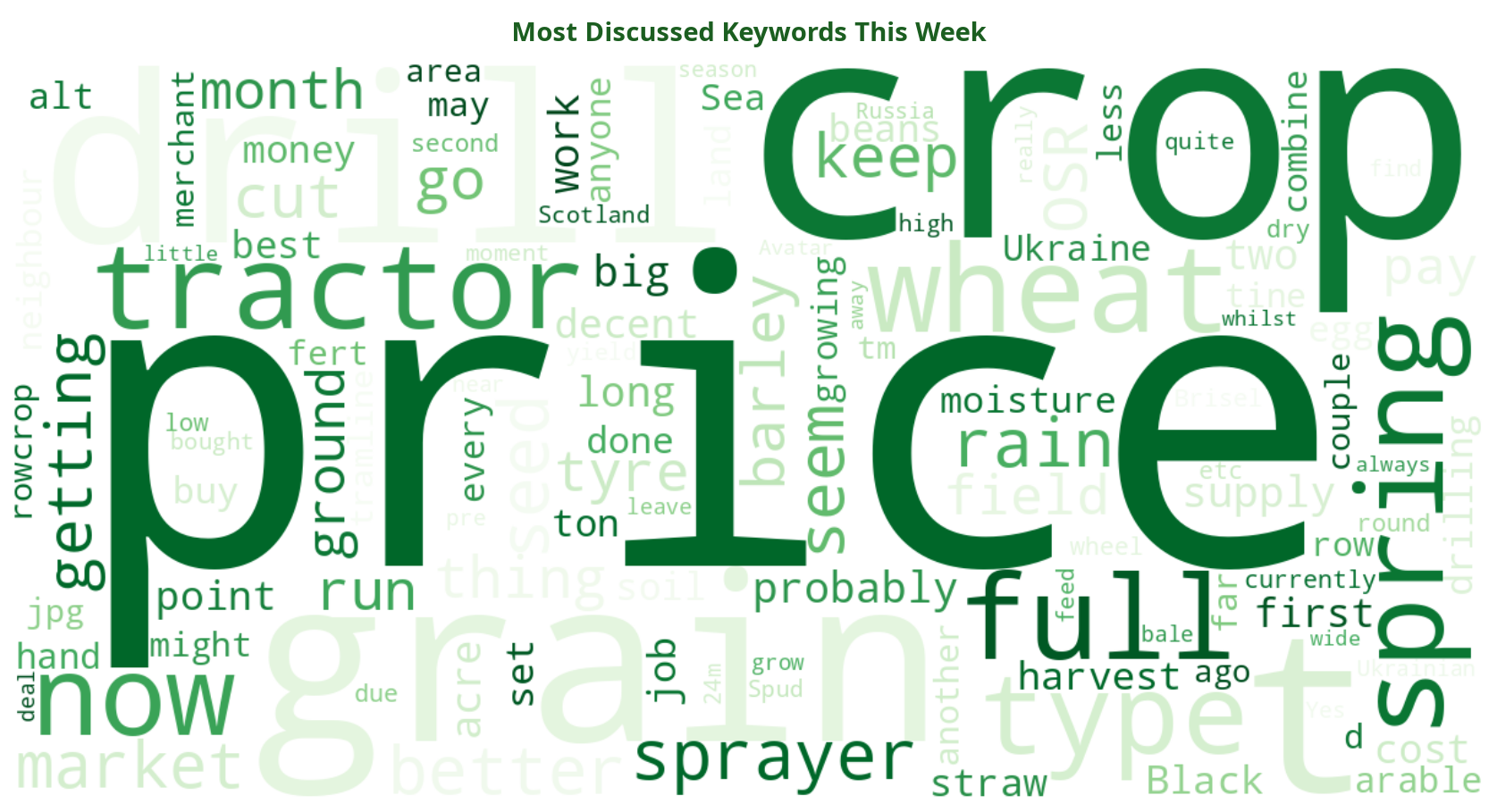
This week’s activity in the Arable section of The Farming Forum was dominated by vibrant discussions on commodity pricing, harvest progress, and innovative agronomic practices. The ongoing Combinables Price Tracker and Harvest 2026 conversations garnered the highest engagement, highlighting growers’ concerns on market volatility amid challenging global supply dynamics and local yield variability. Debates around the cost-benefit of investment in machinery, particularly the use of 650 tyres across 24m tramlines, reflected growers’ efforts to optimize efficiency without incurring unnecessary expense. Additionally, threads concerning sustainable fertiliser use, alternative crops like soya and quinoa, and crop establishment techniques suggest a continuing interest in adapting to evolving economic and environmental conditions. Overall, the week showcased a balanced mix of market analysis, practical farming experiences, and forward-looking crop management strategies.—
Conversations at a Glance
| Conversation Name | Contributions | Key Topics |
|---|---|---|
| Combinables Price Tracker | 91 | Grain prices, market supply-demand balance, merchant margins, feed barley pricing |
| Harvest 2026 | 63 | Yield reports, crop conditions, drying and storage strategies, malting barley quality |
| 650 tyres all year round on 24m tramlines. Am I mad? | 38 | Machinery efficiency, tramline configurations, cost analysis, soil impact |
| Egg Layer’s Dung… | 25 | Organic fertilisation, nutrient management, benefits of poultry manure |
| Fertiliser Price Tracker | 24 | Fertiliser cost trends, supply challenges, purchasing strategies |
| How are you establishing OSR? | 20 | Oilseed rape sowing techniques, crop establishment, varietal choices |
| Taking the arable back in hand | 18 | Arable management strategies, land use decisions, crop rotations |
| Spring linseed advice please. | 13 | Crop management advice, yield expectations, pest and disease control |
| November sown mulika | 11 | Crop performance, drill settings, seasonal considerations |
| Belkar | 7 | Herbicide use, weed control efficacy |
| Anyone growing soya or quinoa this year? | 6 | Alternative crop experiences, climatic suitability, market potential |
Market and Price Discussions
Combinables Price Tracker
This conversation was the most active with 91 contributions, reflecting the acute focus on grain market developments. Members shared recent transaction prices for wheat and barley, with reported feed barley prices around £162/t ex-farm and some offers as high as £190/t in Devon, indicating regional supply pressures and logistical constraints such as lorry availability. The discussions highlighted ongoing tension between farmer expectations and merchant realities; several contributors expressed skepticism regarding merchant margins, suggesting many are operating at a loss amid competitive markets. There was also considerable debate on the influence of large-scale operators and grain terminal investments on price suppression, with references made to geopolitical factors including Ukrainian grain exports and global monopoly dynamics shaping pricing.Fertiliser Price Tracker
Following the grain price conversations, fertiliser costs continue to be scrutinized with 24 contributions. Farmers reported fluctuating input prices, emphasizing the difficulty in securing supplies at reasonable rates. There was consensus that fertiliser remains a significant budget pressure, with discussions touching on procurement timing and the potential benefits of organic alternatives such as egg layer dung to mitigate costs.—
Crop Performance and Harvest Progress
Harvest 2026
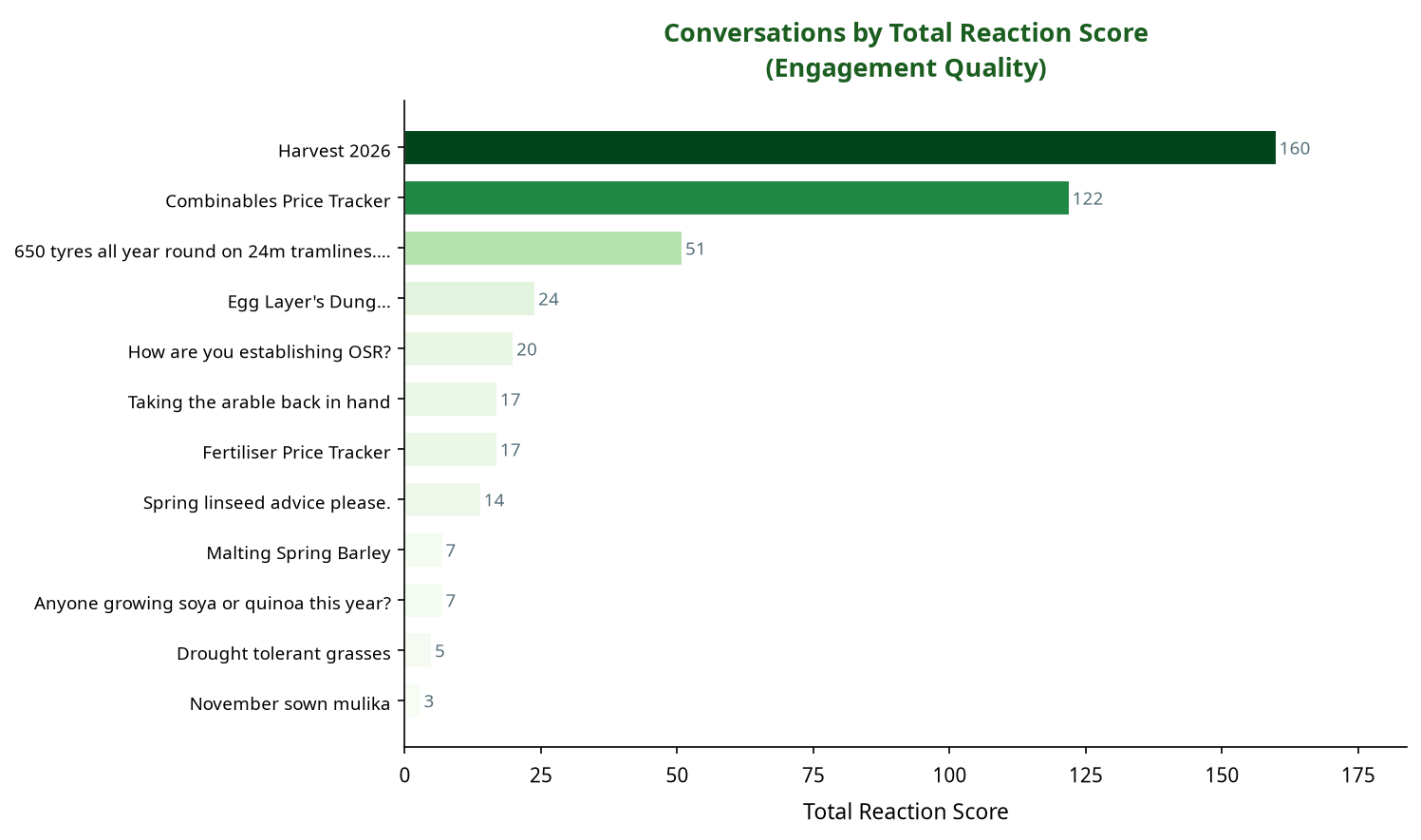
This conversation saw 63 contributions featuring diverse updates on crop yields and quality. Several contributors reported surprisingly high yields in certain fields, such as batches near 2.4 tonnes per acre for spring barley, attributed to favourable weather conditions earlier in the season. Malting barley quality was also a focus, with reports of lower-than-typical volumes but high germination and nitrogen readings. Advice on grain drying and storage practices was exchanged, alongside queries on optimising straw baling timing to ensure optimal moisture content.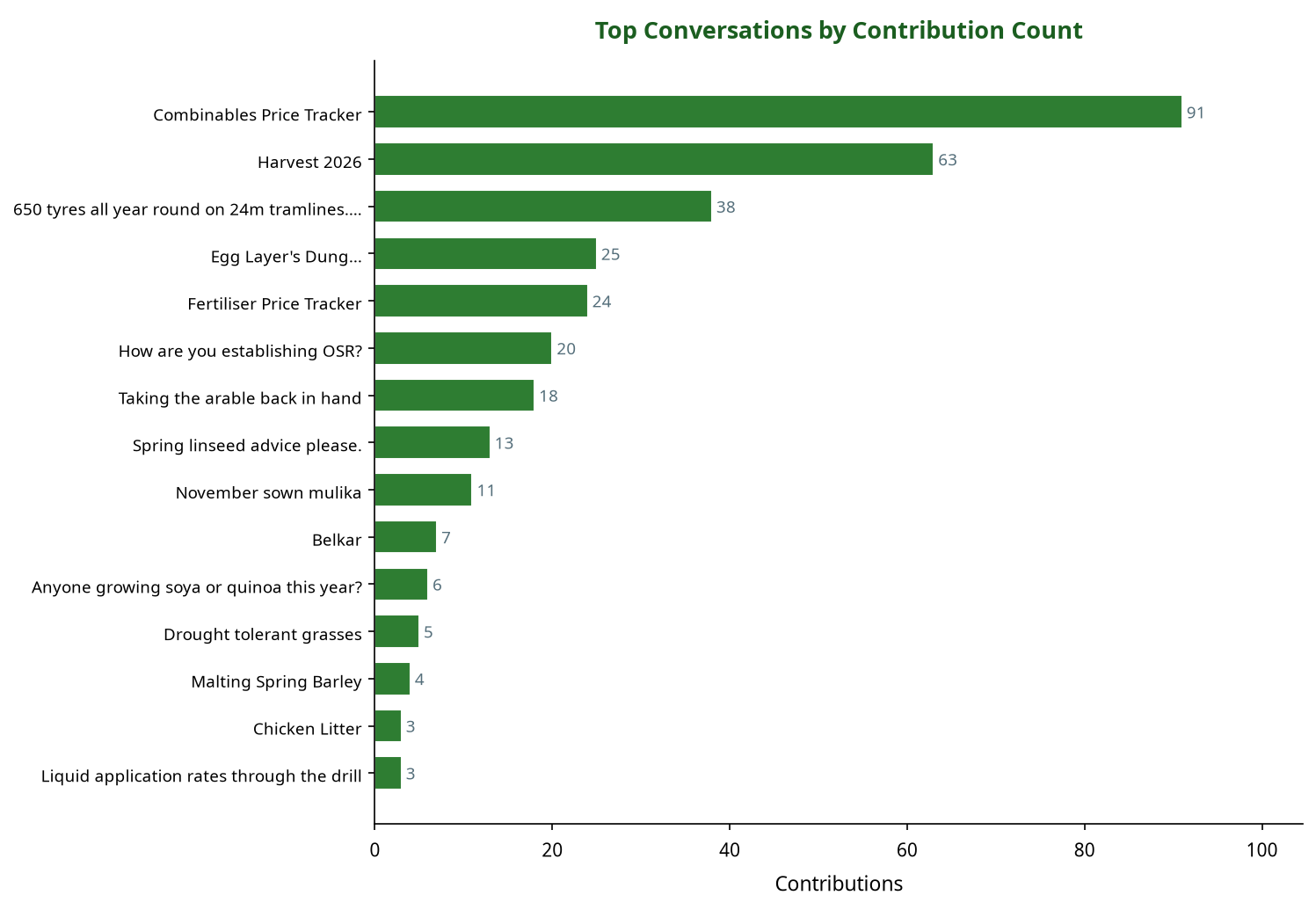
Establishing OSR and Alternative Crops
The thread on How are you establishing OSR? (20 contributions) discussed varietal selection, drill settings, and techniques to manage establishment risks under variable weather patterns. Complementary to this, the relatively smaller conversation on Anyone growing soya or quinoa this year? (6 contributions) revealed cautious experimentation with these alternative combinable crops. While some growers recalled previous attempts with mixed success, there remains curiosity about the potential for such crops under warming climate regimes, although concerns about market demand and harvesting challenges persist.—
Technology, Machinery, and Agronomic Practice
650 Tyres All Year Round on 24m Tramlines
This focused discussion attracted 38 contributions debating the practicality and economic justification of maintaining 650 tyres on wide tramlines year-round. Contributors exchanged experiences on soil integrity, cost implications, and machinery wear. Opinions varied, with some advocating the benefits of larger tyres to reduce compaction and improve flotation, while others questioned the capital outlay involved, highlighting the need for balance between innovation and financial prudence.Organic Inputs and Nutrient Management
The Egg Layer’s Dung… conversation (25 contributions) explored the merits of using poultry manure as an organic fertiliser source. Members shared experiences on nutrient content, spreading techniques, and potential yield impacts. This conversation tied into wider fertiliser discussions and reflected a growing interest in integrating organic inputs to improve sustainability and reduce reliance on expensive chemical fertilisers.—
Miscellaneous Topics
Additional smaller conversations reflected ongoing interests in spring linseed management, herbicide efficacy (Belkar), crop drying logistics, and discussions on new cultivars such as November-sown Mulika. These threads, while less active, highlight the diverse range of agronomic concerns among arable farmers striving to optimize production amidst evolving environmental and economic challenges.
—
Conclusion
The week’s discourse within the Arable section presents a clear narrative of farmers navigating a complex landscape of market volatility, input cost pressures, and crop management challenges. High engagement in price tracking conversations underscores the critical importance of market intelligence for decision-making. Meanwhile, rich harvest reports provide cautious optimism about yields tempered by practical considerations for storage and quality. Machinery investment continues to spark debate, juxtaposing innovation with cost efficiency. Emerging interests in alternative crops and organic inputs reflect adaptive strategies to enhance resilience. Collectively, these conversations demonstrate a proactive and informed farming community committed to balancing productivity, profitability, and sustainability going into the coming season.—
For ongoing updates, participants and readers are encouraged to follow the active conversations linked throughout this summary.