Weekly Summary: Arable Section
Date Range: 14th – 20th September 2026
—
Executive Summary
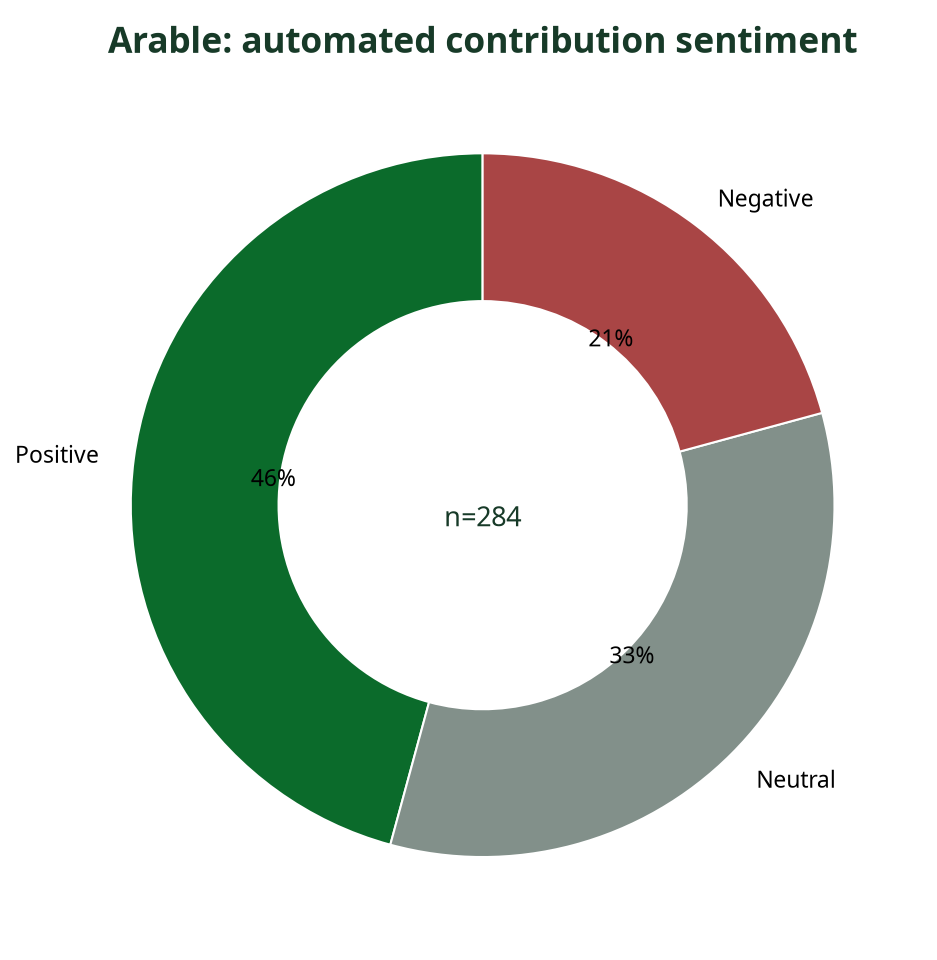
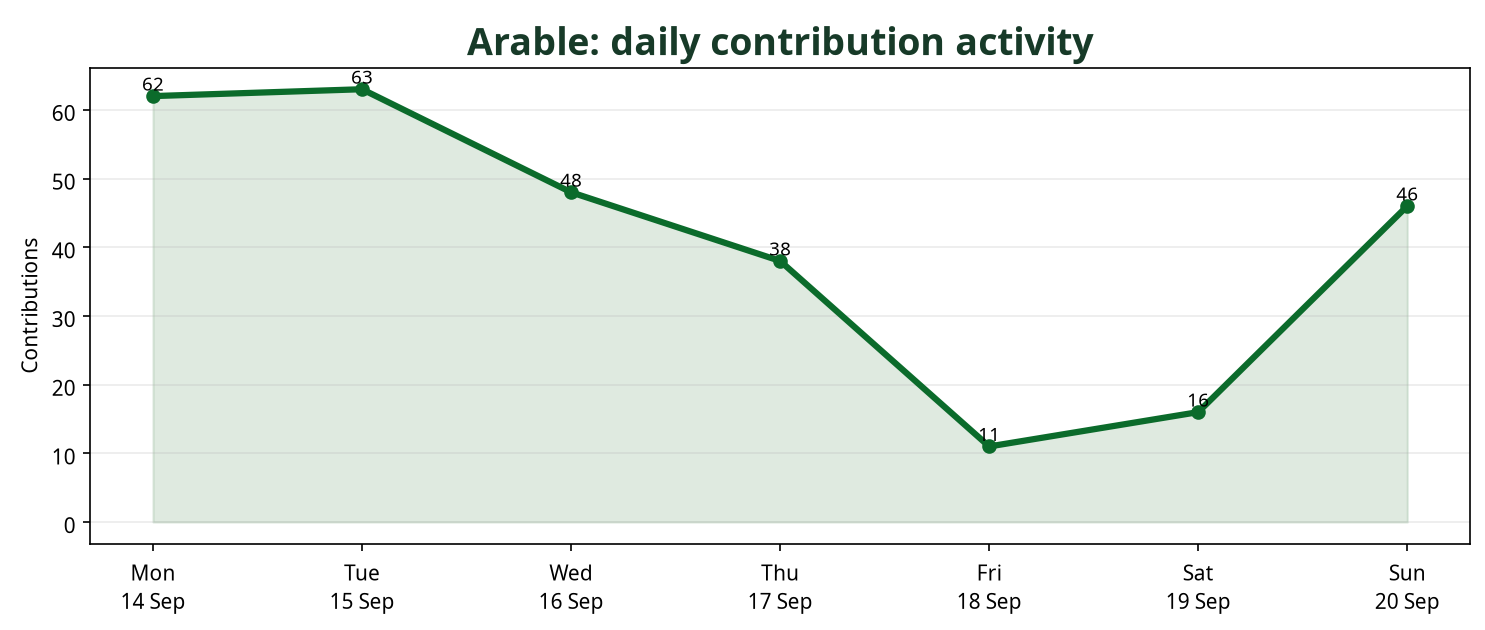
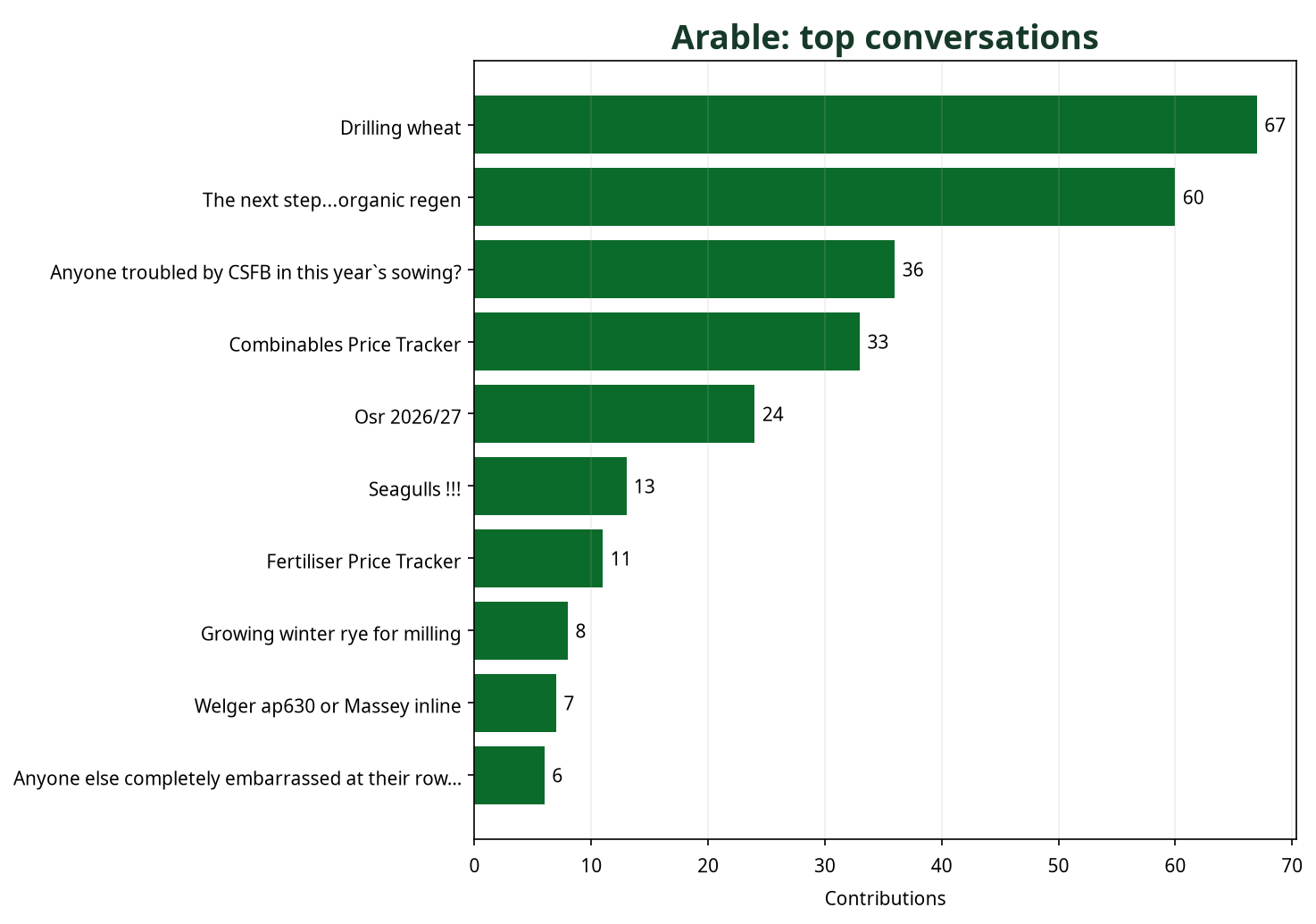
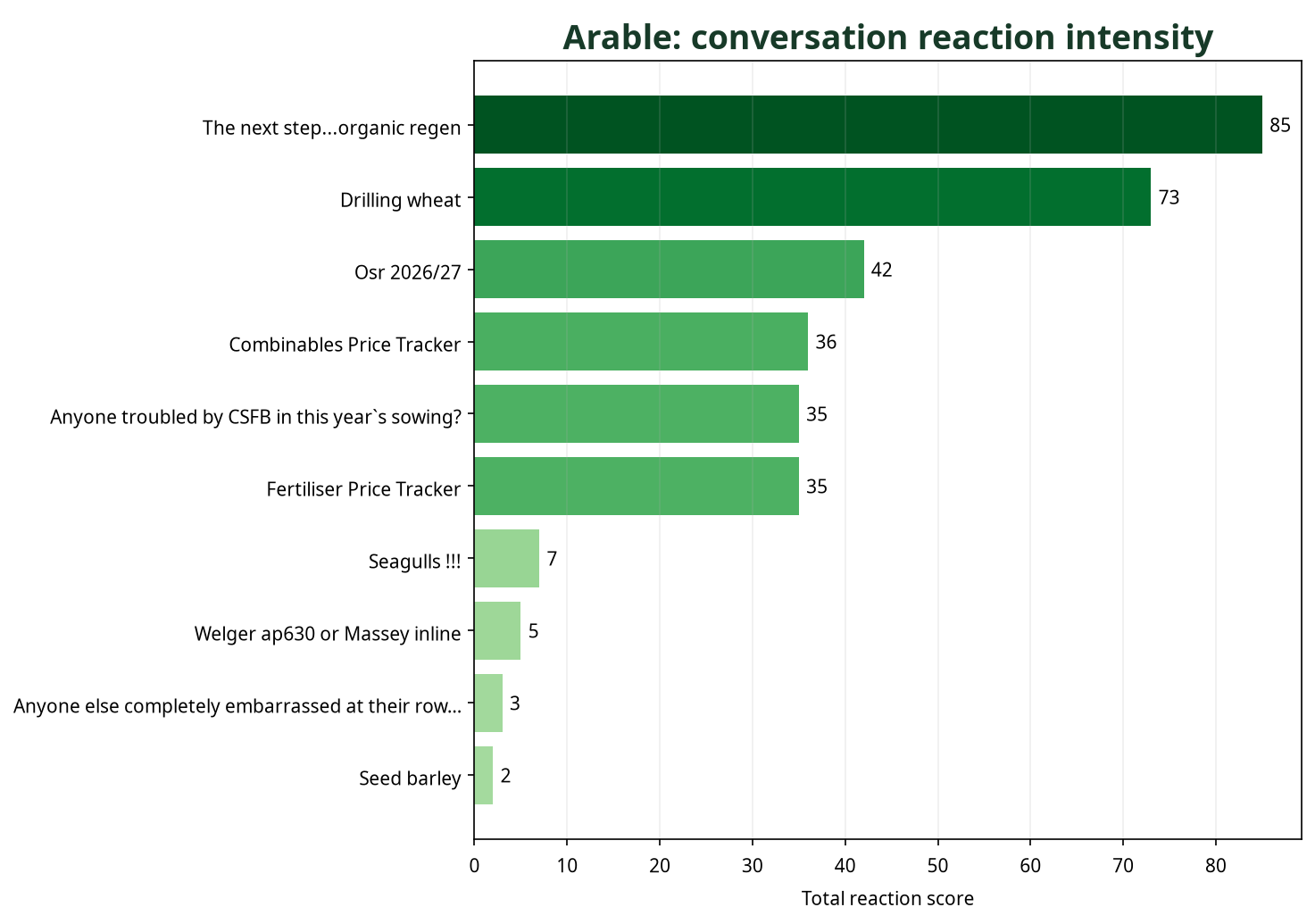
This week’s Arable section was active, with 284 contributions across 16 conversations. The dominant practical topics were autumn establishment decisions and variability between fields, a sustained discussion about moving towards organic or regenerative systems, and ongoing concern about input and commodity price signals. Contributors framed establishment choices around local soil moisture, weather and workload rather than a single recommended method, and reported patchy results for oilseed rape where flea beetle pressure was mentioned. Market conversations combined local combinable price reports with contributor-reported fertiliser quotes, conveying uneven regional signals and perceived upward cost pressure. A smaller set of posts compared visible combine losses and a niche interest in milling rye where outlets exist. Across threads contributors offered farm-specific experience and candidate approaches rather than uniform guidance; the exchanges repeatedly highlighted uncertainty driven by local conditions, logistics and near-term input cost visibility.
—
Conversations at a Glance
| Conversation Name | Contributions | Key Topics |
|---|---|---|
| Drilling wheat | 67 | wheat establishment timing; weather and soil conditions; variation between fields |
| The next step…organic regen | 60 | transition economics; soil-building aims; mixed-enterprise logistics; labour and equipment requirements |
| Anyone troubled by CSFB in this year`s sowing? | 36 | cabbage stem flea beetle pressure; oilseed rape establishment variability; local weather and field conditions |
| Combinables Price Tracker | 33 | local crop price reports; regional delivery differences; international supply references |
| Osr 2026/27 | 24 | oilseed rape establishment; field-to-field variability; pest pressure and crop condition |
| Seagulls !!! | 13 | seagull flock behaviour |
| Fertiliser Price Tracker | 11 | contributor-reported fertiliser quotes; regional availability; short-term cost pressure |
| Growing winter rye for milling | 8 | winter milling rye interest; market outlet questions; farm-specific establishment experience |
| Welger ap630 or Massey inline | 7 | Arable discussion; practical contributor experiences |
| Anyone else completely embarrassed at their rows of combine losses | 6 | visible harvest losses; throughput versus loss trade-offs; differences between crops and fields |
—
Detailed Conversation Analysis
Establishment and autumn workload
Wheat drilling choices and timing
The largest single conversation, titled “Drilling wheat” and containing 67 contributions, focused on timing and technique for wheat establishment. Contributors compared progress across fields with differing soil moisture, recent weather and workload constraints, emphasising trade-offs between sowing windows and autumn operations. Posts largely described farm-specific decisions: whether to prioritise early drilling where soils were warm and dry, or to wait for more consolidation in heavier land. Several accounts stressed that operational capacity and sequential workloads shaped choices as much as agronomy, so no single establishment approach emerged as a clear preference.
Oilseed rape establishment and pest variability
Two related threads — one reporting 36 contributions about cabbage stem flea beetle and another with 24 contributions on OSR 2026/27 — described highly variable oilseed rape establishment. Contributors reported outcomes ranging from severe early defoliation to satisfactory stands, and repeatedly linked differences to local pest pressure, soil conditions and previous field history. The tone was observational: posts noted that flea beetle was a meaningful source of uncertainty for cropping decisions but also emphasised that results were field-specific and contingent on timing, cover and microclimate rather than a single causal factor.
Systems change: organic and regenerative interest
Economic considerations and market uncertainty
A 60-contribution discussion on moving towards organic or regenerative production centred on the economics and uncertain market premiums. Participants weighed potential reductions in purchased inputs against the prospect of price differentials and transitional yield impacts, stressing that anticipated premiums and return profiles remain speculative and highly dependent on identified outlets. Posts highlighted that decisions were driven by farm-specific balance sheets and risk tolerances, with several contributors describing modelling attempts and the need to factor in transitional years, certification timelines and potential short-term revenue gaps.
Logistics, labour and equipment implications
The same exchange also emphasised practical logistics: integrating livestock, changing rotations and acquiring different cultivations or planting equipment were frequent concerns. Contributors discussed labour intensity, contractor availability and the capital cost of adapting machinery fleets, presenting a range of personal approaches rather than standard prescriptions. Several posts underlined that the feasibility of any system change depended on existing enterprise mix and on-the-ground capacity to absorb new routines, so the practical barriers were cited as frequently as the theoretical environmental aims.
Markets, inputs and niche outlets
Local price signals and input cost reports
Contributors used a 33-contribution “Combinables Price Tracker” thread alongside an 11-contribution fertiliser thread to share local price reports and supplier quotes. Posts stressed regional basis differences and delivery-point variation, with several contributors expressing concern about near-term direction and perceived upward input cost pressure. These were presented as individual observations rather than verified national benchmarks; participants cautioned that local offers and availability differed by product and timing, and that short-term volatility made forward planning harder for some farms.
Niche demand: milling rye and crop choices
A smaller exchange of 8 contributions considered winter rye for milling, reflecting niche interest where a reliable outlet exists. Contributors compared establishment experiences, rotational fit and the importance of securing a buyer before committing area. The discussion was explicitly farm-specific: posts noted that milling rye could suit certain rotations and farms with access to a defined market, but that the crop’s attractiveness depended on outlet certainty and how it interacted with broader management goals rather than on generalised yield or price expectations.
Harvest operations and visible losses
Combine losses and harvesting trade-offs
A compact conversation of 6 contributions about visible combine losses explored the trade-off between harvest throughput and grain left in the field. Contributors shared observations from different crops and machine setups, attributing visible losses to a mix of crop conditions, settings and harvesting pace. The posts framed losses as a management balance rather than a single mechanical failure; some described experimenting with settings and harvest timing, while others observed that expectations varied by crop and yield level. The thread emphasised individual experience over standard performance benchmarks.
—
Conclusion
Across the week the forum conversations combined practical field-level reporting with economic reflection. Contributors emphasised that establishment outcomes — for wheat and for oilseed rape — were tightly bound to local soil moisture, weather and workload constraints, producing a wide range of field-level experiences rather than a single best-practice answer. The sizable discussion about moving to organic or regenerative systems highlighted both the aspirational reasons for change and substantial practical and financial uncertainties, underlining the importance of farm-specific planning. Market threads offered many local price and fertiliser quotes, conveying uneven regional signals and a perception of cost pressure. Smaller but consequential exchanges on combine losses and niche crops such as milling rye reinforced that outlet certainty and operational choices remain crucial. All reported observations are anecdotal and reflect individual farm experiences rather than verified benchmarks.
—
For ongoing updates, readers can follow the active conversations linked throughout this summary.
This summary reflects contributions posted during the stated period. It is not a representative survey and should not be treated as professional, legal, financial, veterinary, agronomic or safety advice.