
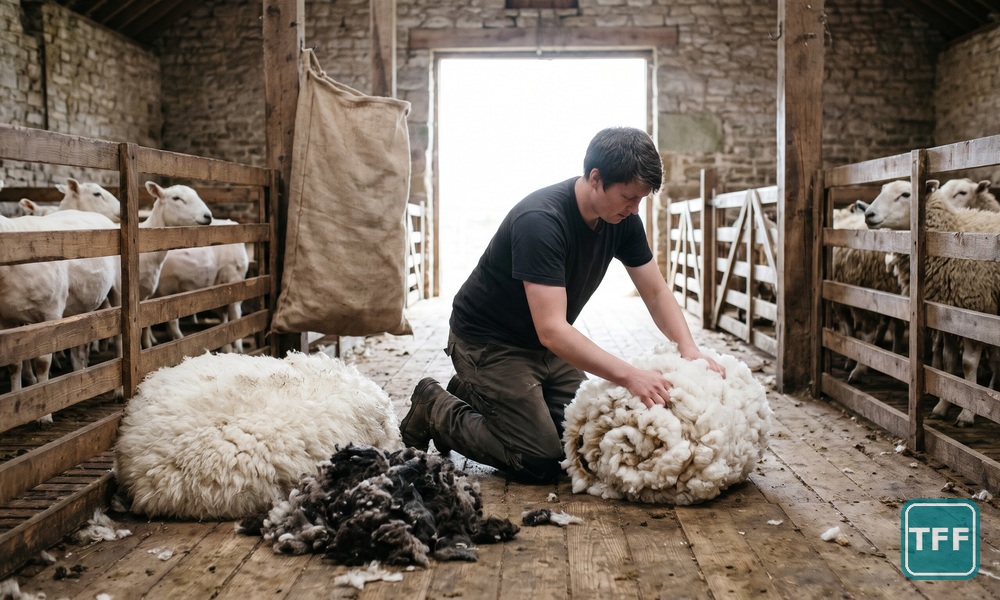
The 2026 shearing season is over, and the contractors and farmer-shearers who clipped through it left a season-long record of where the trade is heading. A conversation on The Farming Forum that ran from the first tups in March to fly-struck lambs in September reads as an audit of the clipping trade: battery handpieces proving themselves at the small flock end, a drought summer that forced shade rules onto the job, wool finally worth the shearing, and the final season of the overseas shearer concession.
By TFF News | 1 November 2026 | Livestock
The conversation drew 233 visible contributions and 13,648 views between 6 March and 4 September 2026, collecting 532 reactions at an average of 2.28 per contribution. It is a working diary kept by people who shear for a living and the farms that hire them, not a representative survey of the sector.
The battery handpiece earns its keep
Kit was the biggest substantive theme of the season, carrying 52 contributions, and the sharpest exchanges were about what a shearer’s money should buy. One contributor priced the premium end of the counter: “Heiniger evo + solid drive £230 more than a Nexus sensor just paying the extra for the name??” A working shearer answered “Theere is an unbelievable difference in the running of the heiniger dropper that will make your days shearing so much easier”, while others said the extra was only worth it at volume.
Below the premium machines, the battery handpiece has moved from novelty to working tool. One contractor reported “Bought a rambo about 4 years ago now. It paid for itelf in small jobs in the first couple of days.” Another put a season through a motorised handpiece: “I have the handypiece and used it to shear about 750 over small flocks this season and 500 last year”, reckoning about 48 commercial ewes to a battery. A third flock owner reported “I imported a brushless shearing handset direct from China in April: it was about £70, is light, has plenty of power, uses standard 18V Makita power-tool batteries, and uses standard combs and cutters.” His regular shearer tried it on a large Texel ewe, managed easily, and “He now wants one himself.” The scepticism was practical: nobody wanted to shear big numbers with battery kit, and a backpack machine drew the objection “the last thing i want is to add more weight to me when I'm shearing!” None of the firms named were part of the conversation; every account here is one working shearer’s experience, not a product test.
No shade, no shear
The season these machines worked through was brutal. The Met Office recorded England’s driest July in 190 years, and by early August drought had been declared across most of the country, per the Environment Agency’s dry weather reports. The conversation turned that into working rules. “Make sure your in shade or under cover, DO NOT SHEAR IN DIRECT SUN!” warned one shearer at the end of May, and a contracting gang confirmed “No shade no shear has been our policy this week.” Gangs worked under trees, tarpaulins tied to loader booms, even a marquee, and the heat ran deep into the season: “35 degrees, 9th July, fit, Still wouldn't shear!!” Farms that shaded and fed their gangs said it kept them coming back each year.
Wool worth shearing again
Behind the season sat a wool trade in recovery. British Wool’s average return for the 2025 clip rose from 40p/kg to 68p/kg, a ten-year high, and it expects a further lift of around 30p/kg for 2026, taking many core grades past £1/kg, according to Farmers Weekly. The NAAC price guide for 2026-27 sets the typical shearing rate at £1.93 a head for ewes and £3.87 for rams, so a decent fleece can cover the direct cost of its own shearing for the first time in many years.
The conversation felt that shift in small ways. In April one contributor was held up because “Want to go shearing end of the week but the wool board don't have any bags in the local collection point for another couple of weeks”, and by July contractors were being pressed to finish flocks the day before the wool was booked in to the board. When wool was worth nothing, nobody booked it in anywhere.
The small flock round grows up
A quieter signal is where new work is coming from. One young contractor has built a round on breeds the big gangs avoid: “I ended up doing 100 Ryelands last year and getting up to 150 this year.” One new client’s sheep had gone nearly eighteen months unshorn before he took the weight off, and small-flock owners routinely ask for feet trimming on the board. The battery handpieces above are the kit this round runs on.
It is not frictionless work. Shearers swapped stories of small flocks treated with fly products just before clipping day despite being asked not to, and of timing arguments: “Then you’ve also got the people that want their sheep clipped at the end of May but they won’t actually be properly ready until middle of June.” The welfare stake ran to the season’s end: in September one contributor reported “Sheared my lambs for the second time. Did them start of June and have had 4 maggot, this last few days, out of 17, so I sheared them all again.”
The labour question 2027 will answer
Underneath the kit and the prices sits the question of who does the work. The job’s reality was put plainly: “6pm you've already been at it 12 hours and you've got another 3 or 4 hours to go to finish” on the hard days, as one shearer described a wet-year shed. The ones who stay are deliberate about the craft: “Can't beat a shearing course, will always be something to learn, minor changes and position can make major differences.” said one, and a contractor measured a career in retention: “when you going back to same customers over 26 years every single year then you doing something right”
In March the conversation caught the policy moment that will shape next season. The Home Office first refused the annual visa concession for Australian and New Zealand shearers, then reversed, and FarmingUK reported that the scheme ran only to 30 June 2026 and will not be renewed, the Home Office saying it expects the sector to complete its transition to domestic labour. Since 2011 the concession had allowed up to 75 overseas shearers a year, shearing between 1.5 and 2 million sheep. Contributors read it at the time: “One year only …… just kicking the can down the road.” said one, while another assumed “Its a rolling thing though, they have to do a last minute exeption every year”. That rolling assumption has now been ended in writing.
What the trade is left to answer
Next summer will be the first since 2011 with no overseas gangs arriving under a concession, just as wool prices make every fleece worth taking properly and a second drought year has shown how narrow the comfortable shearing windows can get. The National Sheep Association points to 800 to 1,000 people entering shearing training each year. Whether that is enough hands in a hotter, shorter season is the question the 2027 diary will answer.
Read the source conversation and analysis
Read the full conversation on The Farming Forum here. A nine-slide analysis of the conversation, with engagement, sentiment and theme breakdowns, is available as a PDF: Shearing Season 2026: conversation analysis.
This conversation had been viewed 13,669 times on The Farming Forum when counted on 1 November 2026. Want your brand in the room when farmers talk livestock? Book advertising with Agri Web Media.