Weekly Dairy Sector Summary
The Farming Forum | 1–7 June 2026—
Executive Summary
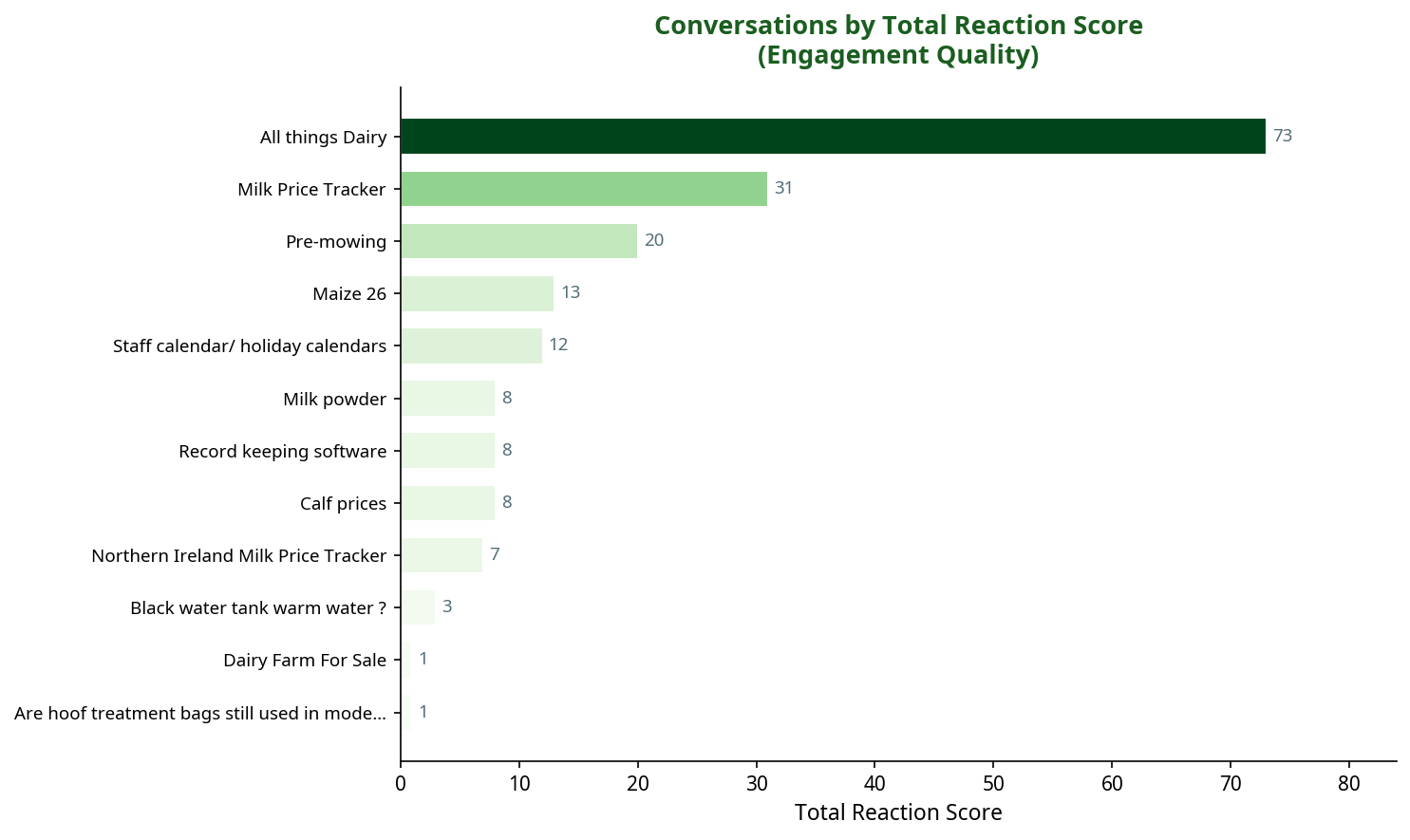
This week in the Dairy section, discussions largely revolved around milk pricing trends, pasture management with particular focus on pre-mowing practices, and operational challenges including staff scheduling and record keeping software. Milk price tracking, both nationally and regionally, remained a high priority amid continuing price pressures and economic concerns. Conversations on calf prices and milk powder sparked considerable interest, highlighting industry sensitivities around input costs and calf rearing strategies. Meanwhile, debate around pasture management methods, especially pre-mowing versus topping, underscored the careful balancing act farmers undertake to maximize feed quality in the context of variable weather patterns and pasture conditions. Technology adoption in dairy farms—spanning software and robotic milking—was touched upon but remains a niche topic. Overall, contributors shared practical insights and sought peer advice on improving efficiency and profitability in a demanding market environment.—
Conversations at a Glance
| Conversation | Contributions | Key Topics Covered |
|---|---|---|
| Milk Price Tracker | 24 | Current trends, regional variations, economic impact |
| All things Dairy | 24 | General dairy farming issues including software usability |
| Pre-mowing | 21 | Pasture management techniques, feed quality, mower performance |
| Staff calendar/ holiday calendars | 17 | Workforce management, scheduling challenges |
| Maize 26 | 13 | Crop management for feed, contractor rates |
| Northern Ireland Milk Price Tracker | 12 | Regional pricing updates, comparison to UK mainland |
| Calf prices | 12 | Market valuation, international price comparisons |
| Black water tank warm water ? | 8 | Farm infrastructure and equipment maintenance |
| Milk powder | 7 | Product quality, supplier comparisons, calf nutrition |
| Record keeping software | 5 | Software functionality, user experience, updates |
| Sand cubicles for sale | 3 | Equipment availability, bed maintenance |
| Dairy Farm For Sale | 2 | Listings and sales information |
| Are hoof treatment bags still used? | 2 | Hoof care methods, changing best practices |
| Cubicle lime | 1 | Bedding maintenance |
| Robotic milking | 1 | Adoption issues, operational feedback |
| Artificial Intelligence in dairy farming | 1 | Emerging technology interest |
Detailed Review by Theme
Milk Pricing Trends
The Milk Price Tracker conversation remained highly active with 24 contributions focused on tracking current milk prices across different regions. National prices continue to hover at challenging levels, with several contributors drawing attention to modest uplifts or depressions tied to broader market pressures. The Northern Ireland Milk Price Tracker echoed these themes, with 12 contributions providing valuable regional nuance. Members commented critically on “producing milk for 33p,” underlining widespread concerns on milk profitability. Comparisons with international markets, particularly the US, surfaced in discussions around calf prices and carcass values, offering context on competitiveness and cost structures.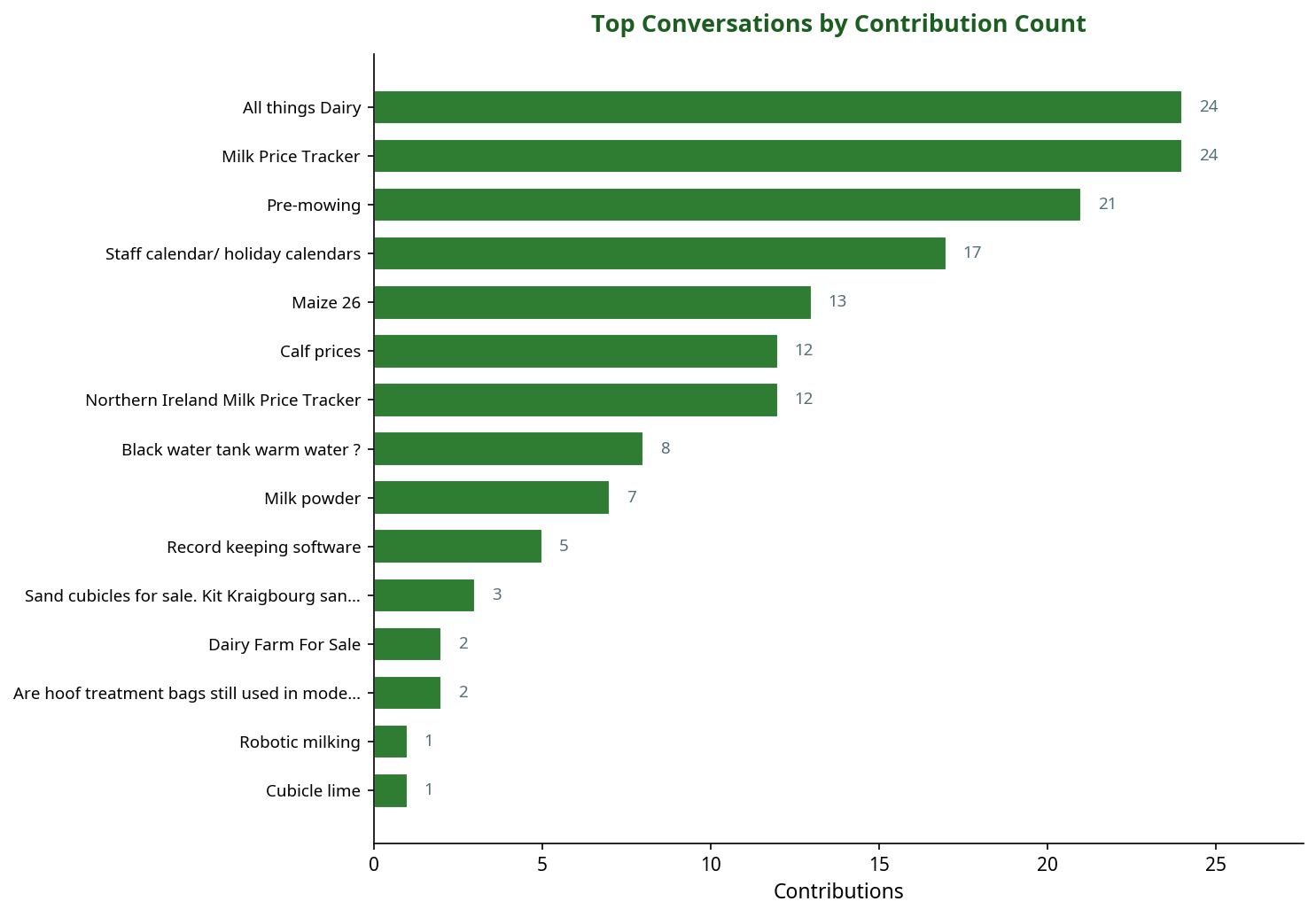
Pasture and Feed Management
Pre-mowing was a major topic with 21 contributions, reflecting active farm-level experimentation and debate. Contributors shared their experiences on pre-mowing techniques that help manage stemmy or drought-stressed covers, and contrasted these practices with topping, sparking detailed discussions on feed intake quality and labor input. Some farmers report improved feed access and intake through pre-mowing, while others raise concerns about practicality and mower performance in certain grass conditions. Images posted by forum members illustrated the varying results they have achieved. Parallel to this, Maize 26 saw discussed contractor charges for silage lifting, highlighting operational cost pressures amid rising fuel and labor expenses.Operational and Workforce Management
Staff calendar and holiday planning garnered 17 contributions, showing that workforce scheduling remains a pressing practical concern. The challenges of balancing labor availability with peak seasonal demand were reported widely, underscoring the need for effective management tools.Similarly, record keeping software was reviewed through 5 contributions where users reported frustrations with current platforms including Uniform. Feedback centered on software usability, the integration challenges with parlour systems, and a strong desire for software updates to enhance intuitiveness and workflow efficiency.
Animal Health and Welfare
Calf prices discussions featured 12 contributions, with shared experiences on market valuations and rearing practices including milk powder choices. Forum members debated the relative merits of different milk powders, reflecting a consensus that calf rearers’ skill is as critical as feed quality. A smaller conversation assessed whether hoof treatment bags remain relevant in modern dairy farming with feedback indicating most farms favor alternative treatments such as footbathing and regular trimming.Equipment and Infrastructure Queries
Discussion about sand cubicles and bedding materials focused on equipment for sale and maintenance approaches, with members sharing insights into the transition from sand to mats and managing damp beds. Black water tank warm water systems and GSM auto dialer issues were raised by a smaller subset of members troubleshooting electrical and system faults following recent weather events.—
Conclusion
This week’s conversation dynamic in The Farming Forum’s Dairy section vividly reflects the complex, interconnected challenges faced by modern dairy farmers. Economic pressures from milk price volatility, rising operational costs, and workforce management are balanced against the evolving demands of pasture and herd management. Pragmatic sharing of experience—from pre-mowing strategies to software compatibility and animal welfare innovations—illustrates a vibrant community committed to continual learning and improvement. As environmental conditions and technology continue to shape the sector’s future, these peer-to-peer engagements will remain invaluable for navigating an increasingly complex dairy landscape.—
Report compiled by [Your Name], Agricultural Journalist