Weekly Summary of the Sustainable Farming Incentive (SFI) Discussions
Date Range: 1 June 2026 – 7 June 2026Executive Summary
The Sustainable Farming Incentive (SFI) section on The Farming Forum experienced a dynamic week marked by robust discussions surrounding the upcoming SFI26 scheme, DEFRA’s payment rate calculations, and ongoing debates about wild camping on farmland. The forum saw significant engagement with the primary focus on clarifications and interpretations of SFI26 scheme details, including application timelines and operational challenges. Conversations reflected both anticipation and skepticism regarding DEFRA’s processes and payment realism. Meanwhile, the topic of wild camping generated a lively exchange of views concerning land management challenges and potential profit from hosting campers. Additionally, contributors shared insights on energy providers and practical farm management topics such as organic farming practices, potato weed control, and solar panel maintenance.Conversations at a Glance
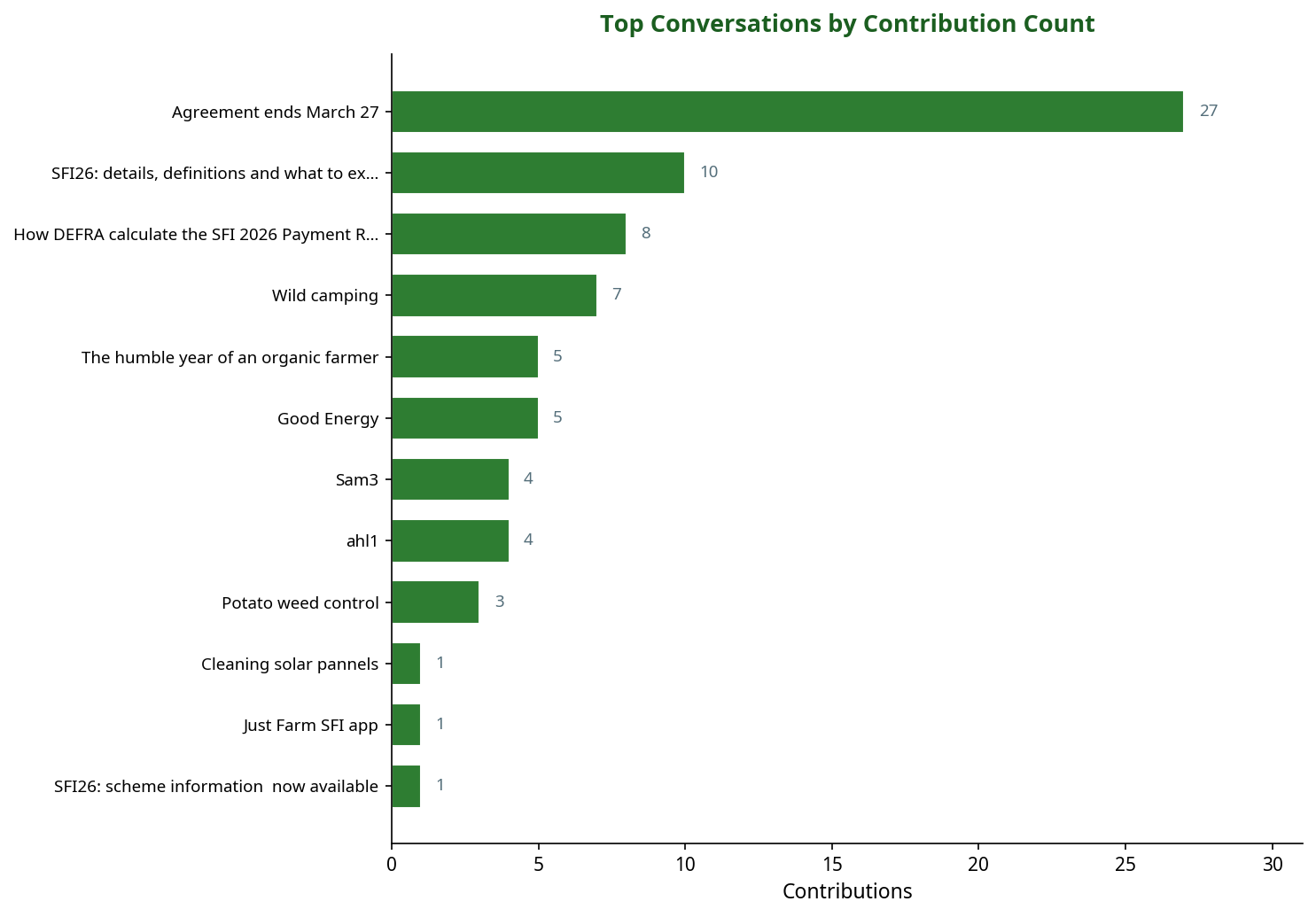
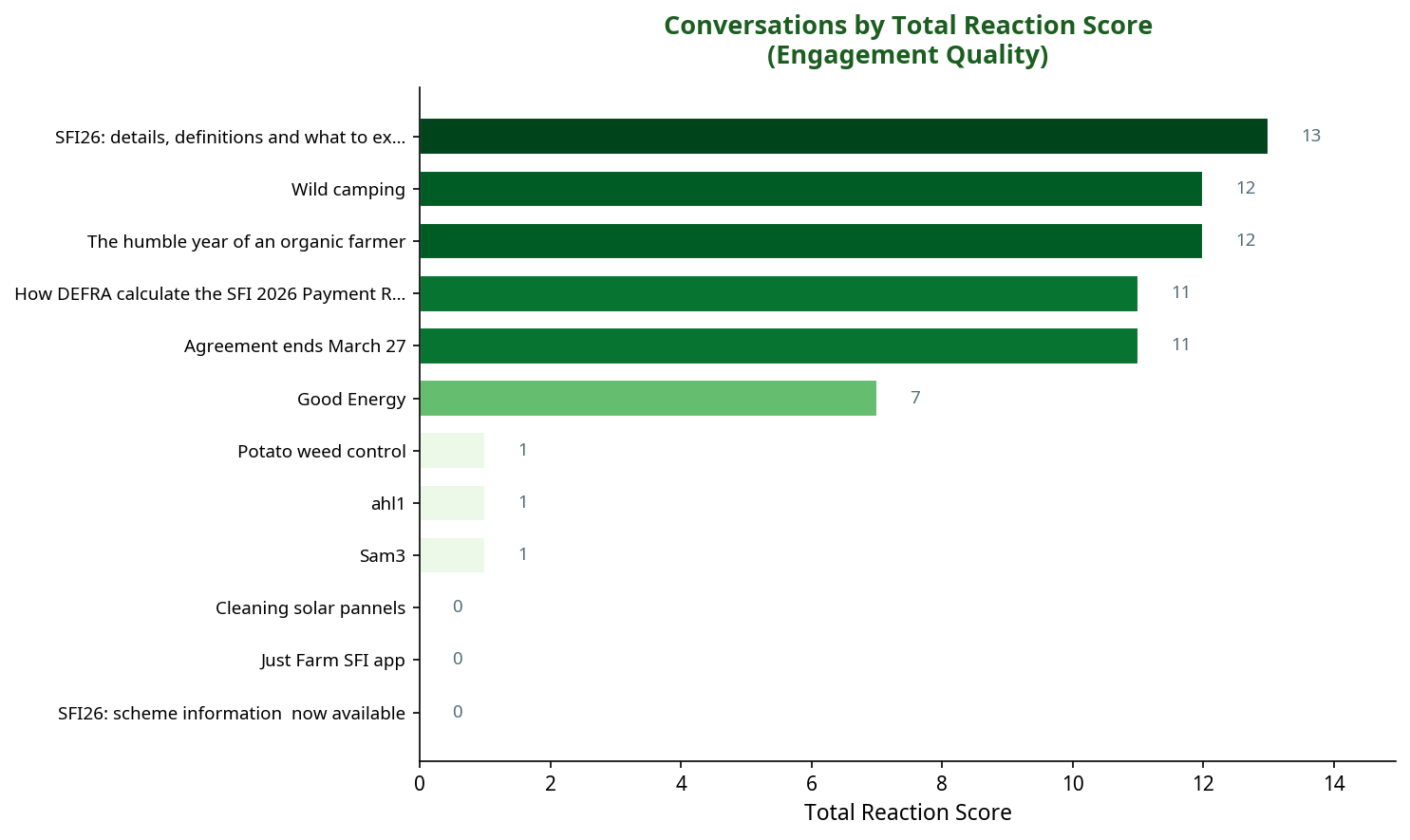
| Conversation Name | Contribution Count | Key Topics Covered | |————————————————————|——————–|——————————————————————| | Agreement ends March 27 | 27 | Transitioning agreements, scheme timings, and related advice | | SFI26: details, definitions and what to expect | 10 | Scheme rules, definitions, expected procedures for SFI26 | | How DEFRA calculate the SFI 2026 Payment Rates for arable | 8 | Payment rate calculations, realism of payments, scheme viability | | Wild camping | 7 | Hosting campers, pros and cons, site management, income potential| | Good Energy | 5 | Experiences with energy supplier service and payments | | The humble year of an organic farmer | 5 | Organic farming challenges and practices advice | | ahl1 | 4 | Miscellaneous contributions (context-specific) | | Sam3 | 4 | Miscellaneous contributions (context-specific) | | Potato weed control | 3 | Weed control methods for potato crops | | Cleaning solar panels | 1 | Practical advice on maintaining solar panels | | SFI26: scheme information now available | 1 | Official scheme update and information release | | Just Farm SFI app | 1 | App usage and support queries |
Detailed Themes and Key Conversations
#### 1. SFI26 Scheme Details, Definitions, and Expectations This conversation was one of the most active, with contributors actively dissecting the “near-final” scheme details recently published by DEFRA. Members discussed application timing, with some confusion about exact application windows; the current consensus places the next application window to open around the end of June, potentially subject to delay. Key points of debate included interpretations of specific scheme prescriptions — for example, the meaning of “unharvested” in the context of the Unharvested Cereal Option, with active debate around how it interacts with crop drilling and grazing practices. Concerns were raised about the government’s ability to meet announced timetables and the system’s capability to handle overlapping agreements, notably the stipulation that only one SFI and one Higher-Tier Environmental Stewardship (HT) agreement can be held per Single Business Identifier (SBI). Several contributors shared experience-based advice for optimizing scheme participation, including strategic crop scheduling and undersowing techniques. This conversation reiterated the tension between bureaucratic rigidity and practical farming realities, with some members highlighting the need for flexibility to avoid scheme exploitation and maintain sustainability standards. #### 2. DEFRA SFI 2026 Payment Rates – Calculations and Realism Eight contributions grappled with how DEFRA calculates payment rates for various arable options under SFI 2026. Participants questioned the realism and adequacy of payments when compared to actual input costs and operational effort. Some highlighted the likelihood of increased contractor expenses, especially relating to emerging mechanized and robotic weed control methods, which could be incentivized at £400/ha under winter cover and spring crop options. Discussion included skepticism about DEFRA’s financial assumptions and concerns over whether payments will sufficiently offset farmer expenditure, particularly for more labour-intensive regenerative practices. Contributors cautioned that while the scheme aims to promote sustainability, profitability remains paramount to many commercial farm operations. #### 3. Agreement End Dates and Transition Planning The most heavily contributed conversation covered the imminent end of existing agreements on 27 March and the transition towards SFI26. Several farmers confirmed intentions to conclude their current 2024 agreements at year-end or shortly thereafter, strategizing their approach to signing up for the new scheme. There was dialogue about potential extension viability, avoidance of clawback risks, and balancing timing of new applications against natural field management cycles. Natural England’s input was referenced regarding system constraints limiting concurrent scheme enrollments, emphasizing that farms could hold one SFI and one HT agreement per SBI to ensure compliance with cross-scheme management structures. #### 4. Wild Camping on Farm Land The topic of wild camping sparked thoughtful debate on the benefits and potential downsides. Contributors shared varied experiences — some expressing concern about environmental impacts such as human waste management and site degradation, others advocating for using controlled camping as a modest but meaningful income stream (£15 per night per person was the figure floated). Off Grid Camp representatives engaged directly with the forum, offering clarity on their operational model, which some users described as hassle-free and well-managed. However, some farmers remained hesitant due to practical challenges in maintaining facilities and mitigating nuisance impacts. The discussion also reflected a shift in attitudes towards diversification amid evolving rural economies. #### 5. Miscellaneous Farm Management and Energy Providers Additional conversations ranged from practical advice on potato weed control and solar panel cleaning to energy supply. Specifically, “Good Energy” was the subject of several contributions — some expressing initial grievances over slow payments and standing charges, while others reported improved resolution following direct communications, indicating responsive customer service. Discussions on organic farming underlined the challenges and rewards of maintaining soil health and sustainability throughout a farming year, with peer support evident in sharing grazing and ley management strategies.
Conclusion
This week’s forum activity within the SFI section underscored a farming community engaged and attentive to the evolving landscape of sustainable farming incentives. While optimism prevails regarding the potential benefits of SFI26, significant concerns remain about administrative clarity, realistic payment structures, and scheme logistics. Parallel discussions on wild camping and energy suppliers highlighted the broader context in which farmers seek diversified income and improved operational efficiency. As DEFRA progresses towards finalizing and rolling out the SFI26 scheme, ongoing dialogue and information exchange on platforms like The Farming Forum will remain vital to helping farmers navigate upcoming transitions successfully.