Weekly Summary: Dairy Section on The Farming Forum
Date Range: March 30 – April 5, 2026—
Executive Summary
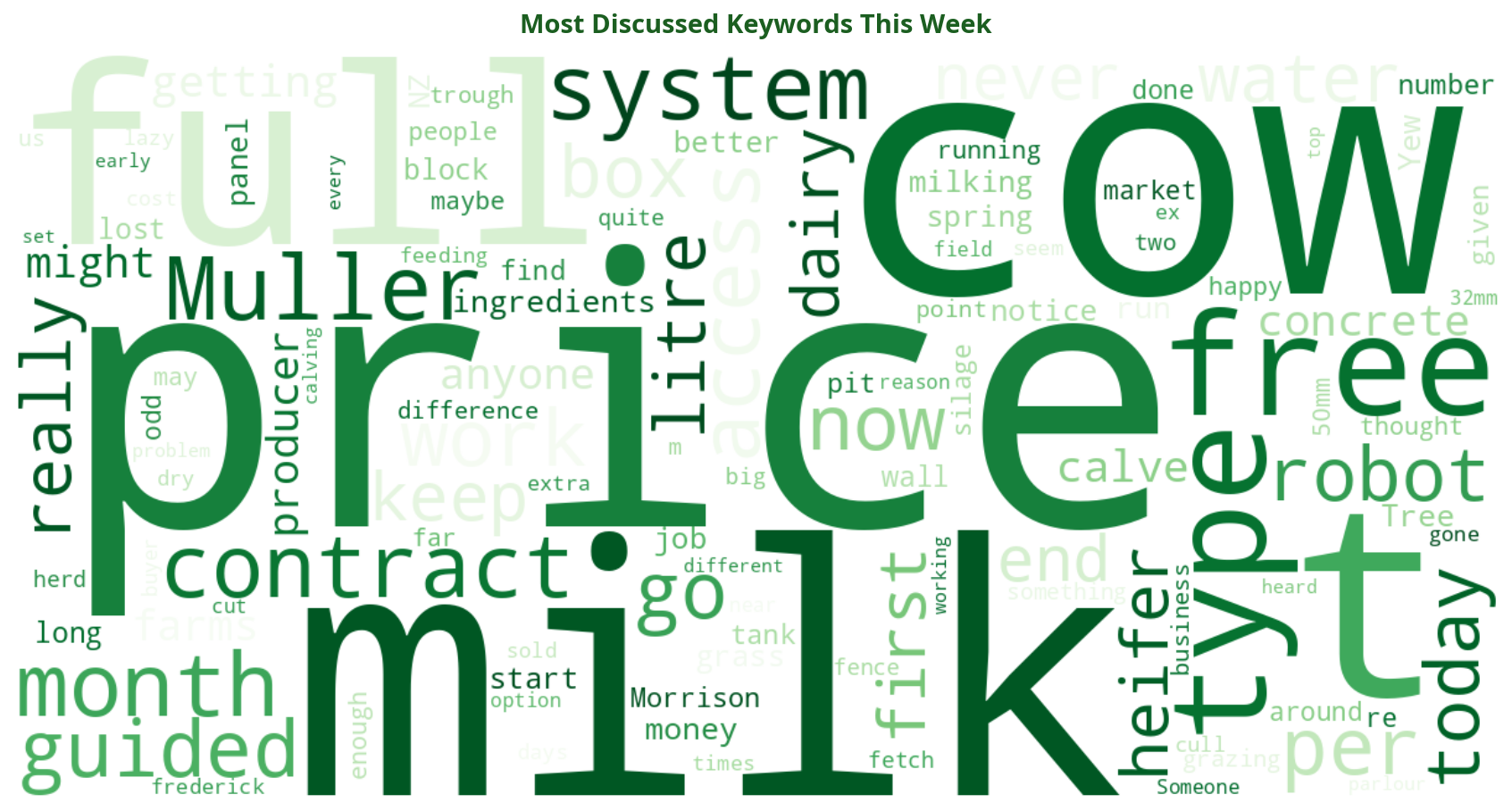
This past week in the Dairy section of The Farming Forum saw vigorous discussions across a variety of topics, with a strong focus on robotic milking systems, fluctuations and uncertainties in milk price contracts, and calf rearing practices. The ongoing debate around guided versus free access robotic milking systems dominated a significant portion of the conversations, with members exchanging practical experiences and management tips. Concerns were raised by several suppliers following termination notices from a major milk buyer, highlighting the financial and operational pressures many dairy farmers currently face. Additionally, members sought and shared advice on calf feeding strategies, infrastructure enhancements, and equipment recommendations. As calving season advances earlier than expected for some, discussions around herd management and facility adjustments have timely relevance.
—
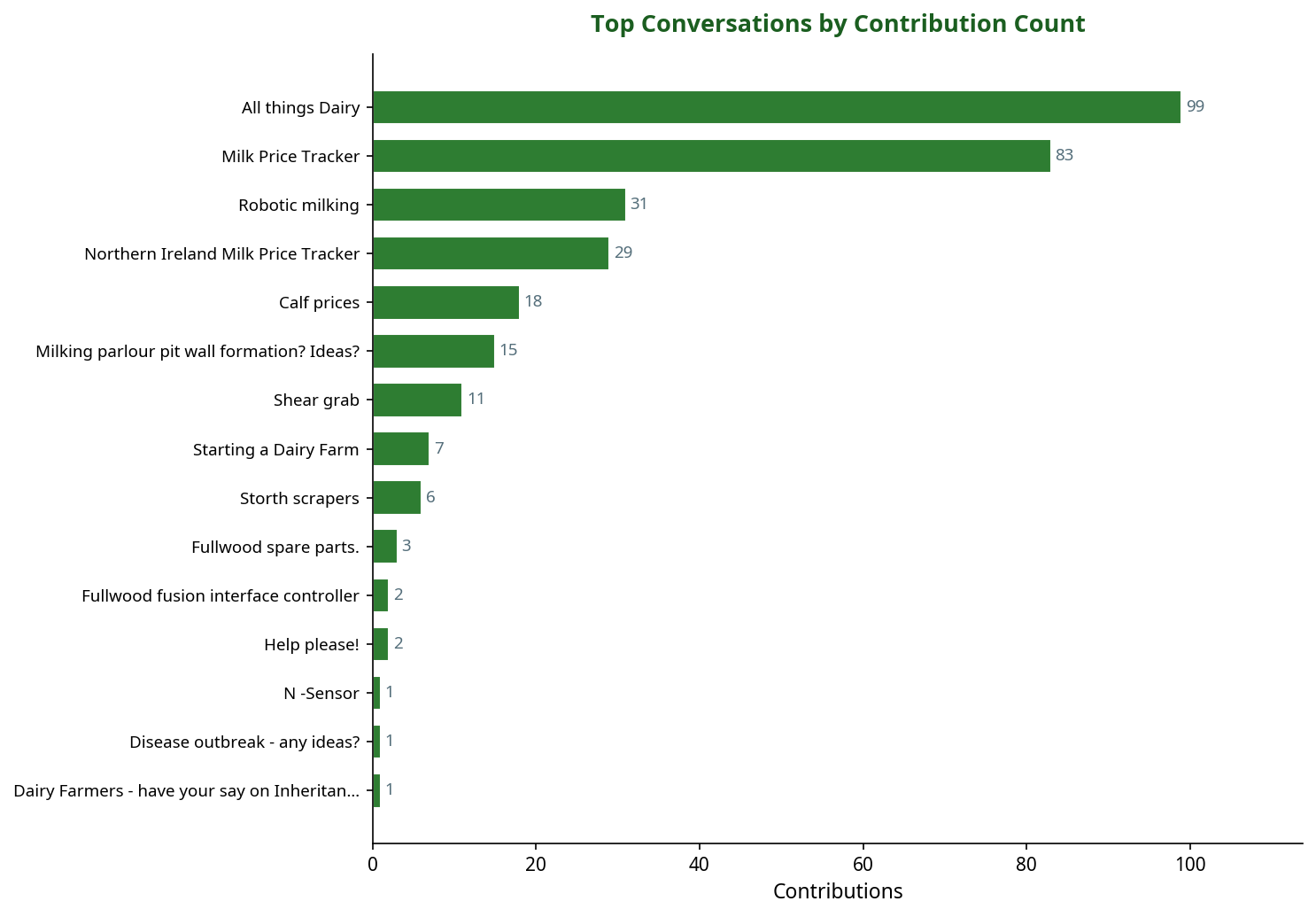
Conversations at a Glance
| Conversation Name | Contribution Count | Key Topics Covered |
|---|---|---|
| All things Dairy | 99 | General dairy farming issues; calving experiences; equipment and feed management; contract changes |
| Milk Price Tracker | 83 | Updates and speculation on milk prices; impact of contract terminations; milk buyer negotiations |
| Robotic Milking | 31 | Detailed discussion on DeLaval V300 guided milk first systems; guided vs free access; management challenges |
| Northern Ireland Milk Price Tracker | 29 | Regional price monitoring and discussions |
| Calf Prices | 18 | Calf valuation trends; feeding and growth strategies |
| Milking Parlour Pit Wall Formation? Ideas? | 15 | Infrastructure improvements; advice on pit wall construction |
| Shear Grab | 11 | Equipment recommendations and user experiences |
| Starting a Dairy Farm | 7 | New entrants’ queries and advice on initiation |
| Storth Scrapers | 6 | Scraper equipment discussion |
| Fullwood Spare Parts | 3 | Specific parts enquiries |
| Fullwood Fusion Interface Controller | 2 | Interface and software support |
| Help Please! | 2 | Miscellaneous urgent queries |
| Disease Outbreak – Any Ideas? | 1 | Rare disease management suggestions |
| N -Sensor | 1 | Precision farming sensor technology |
| Dairy Farmers – Have Your Say on Inheritance Tax Reform | 1 | Policy consultation invitation |
Detailed Conversations
Robotic Milking: Guided Milk First System Debates and Management Insights
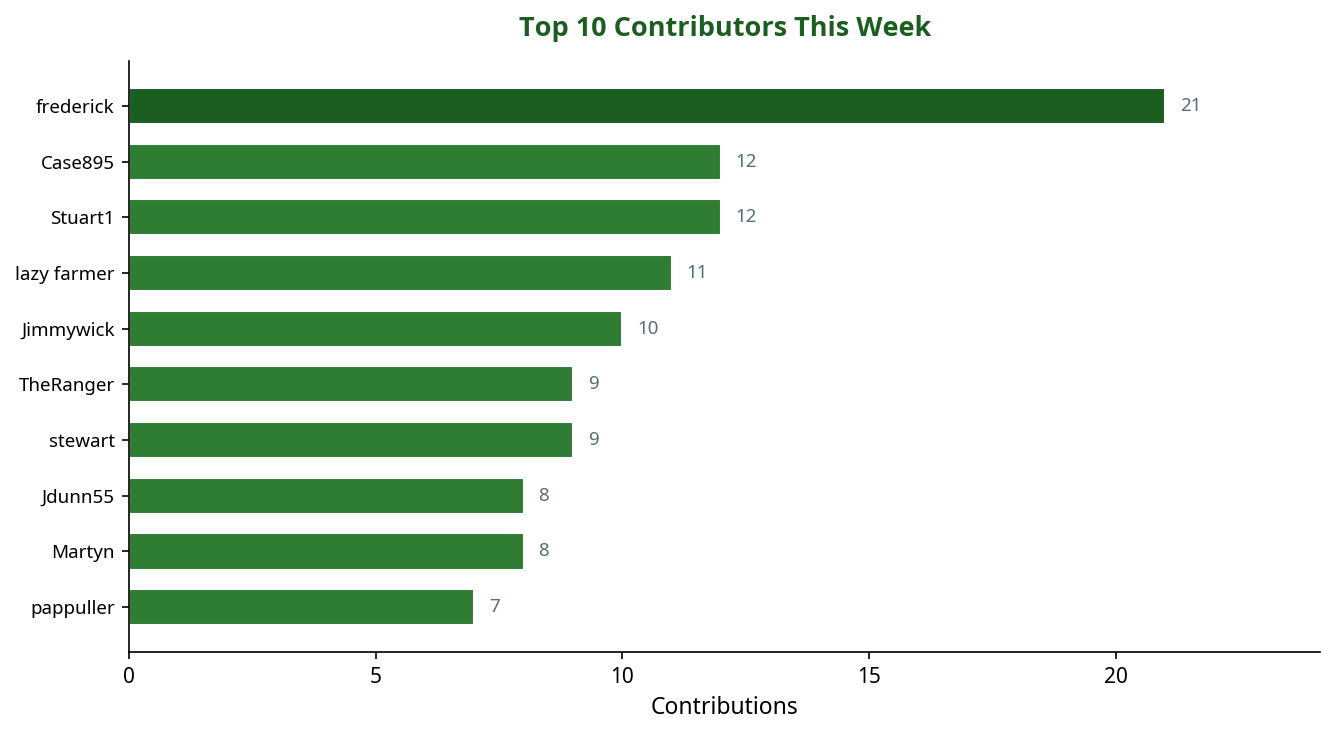
The robotic milking conversation was characterized by an extensive exchange regarding the DeLaval V300 model operated in a guided milk first system. Several contributors including Stuart1 and Nathan818 initiated a healthy debate contrasting guided systems with the more common free access setups. The central themes involved operator workload implications, milk output per milking box, cow behaviour, and the impact on herd management.
- Milk First vs Feed First: Members discussed the strategic merits of milk first systems, particularly under heavy feeding at the barrier, which may incentivize cows to use the robots more reliably.
- Cow Fetching and Motivation: Contributors like Jdunn55 emphasized operator skill’s influence on fetching late or reluctant cows, while others underlined management as a key determinant of success or failure in both systems.
- Milk Output Per Box: Observations suggest guided systems can yield higher volume per box with some farms reportedly averaging up to 3,000 liters per box, although real-life results vary widely.
- Challenges Noted: Users acknowledged that robotic milking is not without frustrations, with system operators describing robots as demanding yet invaluable “extra employees.” Cow behaviour inconsistencies and overfeeding at barriers were recurring concerns.
This active discussion not only highlighted technological advancements but also underscored the nuanced management changes required for optimal performance.
—
Milk Price Tracker & Contract Terminations: Financial Uncertainties and Farmer Concerns
The Milk Price Tracker and related conversations were marked by significant anxiety over contract stability, triggered by multiple reports of Müller terminating supplier contracts. With some farmers revealing they had only just invested heavily in infrastructure such as new cubicle sheds, the timing of termination notices—often with 12 months’ notice—was described as “gut-wrenching.”
Key points included:
- Contract Termination Impact: Several members shared personal experiences and sought clarity on options after losing contracts, with Meadowfoods and Lancashire Dairies reportedly unable or unwilling to take on certain farmers, especially smaller ones.
- Alternative Contracts and Milk Uses: Discussions touched on alternative “ingredients contracts” which some producers can access, particularly those with Jersey or Jersey cross-bred herds.
- Market Stability Concerns: Questions were raised about the reliability of milk contracts and the inherent risks for farmers investing in the sector given the unpredictability of milk buyers.
- Community Support: Forum members expressed solidarity with those affected, recognizing the hardship during critical farming periods such as calving.
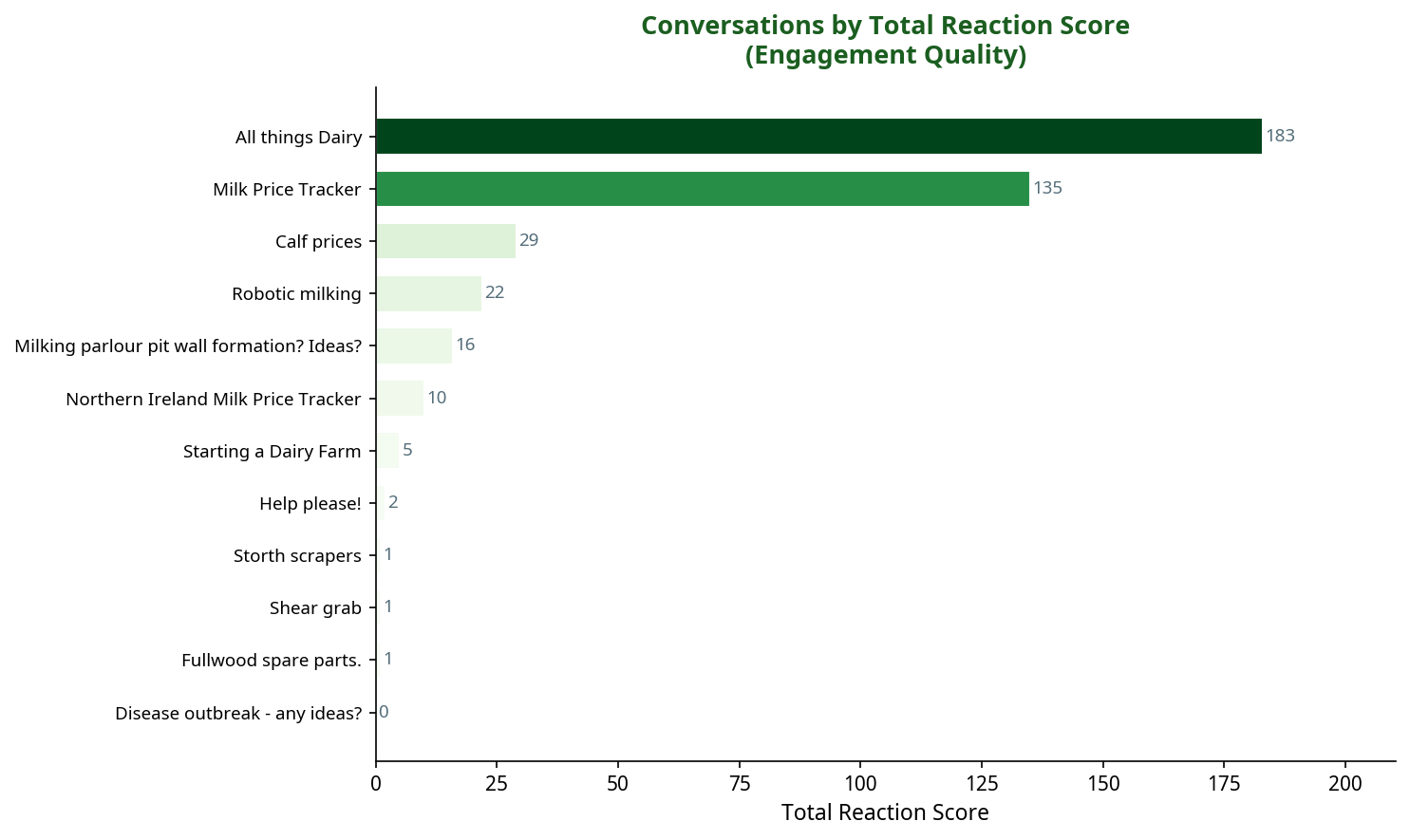
This week’s conversations reflect broader sector-wide challenges regarding milk contract security and pricing structures.
—
Calf Rearing Strategies and Feeding Practices
Insightful discussions took place around calf feeding to ensure healthy growth to bulling weight:
- Feeding to Compensate Past Management: Underfeeding issues, particularly outside the farm’s direct control in autumn and winter months, were cited as persistent challenges.
- Feed Types and Cost-Efficiency: Several members debated the pros and cons of different feed options including blends versus rolls or nuts, with concerns about wastage and cost.
- Early Growth Importance: The consensus emphasized optimizing the first three months of calf growth as critical to later productive performance.
- Community Tips: Contributors shared practical ideas about feeding routines, supplement types, and managing calf nutrition efficiently.
These exchanges demonstrate the forum’s role as a vital knowledge-sharing hub on calf health and developmental best practices.
—
Infrastructure and Equipment Advice
Other notable contributions covered:
- Milking Parlour Pit Wall Formation: With 15 contributions, practical ideas and personal experiences around enhancing pit walls for safety and efficiency were exchanged.
- Shear Grab and Storth Scraper Experiences: Equipment reliability and maintenance were discussed, with specific models and spares being recommended.
- Water Ball Cock Recommendations: As members prepared for new concrete trough installations, experiences with different water fitting types and longevity considerations were shared.
This cluster of technical topics highlights ongoing farmer attention to farm infrastructure improvements and equipment optimization.
—
Miscellaneous and Emerging Topics
- Early Calving Updates: One member shared photographic evidence of calving occurring 16 days ahead of schedule, an indication of season variability and its operational impacts.
- Policy Engagement: There was a singular call to action inviting dairy producers to participate in inheritance tax reform consultations, reflecting the wider engagement of farmers with policy issues affecting their businesses.
- Rare Disease and Precision Farming: Though limited in discussion, queries on disease outbreaks and precision agriculture technologies like N-Sensors indicate areas of emerging interest.
—
Conclusion
The week’s forum activity paints a vivid picture of a dairy farming community actively navigating technological adaptation, market pressures, and operational challenges. Robotic milking systems remain a focal point for innovation debates, while the looming threat of contract terminations by milk buyers has injected a note of caution and planning urgency among producers. Calf rearing practices and infrastructure adjustments continue to be areas for shared learning and improvement. The Farming Forum’s Dairy section continues to be an essential platform fostering peer support, knowledge exchange, and collective resilience amid a rapidly evolving agricultural landscape.
—