
The Royal Highland Show closed its June run with more than 210,000 visitors through the gates. On The Farming Forum, a conversation running right through show week told a more awkward story for the trade: costs that have outpaced recent memory, in-market machinery buyers walking off stands unspoken to, and long-standing members asking whether Scotland’s flagship show is still an event for farmers at all.
By TFF News | 24 September 2026 | Events
The conversation ran on The Farming Forum’s Agricultural Matters section from 4 to 23 June 2026 and drew 127 visible contributions, 8,675 views and 282 reactions, an average of 2.22 reactions per contribution. Of the contributions, 34 were negative in tone against 18 positive, with the rest neutral. These figures describe one conversation, not a representative survey of Scottish farming or of show visitors.
Costs that stack up before the gate
The sharpest cost complaints came from the show’s own members. One contributor booked into the members’ caravan site said it could be his last year: “Used to be 19 caravans from our neck of the woods went altogether and stayed but this year only 2 due to cost. £450 for a caravan this year but 4 years ago it was £130.” A £40 guest charge for the members’ pavilion compounded it.
Another, sympathetic to staging costs, put a number on where it ends: “the general public very soon get to a point of it being a £250-300 day out for a family of 4 with travel parking, food etc. i can see footfall at these big shows taking a real hit in the next few years”. His £50 entry figure is a contributor’s estimate; the last published prices, for 2025, were £46 for an adult day ticket plus £15 for a day’s parking, per The Scotsman’s visitor guide. The show’s official FAQs confirm another opening gripe: admission and parking must be bought in advance through the ticket site, with none sold on entry.
The comparison that drew the most agreement looked abroad: “It costs 29 euro’s to enter the Agritechnica show in Hannover for one day, the biggest agricultural exhibition in Europe.” That figure checks out: organiser DLG priced the standard Agritechnica 2025 day ticket at 29 euros. Another explained why the comparison is not level: “Agritechnica is a pure trade show where exhibitors pay for stand space, no add on costs like livestock showing, or entertainment.”
In-market buyers left to wander the stands
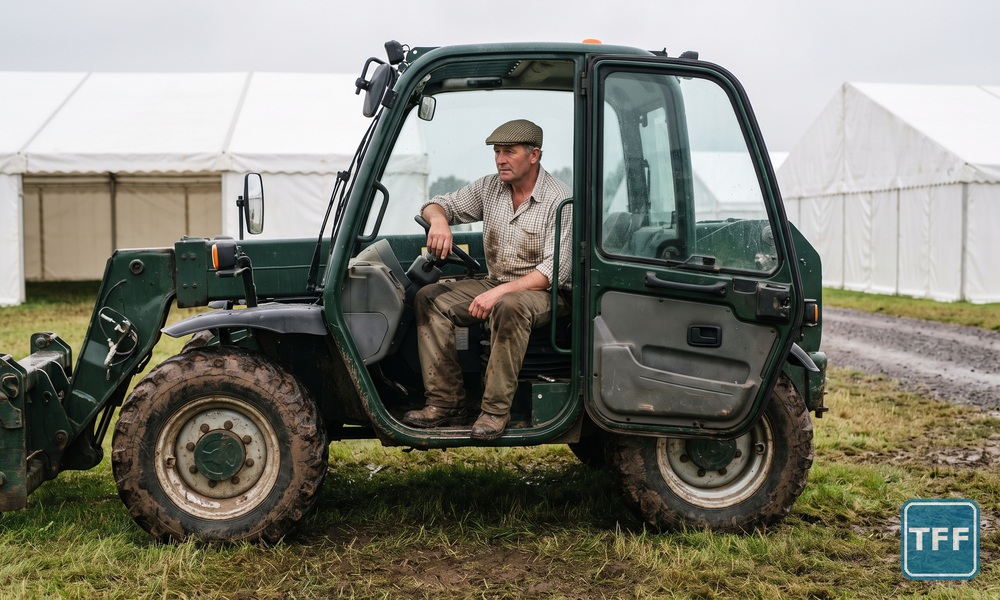
The most commercially pointed strand came from farmers ready to spend. One, actively changing his telehandler this year, visited four manufacturers’ stands: “I went on 4 different manafacturers stands that were fairly quiet , spent bit of time looking/reading specs on info sheet on windows but not once did any rep approach to chat”. He went further later: “one particular stand it was open & sat in it for a good 10 mins familiarising with cab & still no contact from reps , I really shouldn’t need to go find someone’s attention.” A second buyer shopping for a baler described the same experience, though another pushed back that one manufacturer’s team “were very approachable and had all the different specialists there”.
From behind the stand, a contributor who has worked show stints said the stream of casual enquiries wears anyone down: “People who do it for 4 days could not be paid enough.” Another warned against writing off the weekend crowd: “When I worked in an agricultural dealership most our biggest customers weren’t farmers”, pointing to landscapers and contractors closer to a new machine order than many farms.
Whatever happened to buying at the show?
One contributor turned the rep complaints into a question about what a show stand is now for. He bought a muck spreader off a stand last year, and recalled the manufacturer’s reaction on shaking hands: “it was apparently the first time he’d sold at a show for many years”. Others confirmed the habit has gone. “I would never buy at a show.” said one. Another was blunt about where buying has moved: “If I’m interested in buying a machine, will go to demo day to see it working or speak to someone that already runs one.” On that reading the stand is now a public relations exercise for existing customers, not a sales channel.
Not an event for farmers anymore?
Beneath the complaints sat a question of identity. A former regular said he tried returning twice after Covid: “it’s just not the same place. It isn’t an event for farmers anymore.” Another put the same point without the regret: “I don’t really think the RHS target audience is actually farmers anymore.” He listed school buses, lifestyle shoppers and food hall visitors, and called all those audiences great for the show.
The organisers’ numbers back the shift. RHASS reported more than 210,000 visitors across the four days in 2026, including over 23,000 children admitted free. One argued that is as it should be: “Today, interested kids are the life blood, and should be treated as such.” Another set out the stakes for every show society: “If they don’t listen to their public, they will wither on the vine.”
Exhibitors and organisers count the same pressures
A cattle exhibitor described a soaked but worthwhile Thursday, with a supplier contact made on the day: “We did the business related things we had planned plus we found someone who can help us with our borehole water treatment.” He wanted the option to leave on Friday evening, since a near week-long commitment no longer fits farms with off-farm jobs. Another, who gave up on the Highland years ago, said the deciding factor is how societies treat exhibitors: “We now go to shows that appreciate the effort & cost that goes into showing cattle.”
Organisers were candid about their own economics. One committee member of a small local show said it now costs “over 100k to put it on” against £15 entry, with the society-run bar the difference between breaking even and a substantial loss. Another agreed: “We do the bar ourselves and it really has transformed the show finances, the drink is cheaper and you do find that you sell more of it.” Others reported tendered-out bars bringing more income for less volunteer labour. Either way, the margin that keeps a show alive is increasingly made behind the bar rather than at the gate.
The question the trade is left with
Both things are true at once. The Royal Highland Show has rarely been busier, and the farmers in this conversation have rarely sounded less convinced it is for them. For machinery brands and dealers the question is what a stand now buys: if farmers do their deals at demo days, and the weekend aisles hold contractors with real budgets, then stand staffing, who reps approach and which days matter all deserve a rethink. For show societies the arithmetic is harsher: costs rising faster than gate income, exhibitors weighing their welcome, a public whose loyalty cannot be assumed. Who exactly is the show for, and who is prepared to keep paying for it? Neither was settled when the conversation went quiet.
Read the source conversation and analysis
Read the full conversation on The Farming Forum here.
Download the full conversation analysis as a PDF slide deck: Highland Show 26 conversation analysis.
This conversation had been viewed 8,822 times on The Farming Forum when counted on 1 October 2026. Want your brand in the room when farmers talk events? Book advertising with Agri Web Media.