Weekly Summary: Politics Section
Date Range: 9th – 15th November 2026
—
Executive Summary
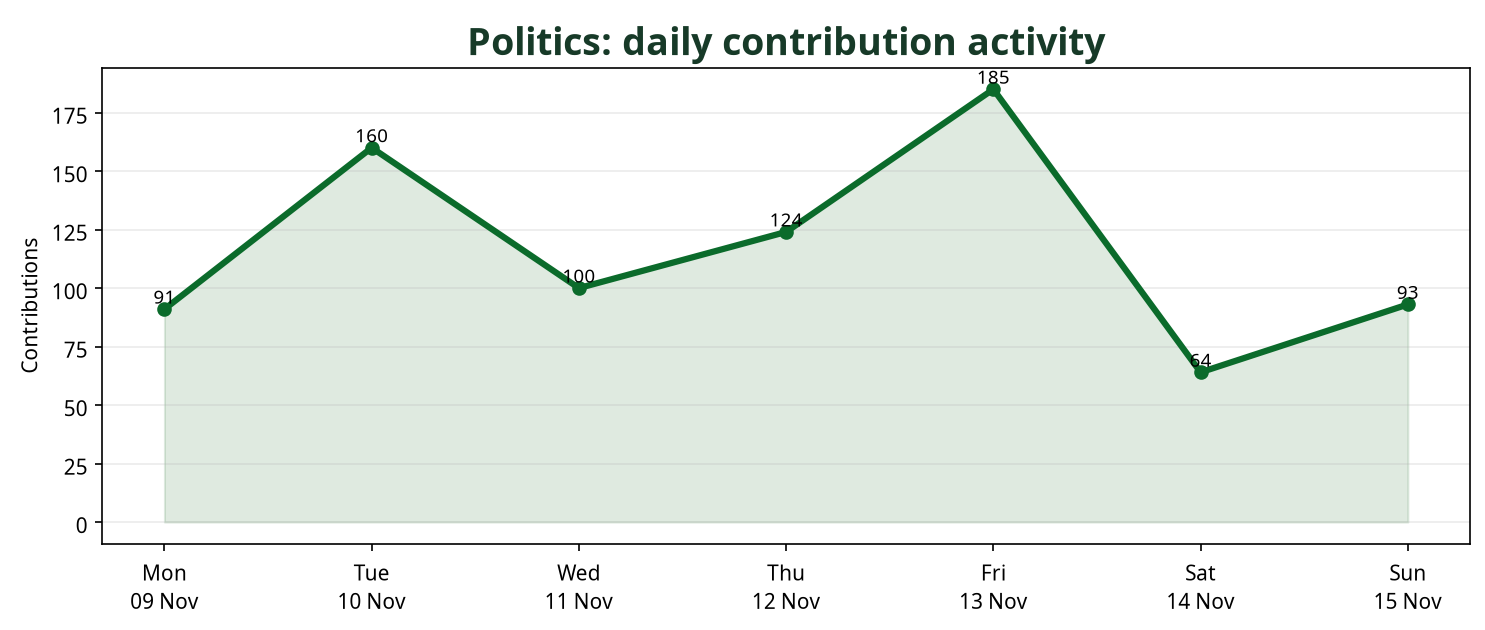
This review covers a small, reviewed subset of three conversations from the Politics section of The Farming Forum within 9–15 November 2026. Across the week the section recorded 817 contributions in 27 conversations; the three threads summarised here together account for 57 contributions. Contributors addressed questions of political accountability when party affiliations change, the desired character of essential public services, and brief, rhetorical exchanges about Brexit. Discussions mixed substantive points with short-form replies and humour, while later posts in the public-services conversation acknowledged limits to the technical information available. The summaries below describe the subjects and arguments presented by contributors without endorsing claims or treating anecdote as representative evidence. Broader activity metrics (contributions and conversation count) are reported to situate these items, not to imply that the three themes were dominant across the full week.
—
Conversations at a Glance
| Conversation Name | Contributions | Key Topics |
|---|---|---|
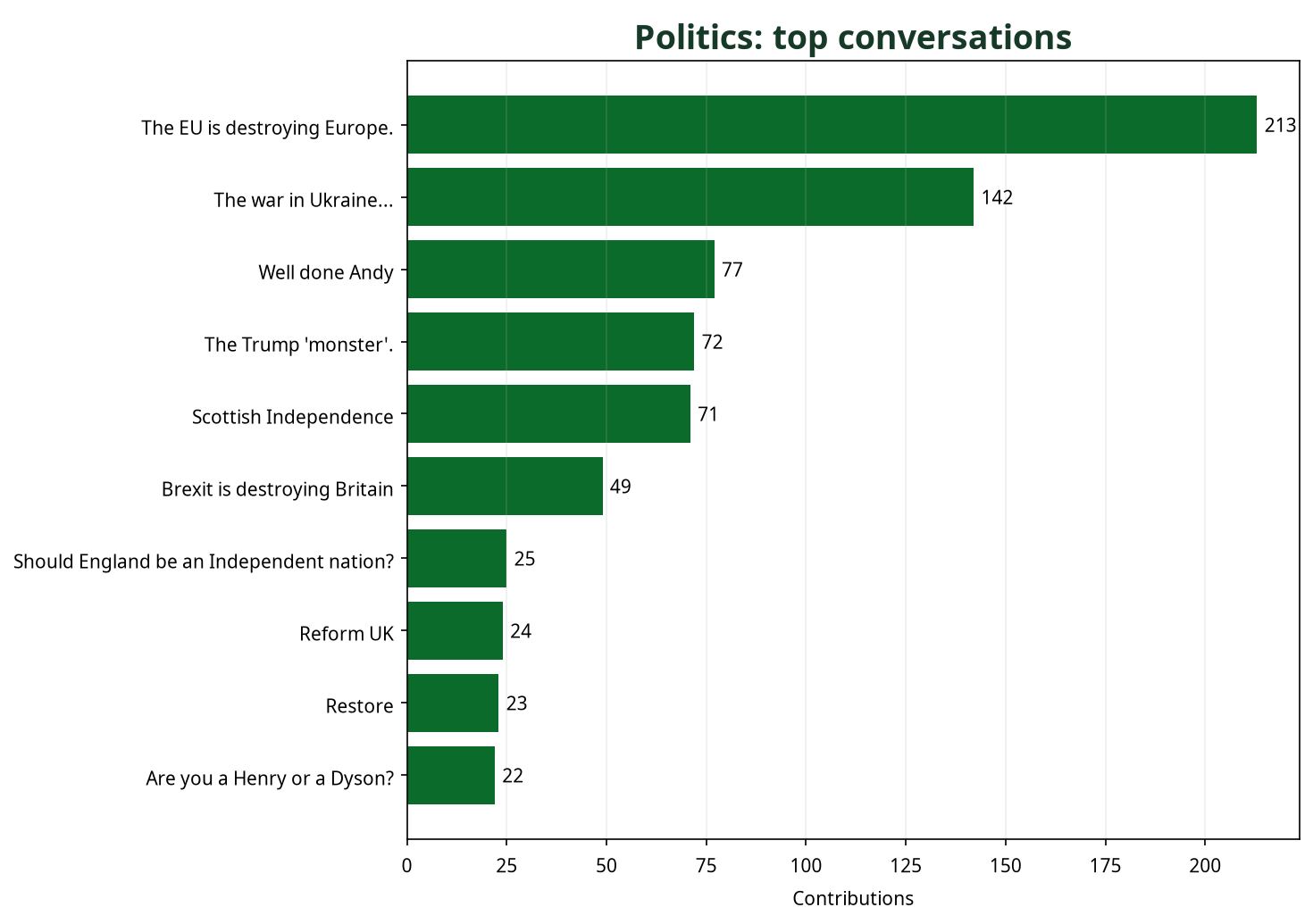
| The EU is destroying Europe. | 213 | Politics discussion; Source activity only |
| The war in Ukraine… | 142 | Politics discussion; Source activity only |
| Well done Andy | 77 | Politics discussion; Source activity only |
| The Trump ‘monster’. | 72 | Politics discussion; Source activity only |
| Scottish Independence | 71 | Politics discussion; Source activity only |
| Brexit is destroying Britain | 49 | Politics discussion; Source activity only |
| Should England be an Independent nation? | 25 | Politics discussion; Source activity only |
| Reform UK | 24 | Political accountability; Changing party labels; Discussion of effectiveness |
| Restore | 23 | Politics discussion; Source activity only |
| Are you a Henry or a Dyson? | 22 | Essential service dependability; Simplicity and complexity; Government responsibility |
—
Detailed Conversation Analysis
Accountability and party identity
Continuity of political responsibility
In the conversation labelled “Reform UK”, which recorded 24 contributions, posts questioned how past political responsibilities should be considered when party affiliations change. Several replies contrasted earlier and current party labels, while others referred to short or selective memories. These exchanges are evidence of a discussion about accountability, not evidence that any named person acted improperly. The retained account does not repeat claims about attendance, personal motives or foreign connections. It records a limited subject within this particular thread and does not establish a wider view among the forum’s readers or contributors.
How labels shape perception
The same conversation included brief replies about political labels and disagreement about effectiveness. Some posts challenged previous comments; others offered short questions or responses with little explanatory detail. That mix matters when reading the extract: not every contribution contains a developed argument, and a contribution count does not measure support for a party or position. The summary therefore keeps the observation narrow. Party identity and responsibility appeared as subjects of discussion, but the current posts do not provide a basis for general claims about how labels influence voters or media coverage.
Public services: simplicity versus sophistication
Prioritising dependable delivery
The 22-contribution public-services conversation began with a household-appliance comparison, then turned to broader questions about basic services. Posts asked whether government and service providers should concentrate on dependable power and water provision rather than additional complexity. Other replies addressed the limits of the comparison. The useful retained point is the preference expressed by some contributors for reliable delivery of basic functions. The appliance names remain in the canonical activity table as the source title; this review does not endorse a product or treat anecdotes about its performance as established findings.
Trade-offs and system complexity
Later posts questioned the cost and practicality of improving service reliability and acknowledged that precise technical information was not available in the discussion. Other contributions offered explanations or operational suggestions, but those have not been reproduced here. This distinction keeps a discussion of public-service priorities separate from technical guidance. The weekly extract shows contributors asking where responsibility should sit and how much complexity is useful; it does not establish the cause of an outage, a legal restoration requirement, a verified performance comparison or an appropriate repair procedure.
Brief rhetorical exchanges on Brexit
Form and tone of short debates
The smaller Brexit-related conversation recorded 11 contributions. Most were short replies, jokes or attributions of blame rather than a developed account of a policy measure. Several comments answered earlier remarks in only a few words. The retained observation is about the form of this particular exchange: it was largely rhetorical. Names, insults and claims assigning responsibility have been omitted. There is no basis in this short extract for converting the number of replies into support for an argument or for treating the exchange as a substantive assessment of Brexit’s effects.
Limits to substantive resolution
The difference between activity and substantiated analysis is especially clear in this short conversation. A reply may add to the weekly count without supplying evidence for a factual proposition. Its 11 contributions are retained in the all-source metrics, while the prose describes only the observable brevity and rhetorical form of the posts. This does not imply that other Brexit discussions in the section lacked detail. Nor does it settle any contested political point. It is a restrained account of one small conversation during the stated reporting week.
—
Conclusion
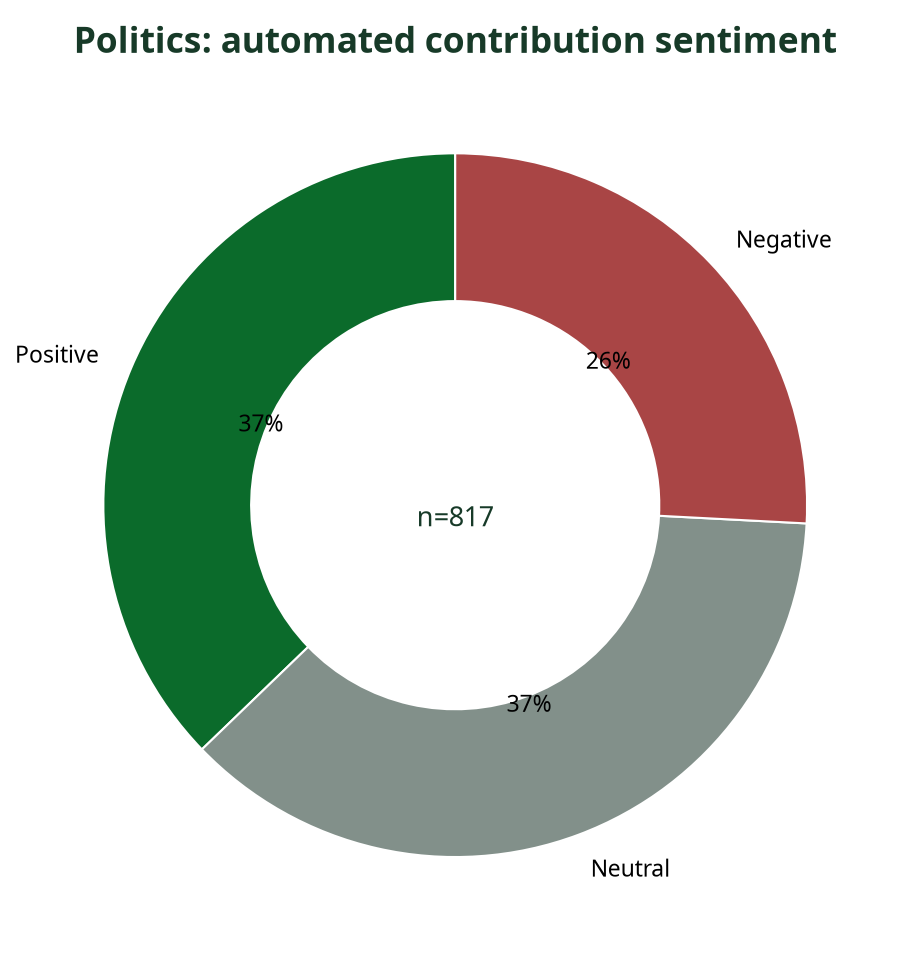
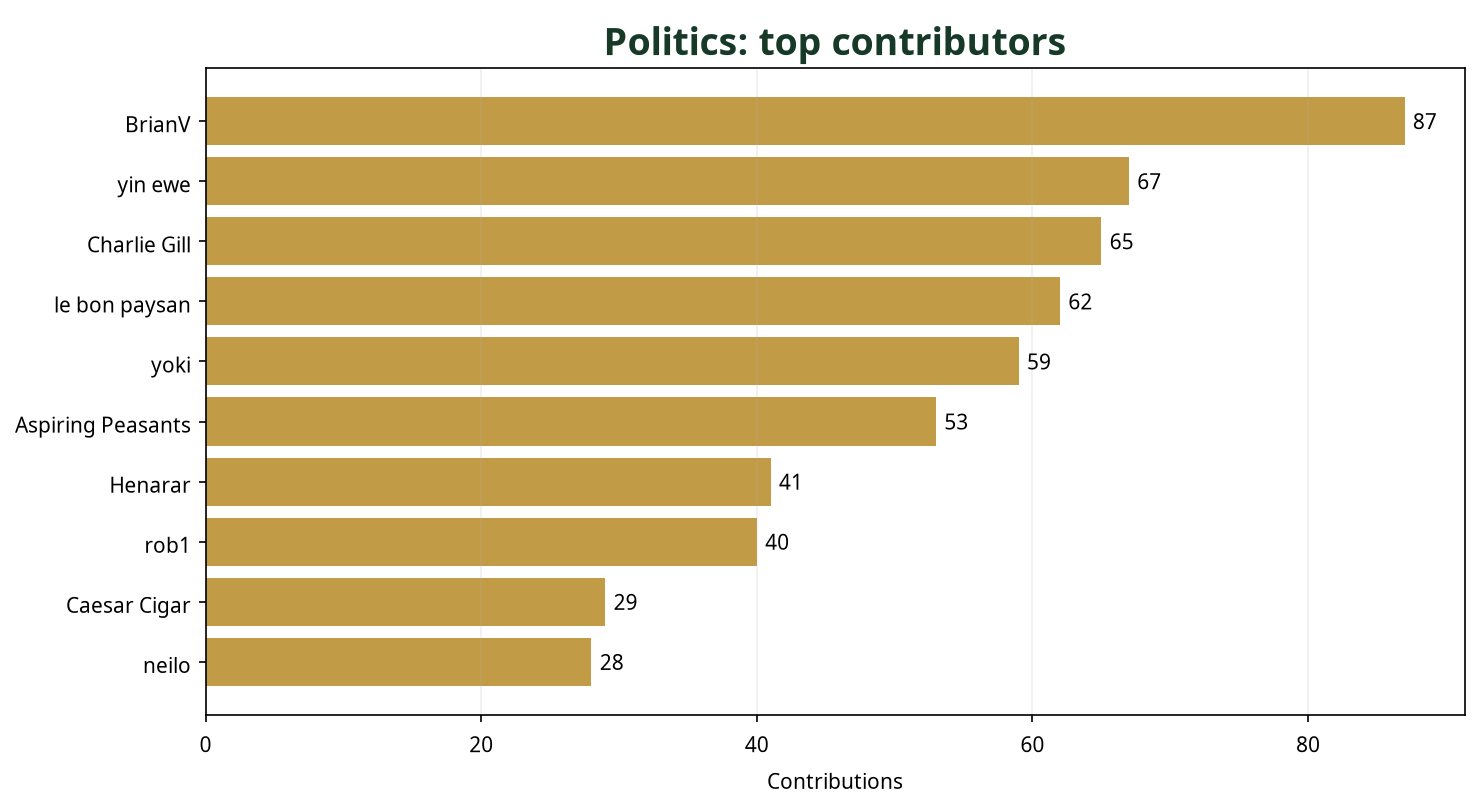
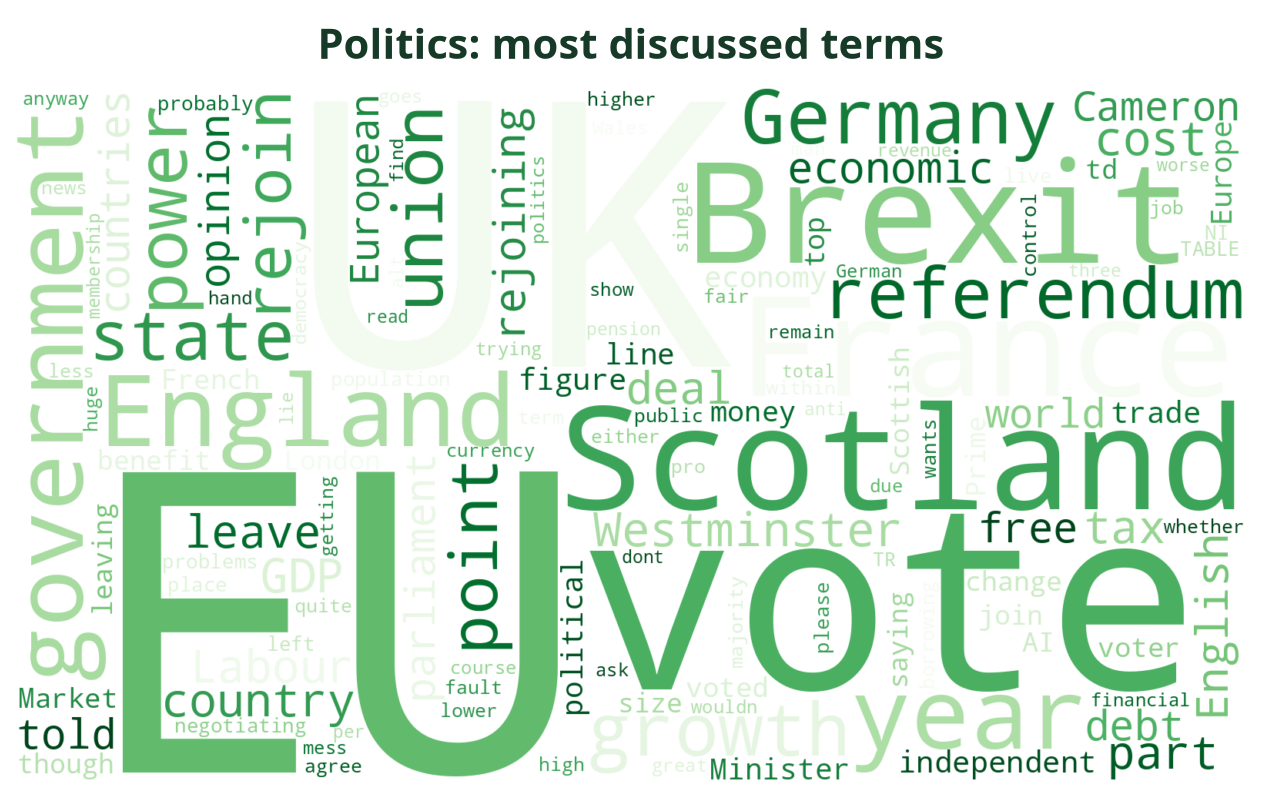
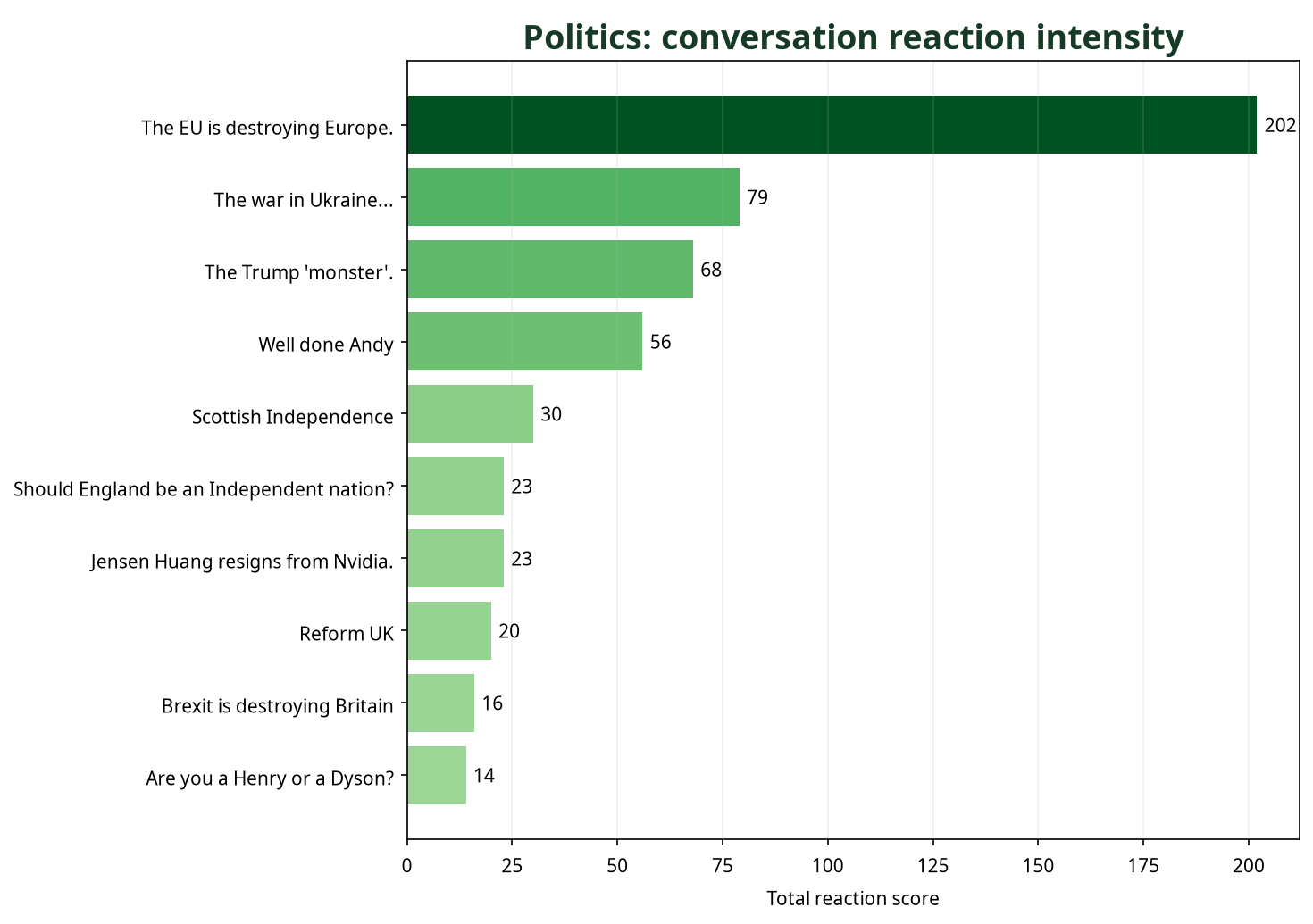
This editorial examined three independently reviewed conversations from the Politics section during 9–15 November 2026; collectively they represented 57 of the section’s 817 contributions across 27 conversations. The sampled threads illustrate discussion subjects about how party labels and shifting affiliations affect perceptions of accountability, preferences for simplicity and dependable delivery in essential services, and the persistence of short, rhetorical exchanges on Brexit. Each summary intentionally records the subjects and arguments raised without endorsing claims or treating anecdote as representative evidence. Readers should note that these three threads are a small, non-representative subset of weekly activity and that the activity counts provided here describe the current export rather than wider public opinion. The six charts retain exact activity from the whole source, except for the explicitly filtered vocabulary cloud. Source titles are activity labels, not endorsed claims. The sentiment donut is automated text classification, not a representative measure of political opinion.
—
For ongoing updates, readers can follow the active conversations linked throughout this summary.
This summary reflects contributions posted during the stated period. It is not a representative survey and should not be treated as professional, legal, financial, veterinary, agronomic or safety advice.