Weekly Summary of the SFI Section on The Farming Forum
Date Range: 3rd August 2026 – 9th August 2026—
Executive Summary
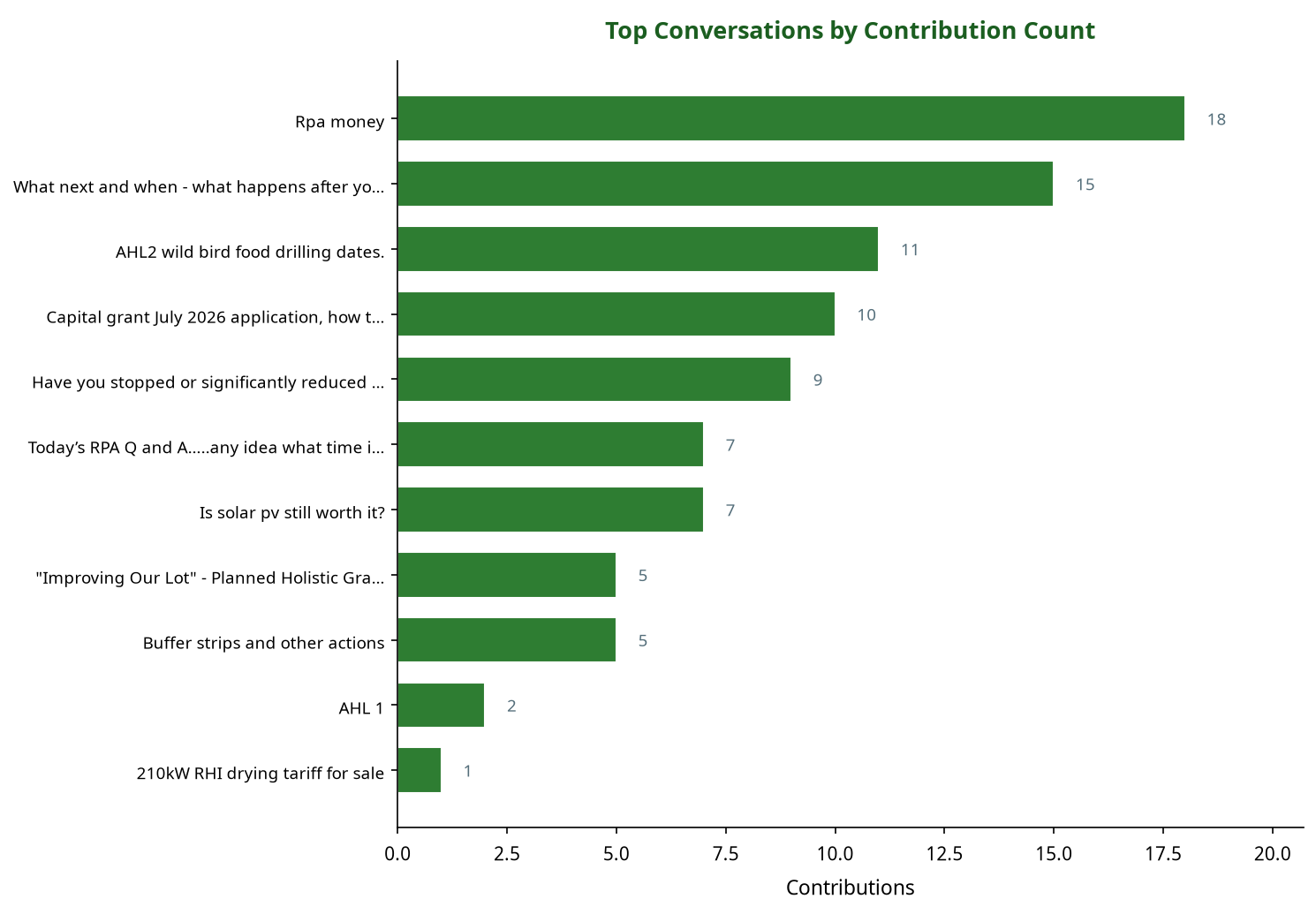
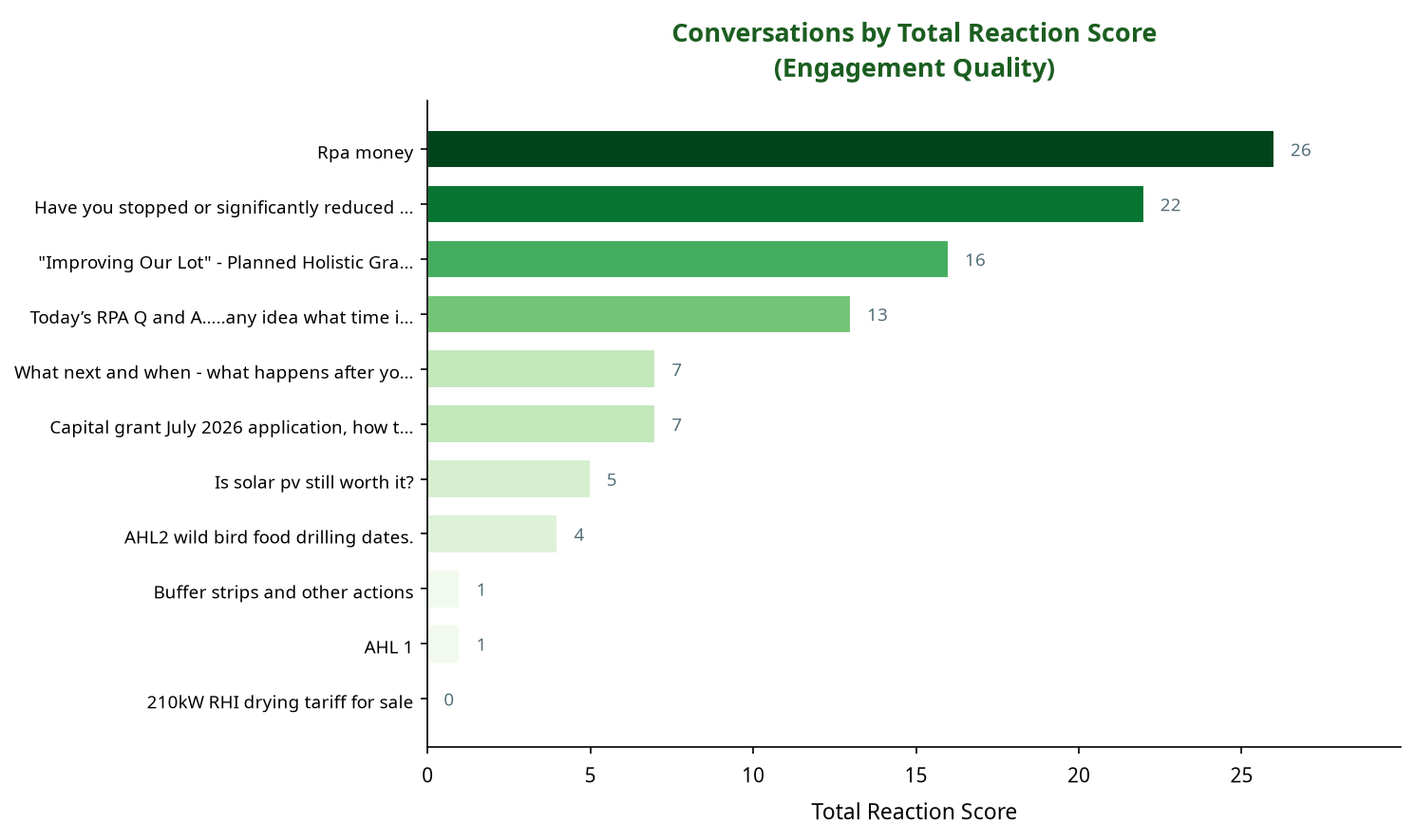
This week’s discussions within the SFI section of The Farming Forum were dominated by conversations around Rural Payments Agency (RPA) funding, application procedures, and payment timelines, highlighting ongoing frustrations and uncertainties among farmers. The interactions reflected a mixture of concern, humor, and practical advice, particularly regarding the timing for submitting applications and how to manage supporting information. Additionally, the topic of environmentally focused schemes, such as AHL2 wild bird food drilling dates and buffer strips, gained noticeable attention, reflecting continued engagement with sustainable farming practices. Of particular interest was a poignant conversation about the reduction or cessation of food production on farms due to economic and environmental pressures, indicating broader tensions in the sector. Capital grants and their application nuances also received detailed discussion, underscoring farmers’ eagerness to access available financial support amid bureaucratic challenges.
—
Conversations at a Glance
| Conversation Name | Contribution Count | Key Topics Covered |
|---|---|---|
| RPA Money | 18 | Payment delays, amounts, BPS discussions, administrative frustrations |
| What Next and When – What Happens After You Submit an Application | 15 | Application timelines, offer acceptance deadlines, RPA communication |
| AHL2 Wild Bird Food Drilling Dates | 11 | Drilling timing, seed selection, rule compliance for late planting |
| Capital Grant July 2026 Application, How to Add Supporting Info | 10 | Application process, documentation requirements, evidencing compliance |
| Have You Stopped or Significantly Reduced Food Production on Your Farm? | 9 | Economic pressures, diversification, definitions of food production |
| Today’s RPA Q and A… Any Idea What Time It’s Scheduled? | 7 | Scheduling and communication from RPA |
| Is Solar PV Still Worth It? | 7 | Financial viability, practical considerations |
| Buffer Strips and Other Actions | 5 | Environmental measures, compliance, scheme benefits |
| “Improving Our Lot” – Planned Holistic Grazing, For Starters | 5 | Grazing techniques, soil health, pasture management |
| AHL 1 | 2 | Crop management, drilling queries |
| 210 kW RHI Drying Tariff for Sale | 1 | Equipment sale query |
Detailed Conversation Review
1. Rural Payments Agency (RPA) Funding and Administration
The most active conversation, with 18 contributions, revolved around RPA funding and payment administration. Contributors shared firsthand experiences with payment amounts, notably recurring sums around £600, which some pointed out was insufficient to cover basic input costs such as fertilizer. The debate extended to critical reflections on the bureaucracy associated with the RPA, with some advocating for a reduction in administrative costs and considering whether the payments delivered adequate value given the staff involved.
BPS (Basic Payment Scheme) discussions emerged regularly, with contributors clarifying that recent payments were among the last of this type, though some confusion remained about future prospects. The tone ranged from satire on how funds might be spent (wit about “a couple of nights out”) to serious concerns about administrative delays, payment reliability, and the underlying political context influencing funding schemes.
2. Application Procedures: What Happens After Submission?
With 15 contributions, this conversation focused on the procedural aspects following the submission of applications for grants or payments. Contributors discussed expected response times, acceptance or rejection deadlines, and the variability of turnaround times—from as quick as 24 hours to months.
Several farmers underscored challenges with communication, noting that offers often come through the RPA online portal or email, sometimes lacking clear instructions on acceptance deadlines. The discussion also touched upon the necessity of planning well in advance, since some schemes require assessments or inspections scheduled up to a year ahead.
3. AHL2 Wild Bird Food Drilling Dates and Crop Management
This discussion, featuring 11 contributions, concentrated on the timing and compliance aspects of sowing AHL2 mixtures intended for wild bird food crops. Farmers debated best practices for late drilling, seed selection, and how to navigate SFI rules around late plantings, including constraints such as minimum periods of crop establishment (e.g., two-year requirements under SFI 26).
There was a consensus that drilling between May and August is generally acceptable, with some contributors sharing personal experience about successful or failed plantings and adaptations to weather conditions.
4. Capital Grants and Supporting Information
Farmers contributed 10 detailed messages about how to prepare and add supporting evidence for capital grant applications submitted in July 2026. The conversation focused on the documentation required to satisfy compliance rules, demonstrating eligibility, and evidence submission methods.
Members shared suggestions on effective ways to collect supporting data—photos, contractor invoices, work schedules—and discussed how bureaucratic processes often feel overwhelming. The topic also included queries on acceptance timelines and the repercussions of missing deadlines.
5. Changes in Food Production Practices on Farms
A thought-provoking discussion with 9 contributions addressed the trend of farmers either significantly reducing or entirely stopping food production on their farms. Several contributors cited economic pressures, policy incentives favoring diversification, and climate-related challenges.
The dialogue explored definitions of what constitutes food production, with some farmers indicating that their crop outputs serve non-food purposes (e.g., equine feed). One member expressed interest in interviewing farmers experiencing these shifts, highlighting the importance of understanding the evolving agricultural landscape.
6. Scheduled RPA Q&A Sessions and Solar PV Viability
Two conversations, each with 7 contributions, involved queries about the timing and content of RPA Q&A sessions as well as assessments of the current benefits of solar photovoltaic systems on farms.
The RPA Q&A discussion reflected uncertainty about event schedules and how to access answers, whereas the solar PV conversation evaluated the financial feasibility of continued or new installations, considering changing tariffs and the evolving energy market.
7. Environmental Actions: Buffer Strips and Holistic Grazing
Smaller but nevertheless pertinent discussions (5 contributions each) focused on sustainable farming practices, including the establishment of buffer strips and the introduction of holistic grazing techniques.
Farmers shared insights into planning these environmental actions, their perceived benefits for soil health and biodiversity, and how they fit into overall stewardship schemes.
—
Conclusion
The week’s discussions in the SFI section of The Farming Forum reflect a sector navigating complex and often frustrating administrative landscapes while striving to adapt to evolving environmental and economic conditions. The preeminent focus on RPA payments and application procedures underscores a collective desire for clarity, efficiency, and timely support. Meanwhile, conversations about cropping practices, grant applications, and reduced food production signal broader trends influencing modern farming decisions. Together, they highlight the multifaceted challenges and opportunities facing farmers in 2026, emphasizing the continued importance of community dialogue and shared experience.
—
Report prepared by [Your Name], Agricultural Journalist